-
Use Cases
-
Resources
-
Pricing
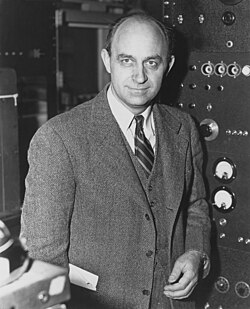
Enrico Fermi (1901–1954) was an Italian-American physicist widely regarded as one of the greatest scientists of the 20th century. He made pioneering contributions to nuclear physics, quantum theory, and statistical mechanics, developed the first nuclear reactor as part of the Manhattan Project, and won the Nobel Prize in Physics in 1938. More Less
Sep 29, 1901
% complete
Enrico Fermi was born on 29 September 1901 in Rome, Italy, the third child of Alberto Fermi, a division head in the Ministry of Railways, and Ida de Gattis, an elementary school teacher.
1914
% complete
In 1914 Fermi met his father's colleague Adolfo Amidei, who encouraged his interest in physics and mathematics and helped guide his early scientific education.
Image source: Enrico Fermi
1915
% complete
Fermi's brother Giulio died during an operation on a throat abscess in 1915, a loss that deeply affected the young Enrico.
Jul 1918
% complete
Fermi graduated from high school in July 1918, having skipped the third year entirely.
Sep 1920
% complete
In September 1920, Fermi was admitted to the physics department at the university in Pisa.
1921
% complete
During 1921, his third year at the university, Fermi published his first scientific works in the Italian journal Nuovo Cimento.
1922
% complete
One of Fermi's papers was sufficiently well-regarded that it was translated into German and published in the German scientific journal Physikalische Zeitschrift in 1922.
Jul 1922
% complete
Fermi submitted his thesis, "A theorem on probability and some of its applications", in July 1922, and received his doctorate at the unusually young age of 20.
1923
% complete
While writing the appendix for the Italian edition of Fundamentals of Einstein Relativity by August Kopff in 1923, Fermi was the first to point out that hidden inside the Einstein equation (E = mc2) was an enormous amount of nuclear potential energy to be exploited.
1923 - 1924
% complete
In 1923–1924, Fermi spent a semester studying under Max Born at the University of Göttingen, where he met Werner Heisenberg and Pascual Jordan.
Sep 1924 - Dec 1924
% complete
Fermi studied in Leiden with Paul Ehrenfest from September to December 1924 on a fellowship from the Rockefeller Foundation obtained through the intercession of the mathematician Vito Volterra.
1925 - 1926
% complete
After Wolfgang Pauli formulated his exclusion principle in 1925, Fermi responded with a paper applying the principle to an ideal gas, employing a statistical formulation now known as Fermi–Dirac statistics.
Image source: Fermi–Dirac statistics
Jan 1925 - Dec 1926
% complete
From January 1925 to late 1926, Fermi taught mathematical physics and theoretical mechanics at the University of Florence, where he teamed up with Rasetti to conduct experiments on the effects of magnetic fields on mercury vapour.
1926
% complete
Fermi received the Matteucci Medal in 1926, one of numerous awards recognizing his achievements.
Image source: Matteucci Medal
1926
% complete
In 1926, at the age of 24, Fermi applied for and won a professorship at the Sapienza University of Rome.
Image source: Sapienza University of Rome
1928
% complete
In 1928, Fermi published his Introduction to Atomic Physics (Introduzione alla fisica atomica), which provided Italian university students with an up-to-date and accessible text.
Jul 19, 1928
% complete
Fermi married Laura Capon, a science student at the university, on 19 July 1928. They had two children: Nella, born in January 1931, and Giulio, born in February 1936.
Image source: Laura Fermi
Mar 18, 1929
% complete
On 18 March 1929, Fermi was appointed a member of the Royal Academy of Italy by Mussolini, and on 27 April he joined the Fascist Party.
Image source: Royal Academy of Italy
1932
% complete
German physicist Hans Bethe came to Rome as a Rockefeller Foundation fellow and collaborated with Fermi on a 1932 paper "On the Interaction between Two Electrons".
Image source: Hans Bethe
1933 - 1934
% complete
Fermi developed beta decay theory in a tentative paper in 1933, then a longer paper the next year incorporating the postulated particle, which he called a "neutrino".
Image source: Neutrino
Mar 25, 1934
% complete
After Joliot-Curie's announcement of induced radioactivity in January 1934, Fermi switched to experimental physics using neutrons. In March 1934 he induced radioactivity with a polonium-beryllium neutron source and rapidly reported the discovery in La Ricerca Scientifica on 25 March 1934.
1938
% complete
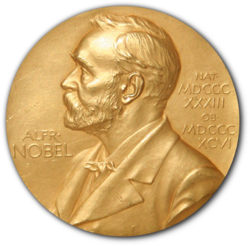
In 1938, Fermi received the Nobel Prize in Physics at the age of 37 for his demonstrations of the existence of new radioactive elements produced by neutron irradiation, and for his related discovery of nuclear reactions brought about by slow neutrons.
Image source: Nobel Prize in Physics
1938
% complete
Fermi left Italy in 1938 to escape new Italian racial laws that affected his Jewish wife, Laura Capon. After receiving the prize in Stockholm, he continued to New York City with his family in December 1938, where they applied for permanent residency.
Image source: Italian racial laws
Jan 2, 1939
% complete
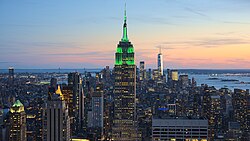
Fermi arrived in New York City on 2 January 1939. He was immediately offered positions at five universities, and accepted one at Columbia University, where he had already given summer lectures in 1936.
Image source: New York City
Jan 25, 1939
% complete
On 25 January 1939, in the basement of Pupin Hall at Columbia, an experimental team including Fermi conducted the first nuclear fission experiment in the United States, following news of Hahn and Strassmann's discovery interpreted by Meitner and Frisch.
Image source: Columbia University
Mar 18, 1939
% complete
Fermi was among the first to warn military leaders about the potential impact of nuclear energy, giving a lecture on the subject at the Navy Department on 18 March 1939.
Image source: United States Department of the Navy
Aug 1941
% complete
By August 1941, Fermi had six tons of uranium oxide and thirty tons of graphite, which he used to build a still larger pile in Schermerhorn Hall at Columbia.
Image source: Schermerhorn Hall
Dec 18, 1941
% complete
The S-1 Section of the Office of Scientific Research and Development met on 18 December 1941, with the US now engaged in World War II, making its work urgent. Arthur Compton determined that plutonium produced in reactors was a feasible alternative to enriched uranium.
Image source: Office of Scientific Research and Development
Dec 2, 1942
% complete
Construction of the pile began on 6 November 1942, and Chicago Pile-1 went critical on 2 December 1942, demonstrating the first human-created, self-sustaining nuclear chain reaction. Fermi led the team at the University of Chicago that designed and built it.
Image source: Chicago Pile-1
Apr 1943
% complete
In April 1943, Fermi raised with Robert Oppenheimer the possibility of using the radioactive byproducts from enrichment to contaminate the German food supply.
Image source: J. Robert Oppenheimer
Nov 4, 1943
% complete
When the air-cooled X-10 Graphite Reactor at Oak Ridge went critical on 4 November 1943, Fermi was on hand just in case something went wrong.
Image source: X-10 Graphite Reactor
May 1944
% complete
Initially run by Fermi as part of the University of Chicago, Argonne became a separate entity with Fermi as its director in May 1944.
Image source: Argonne National Laboratory
Jul 1944
% complete
Fermi became an American citizen in July 1944, the earliest date the law allowed.
Jul 1944
% complete
In mid-1944, Oppenheimer persuaded Fermi to join his Project Y at Los Alamos, New Mexico.
Image source: Project Y
Sep 1944
% complete
In September 1944, Fermi inserted the first uranium fuel slug into the B Reactor at the Hanford Site, the production reactor designed to breed plutonium in large quantities.
Image source: B Reactor
Jul 16, 1945
% complete
Fermi observed the Trinity test on 16 July 1945, the first test of a full nuclear bomb explosion, and conducted an experiment to estimate the bomb's yield by dropping strips of paper into the blast wave, using his famous Fermi method.
Image source: Trinity (nuclear test)
1945
% complete
Fermi was elected a member of the US National Academy of Sciences in 1945.
Image source: National Academy of Sciences
Jul 1, 1945
% complete
Fermi was named Swift Distinguished Professor of Physics at the University of Chicago on 1 July 1945, although he did not depart the Los Alamos Laboratory with his family until 31 December 1945.
Image source: University of Chicago
1946
% complete
Fermi was awarded the Medal for Merit in 1946 for his contribution to the Manhattan Project.
Image source: Medal for Merit
Jul 1, 1946
% complete
The Metallurgical Laboratory became the Argonne National Laboratory on 1 July 1946, the first of the national laboratories established by the Manhattan Project.
Jan 1, 1947
% complete
The Manhattan Project was replaced by the Atomic Energy Commission (AEC) on 1 January 1947.
Image source: United States Atomic Energy Commission
Aug 1949
% complete
After the detonation of the first Soviet fission bomb in August 1949, Fermi, along with Isidor Rabi, wrote a strongly worded report opposing the development of a hydrogen bomb on both moral and technical grounds.
Image source: Thermonuclear weapon
1950
% complete
Fermi was elected member of the American Philosophical Society in 1939 and a Foreign Member of the Royal Society (FRS) in 1950.
Image source: Royal Society
1952
% complete
A synthetic element isolated from the debris of the 1952 Ivy Mike nuclear test was named Fermium, in honor of Fermi's contributions to the scientific community.
Image source: Fermium
1953
% complete
Fermi received the Rumford Prize in 1953, among other honors including the Hughes Medal in 1942 and the Franklin Medal in 1947.
Image source: Rumford Prize
1954
% complete
Fermi was among the scientists who testified on Oppenheimer's behalf at the Oppenheimer security hearing in 1954 that resulted in the denial of Oppenheimer's security clearance.
Image source: Oppenheimer security clearance hearing
Oct 1954
% complete
Fermi underwent what was called an "exploratory" operation in Billings Memorial Hospital in October 1954, after which he returned home.
Or browse the full history timeline directory, with more than 2,000 topics.
This Enrico Fermi timeline was generated with the help of AI, using information found on the internet.
We work hard to keep these timelines accurate, but mistakes do get through. If you spot one, email us at [email protected] and we'll fix it for future visitors.
Generate yours with AI or build it from scratch, for free.
Export your timeline, add your own events, edit or remove AI-generated events, and much more
No credit card required.
Cancel anytime.
Cancel anytime.
You can create an unlimited number of timelines with up to 10 events on each one, customize how they look, export them to PDF, PNG, PowerPoint, CSV, and Excel, and share them with a link. Paid plans raise the event limit and add features like spreadsheet imports and collaborators.
Yes. You can cancel your subscription from your account page at any time, and you will not be charged again. Your subscription stays active for the rest of the period you already paid for.
Yes. We will email you a reminder before the annual renewal, and we will also email you a receipt.
Yes. You can email us within 15 days of any payment, and we will issue you a full refund.
Check out our pricing docs or send us an email anytime: [email protected].