-
Use Cases
-
Resources
-
Pricing
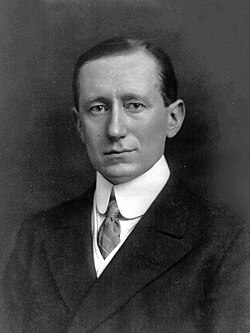
Guglielmo Marconi (1874–1937) was an Italian inventor and electrical engineer who pioneered long-distance radio transmission and is credited with the invention of the radio. He developed the first practical wireless telegraphy system, transmitted the first transatlantic radio signal in 1901, and won the Nobel Prize in Physics in 1909. His work revolutionized global communication and laid the foundation for modern wireless technology. More Less
Apr 25, 1874
% complete
Guglielmo Marconi was born in Bologna, Italy, the second son of Italian landowner Giuseppe Marconi and his Irish wife Annie Jameson, of the whiskey-distilling Jameson family.
Image source: Guglielmo Marconi
1880 - 1894
% complete
Marconi was educated privately by tutors in Bologna and later in Florence, where he studied under Vincenzo Rosa, developing an early interest in physical and electrical science.
1891 - 1895
% complete
Marconi attended lectures at the University of Bologna under physicist Augusto Righi, who had done pioneering research on Hertzian waves (radio waves), greatly influencing the young inventor.
Image source: Augusto Righi
1894
% complete
After reading about Heinrich Hertz's experiments, Marconi began experimenting with radio waves at his family's estate, Villa Griffone near Pontecchio, transmitting signals over short distances using a spark-gap transmitter and a coherer receiver.
Image source: Sasso Marconi
1895
% complete
In the summer of 1895, Marconi succeeded in sending radio signals over a distance of about 1.5 miles across hills at Pontecchio, demonstrating that wireless telegraphy could work beyond line-of-sight expectations.
Image source: History of radio
Jul 27, 1896
% complete
Marconi demonstrated his wireless system to officials of the British General Post Office in London, transmitting signals across rooftops, which attracted significant official interest.
Image source: General Post Office
Sep 2, 1896
% complete
With support from Post Office engineer William Preece, Marconi transmitted Morse code signals nearly two miles across Salisbury Plain, impressing military observers.
Image source: Salisbury Plain
May 13, 1897
% complete
Marconi transmitted messages between Lavernock Point in Wales and Flat Holm island in the Bristol Channel, a distance of about 3.7 miles, marking the first wireless communication over open water.
Image source: Bristol Channel
Mar 27, 1899
% complete
Marconi transmitted the first wireless messages across the English Channel from South Foreland, England, to Wimereux, France, proving long-distance international wireless communication was possible.
Image source: Wimereux
Dec 12, 1901
% complete
From Signal Hill in St John's, Newfoundland, Marconi received the letter 'S' in Morse code transmitted from Poldhu, Cornwall, achieving the first transatlantic wireless signal reception.
Image source: Marconi Beach
1932 - 1936
% complete
Aboard his research yacht Elettra, Marconi conducted pioneering experiments with ultra-shortwave and microwave transmissions, including demonstrations of radiotelephone links between Italy and other countries.
Image source: Elettra (1904 ship)
1896
% complete
The Italian Ministry of Posts and Telegraphs showed little interest in Marconi's invention, prompting him to travel to Britain, where his mother's family connections offered better prospects.
Jun 2, 1896
% complete
Marconi filed his first British patent for improvements in transmitting electrical impulses and signals, widely regarded as the first patent for a practical system of wireless telegraphy.
Jul 20, 1897
% complete
Marconi founded The Wireless Telegraph & Signal Company Ltd (later Marconi's Wireless Telegraph Company) in London to commercialize his inventions, with backing from relatives and investors.
1898
% complete
Marconi set up one of his first permanent wireless stations on the Isle of Wight, providing communication with ships at sea and demonstrating the commercial viability of maritime wireless service.
Image source: Niton
Jul 1898
% complete
Marconi provided wireless reports of the Kingstown Regatta yacht races in Dublin Bay for Dublin newspapers, one of the earliest uses of radio journalism.
Image source: Dún Laoghaire
1899
% complete
The Royal Navy adopted Marconi's equipment during fleet maneuvers, allowing ships to communicate over distances up to 75 miles and demonstrating the strategic value of wireless at sea.
Image source: Royal Navy
Mar 3, 1899
% complete
The East Goodwin lightship, fitted with Marconi equipment, reported the grounding of the steamship SS St Paul, enabling assistance; the lightship itself was later rammed but its distress calls brought rescue, showcasing wireless as a lifesaving technology.
Image source: SS Saint Paul (1895)
Oct 17, 1907
% complete
Marconi opened a regular public transatlantic wireless telegraph service between Clifden, Ireland, and Glace Bay, Nova Scotia, making rapid intercontinental communication commercially available.
Image source: Clifden
Jan 23, 1909
% complete
After colliding with the SS Florida, the RMS Republic used its Marconi wireless set to summon help, resulting in the rescue of around 1,500 people and cementing wireless telegraphy's reputation as essential for safety at sea.
Image source: RMS Republic
Apr 15, 1912
% complete
The sinking of the Titanic demonstrated the critical importance of shipboard wireless: Marconi operators aboard nearby vessels received distress signals that helped save over 700 lives, and Marconi was hailed as a hero.
Image source: Guglielmo Marconi
Mar 16, 1905
% complete
Marconi married Beatrice O'Brien, daughter of Baron Inchiquin, in London; the couple had three daughters and a son before divorcing in 1924.
Dec 10, 1909
% complete
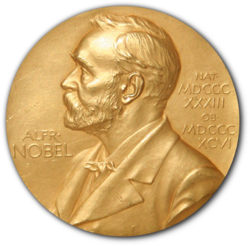
Marconi shared the 1909 Nobel Prize in Physics with Karl Ferdinand Braun for their contributions to the development of wireless telegraphy.
Image source: Nobel Prize in Physics
Apr 1912
% complete
Marconi testified before the American Senate inquiry investigating the Titanic disaster, discussing wireless operations and the conduct of radio operators during the tragedy.
Image source: United States Senate inquiry into the sinking of the Titanic
1914 - 1918
% complete
During World War I, Marconi served Italy by overseeing military wireless communications, holding commissions in the army and navy and helping develop wartime radio technology.
Image source: Military history of Italy during World War I
1914
% complete
Marconi was appointed a Senator of the Kingdom of Italy, gaining a seat in the Italian Senate in recognition of his scientific achievements and services to the nation.
Image source: Senate of the Kingdom of Italy
1923
% complete
Marconi joined Benito Mussolini's National Fascist Party, becoming an active supporter of the regime and later serving as a prominent figurehead for Italian science under fascism.
Image source: National Fascist Party
1930
% complete
Mussolini appointed Marconi president of the Royal Academy of Italy, making him a leading representative of Italian science and culture.
Image source: Accademia dei Lincei
Jul 20, 1937
% complete
Guglielmo Marconi died in Rome at age 63 after a series of heart attacks. As a tribute, radio stations worldwide observed two minutes of silence, and he was buried at Sasso di Bolgare, later moved to the Basilica of Santa Croce in Florence.
1938
% complete
Following his death, Marconi's legacy grew through institutions such as the Marconi Company, numerous memorials, and continued recognition as the father of radio, with his patents and companies shaping the modern telecommunications industry.
Or browse the full history timeline directory, with more than 2,000 topics.
This Guglielmo Marconi timeline was generated with the help of AI, using information found on the internet.
We work hard to keep these timelines accurate, but mistakes do get through. If you spot one, email us at [email protected] and we'll fix it for future visitors.
Generate yours with AI or build it from scratch, for free.
Export your timeline, add your own events, edit or remove AI-generated events, and much more
No credit card required.
Cancel anytime.
Cancel anytime.
You can create an unlimited number of timelines with up to 10 events on each one, customize how they look, export them to PDF, PNG, PowerPoint, CSV, and Excel, and share them with a link. Paid plans raise the event limit and add features like spreadsheet imports and collaborators.
Yes. You can cancel your subscription from your account page at any time, and you will not be charged again. Your subscription stays active for the rest of the period you already paid for.
Yes. We will email you a reminder before the annual renewal, and we will also email you a receipt.
Yes. You can email us within 15 days of any payment, and we will issue you a full refund.
Check out our pricing docs or send us an email anytime: [email protected].