-
Use Cases
-
Resources
-
Pricing
Greek Philosophy refers to the intellectual tradition that emerged in ancient Greece beginning in the 6th century BCE. It encompasses the ideas of the Pre-Socratic natural philosophers, the ethical inquiries of Socrates, the metaphysical systems of Plato and Aristotle, and later schools such as Stoicism, Epicureanism, and Skepticism. Greek philosophers pioneered rational inquiry into the nature of reality, knowledge, ethics, and politics, laying the foundations of Western philosophy and science. More Less
May 28, 585 BC
% complete
Thales of Miletus, traditionally regarded as the first Greek philosopher, is said to have predicted a solar eclipse. He sought natural, rather than mythological, explanations for the world, proposing water as the fundamental principle (arche) of all things and founding the Milesian school of thought.
Image source: Thales of Miletus
570 BC
% complete
Anaximander of Miletus, a student of Thales, proposed that the origin of all things was the apeiron, an indefinite boundless substance. He also produced one of the first prose works on philosophy and made early contributions to cosmology, geography, and biology.
Image source: Anaximander
530 BC
% complete
Pythagoras established a community in Croton, southern Italy, blending mathematics, mysticism, and philosophy. The Pythagoreans held that number was the essence of all things and pursued ideas such as the transmigration of souls, deeply influencing later Greek thought including Plato.
Image source: Pythagoras
500 BC
% complete
Heraclitus of Ephesus taught that reality is in constant flux, famously comparing it to a river that cannot be stepped into twice. He introduced the concept of the logos, a rational principle governing the cosmos, and saw fire as a symbol of perpetual transformation.
Image source: Heraclitus
480 BC
% complete
Anaxagoras moved to Athens and became associated with Pericles, teaching that Mind (Nous) ordered the cosmos out of an original mixture of all things. He was later prosecuted for impiety, marking an early clash between new philosophy and traditional Athenian religion.
Image source: Anaxagoras
475 BC
% complete
Parmenides of Elea argued in his philosophical poem that true being is unchanging, eternal, and indivisible, and that change and motion are illusions of the senses. His rationalist approach set the agenda for much subsequent metaphysics and provoked responses from thinkers like Heraclitus's followers and atomists.
Image source: Parmenides
450 BC
% complete
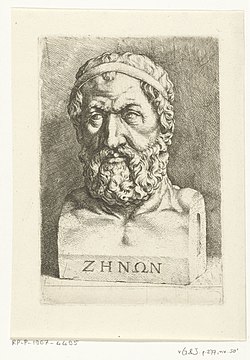
Zeno of Elea devised famous paradoxes, such as Achilles and the tortoise and the dichotomy, intended to defend Parmenides by showing that motion and plurality lead to logical contradictions. His arguments stimulated the development of mathematics and theories of infinity.
Image source: Zeno of Elea
450 BC
% complete
Empedocles of Acragas proposed that everything is composed of four roots—earth, water, air, and fire—mixed and separated by the forces of Love and Strife. His theory dominated Western science for centuries and influenced medicine through the idea of the four humors.
Image source: Empedocles
430 BC
% complete
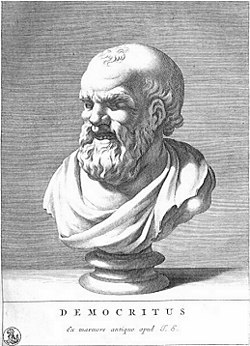
Democritus of Abdera, with his teacher Leucippus, argued that reality consists of indivisible atoms moving in a void. His materialist and deterministic picture of nature anticipated modern science and was later revived by Epicurus and Lucretius.
Image source: Democritus
450 BC
% complete
The Sophists were traveling teachers who offered instruction in rhetoric and argument for fees. Protagoras, the most famous, declared that 'man is the measure of all things,' emphasizing relativism and human convention, and provoking debates about truth, virtue, and education in democratic Athens.
Image source: Sophist
440 BC
% complete
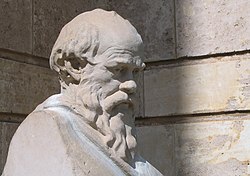
Socrates spent his life engaging fellow Athenians in conversation, using questioning (the elenchus) to expose ignorance and pursue definitions of virtues like courage and justice. He left no writings, but his method and moral focus transformed philosophy and inspired the Socratic schools.
Image source: Socrates
399 BC
% complete
Socrates was tried by an Athenian jury on charges of impiety and corrupting the youth. Found guilty, he was sentenced to death by drinking hemlock. His execution profoundly affected Plato and other followers, becoming a defining moment in the history of philosophy.
Image source: Trial of Socrates
387 BC
% complete
Plato established the Academy in a grove sacred to the hero Academus, creating one of the earliest institutions of higher learning in the Western world. There he taught mathematics, dialectic, and his theory of Forms, influencing generations of philosophers including Aristotle.
Image source: Platonic Academy
380 BC - 347 BC
% complete
Over four decades Plato composed philosophical dialogues featuring Socrates as protagonist. Works like the Republic explored justice, the ideal state, the theory of Forms, and the philosopher-king, establishing foundational texts of Western philosophy.
Image source: Republic (Plato)
367 BC - 347 BC
% complete
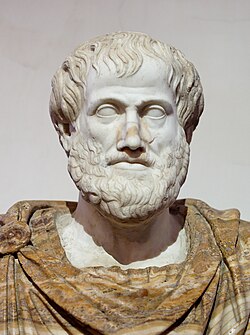
Aristotle joined the Academy at age seventeen and remained for twenty years, absorbing Platonic teachings while developing his own views. He would go on to critique the theory of Forms and lay foundations for logic, biology, ethics, and political science.
Image source: Aristotle
343 BC - 336 BC
% complete
King Philip II of Macedon invited Aristotle to tutor his son Alexander at Mieza. The future conqueror received instruction in literature, ethics, and politics, and Aristotle's connection to Alexander gave him resources for his scientific researches.
335 BC
% complete
Returning to Athens, Aristotle established the Lyceum, where he lectured while walking (hence the name Peripatetics). The school conducted systematic research in logic, natural science, ethics, and politics, producing treatises that shaped Western thought for two millennia.
Image source: Lyceum (classical)
322 BC
% complete
Aristotle died in Chalcis on Euboea after leaving Athens amid anti-Macedonian sentiment, reportedly saying he would not let Athens sin twice against philosophy. His vast corpus became the backbone of medieval scholasticism and Islamic philosophy.
330 BC - 270 BC
% complete
Pyrrho of Elis, influenced by encounters with Indian gymnosophists during Alexander's campaigns, advocated suspension of judgment (epoché) about all beliefs as the path to tranquility. His radical skepticism inspired the Pyrrhonist tradition later systematized by Sextus Empiricus.
Image source: Pyrrho
307 BC
% complete
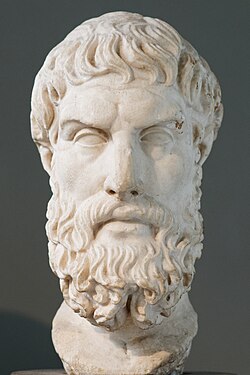
Epicurus established the Garden, a community devoted to achieving ataraxia (tranquility) through simple pleasures, friendship, and freedom from fear of gods and death. His atomistic physics supported an ethic of pleasure understood as absence of pain.
Image source: Epicurus
301 BC
% complete
Zeno of Citium began teaching in the painted porch (Stoa Poikile) in Athens, giving Stoicism its name. Stoicism taught that virtue alone is good, that we should live according to nature and reason, and that wisdom brings freedom from passion.
Image source: Zeno of Citium
268 BC
% complete
As head of the Academy, Arcesilaus turned it toward Academic Skepticism, arguing against the possibility of certain knowledge (katalepsis) claimed by the Stoics. This skeptical phase of the Academy dominated for two centuries and shaped Hellenistic epistemological debate.
Image source: Arcesilaus
232 BC
% complete
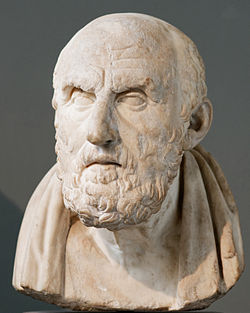
Chrysippus, the third head of the Stoa, wrote hundreds of works organizing Stoic logic, physics, and ethics into a coherent system. So central was he that it was said without Chrysippus there would be no Stoa.
Image source: Chrysippus
155 BC
% complete
Carneades, head of the Academy, developed sophisticated arguments against dogmatic claims to knowledge and introduced the notion of probability as a practical guide to life. His embassy to Rome in 155 BC famously scandalized conservative Romans with opposing speeches on justice.
Image source: Carneades
87 BC
% complete
Antiochus broke with the skeptical Academy, arguing that Plato, Aristotle, and the Stoics shared a single Old Academic doctrine. His Middle Platonist synthesis influenced Cicero and prepared the way for later Platonism.
45 BC
% complete
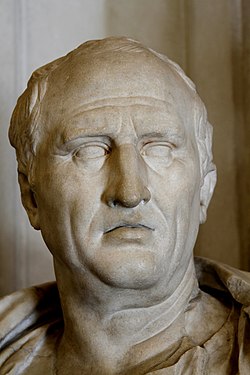
Cicero wrote works such as De Finibus, Tusculan Disputations, and De Natura Deorum, rendering Greek philosophical debates into elegant Latin. His writings transmitted Hellenistic philosophy, especially Stoicism and Academic skepticism, to the Roman and later Christian worlds.
Image source: Cicero
50 AD - 65 AD
% complete
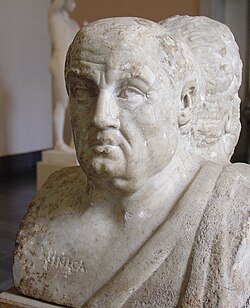
The Roman statesman Seneca produced Moral Letters to Lucilius and essays on anger, grief, and the shortness of life, making Stoicism practical and accessible. Forced to die by Nero in 65 AD, he became a model of the philosopher facing death calmly.
Image source: Seneca the Younger
108 AD
% complete
Epictetus, born a slave, taught that we control only our own judgments and volitions, not external events. His Discourses and Enchiridion, recorded by Arrian, emphasized inner freedom and duty, deeply influencing Marcus Aurelius and modern cognitive therapy.
Image source: Epictetus
160 AD - 200 AD
% complete
Galen of Pergamon, physician to Roman emperors, integrated Aristotelian logic and Platonic psychology with medical practice. His voluminous writings on the soul, logic, and the best doctor as philosopher preserved and shaped ancient philosophy for later ages.
Image source: Galen
170 AD - 180 AD
% complete
While campaigning on the Danube frontier, the Roman emperor Marcus Aurelius composed private reflections in Greek known as the Meditations. The work applies Stoic principles to self-discipline, mortality, and duty, remaining one of the most beloved works of practical philosophy.
Image source: Meditations
250 AD - 270 AD
% complete
Plotinus taught in Rome that all reality emanates from a transcendent One, with the soul's goal being mystical return to its source. His student Porphyry compiled the Enneads, making Neoplatonism the dominant pagan philosophy and a major influence on Christian, Jewish, and Islamic thought.
Image source: Plotinus
400 AD - 415 AD
% complete
Hypatia, daughter of mathematician Theon, led a Neoplatonic school in Alexandria, teaching philosophy, mathematics, and astronomy to Christians and pagans alike. Her murder by a mob in 415 AD made her a symbol of learning and the decline of classical pagan culture.
Image source: Hypatia
529 AD
% complete
Emperor Justinian I ordered the closure of the philosophical schools of Athens, ending over nine hundred years of continuous philosophical teaching there. Some scholars fled to Persia under Khosrow I, and the event is often taken to mark the end of ancient Greek philosophy.
Or browse the full history timeline directory, with more than 2,000 topics.
This Greek Philosophy timeline was generated with the help of AI, using information found on the internet.
We work hard to keep these timelines accurate, but mistakes do get through. If you spot one, email us at [email protected] and we'll fix it for future visitors.
Generate yours with AI or build it from scratch, for free.
Export your timeline, add your own events, edit or remove AI-generated events, and much more
No credit card required.
Cancel anytime.
Cancel anytime.
You can create an unlimited number of timelines with up to 10 events on each one, customize how they look, export them to PDF, PNG, PowerPoint, CSV, and Excel, and share them with a link. Paid plans raise the event limit and add features like spreadsheet imports and collaborators.
Yes. You can cancel your subscription from your account page at any time, and you will not be charged again. Your subscription stays active for the rest of the period you already paid for.
Yes. We will email you a reminder before the annual renewal, and we will also email you a receipt.
Yes. You can email us within 15 days of any payment, and we will issue you a full refund.
Check out our pricing docs or send us an email anytime: [email protected].