
-
Use Cases
-
Resources
-
Pricing
The history of Greek art traces the development of visual culture from the Geometric period through Archaic, Classical, Hellenistic, Byzantine, and modern Greece. It includes architecture, sculpture, pottery, painting, mosaics, and decorative arts, emphasizing changing ideas about mythology, religion, humanism, beauty, and civic life. More Less
336 BC - 323 BC
Alexander the Great’s conquests initiated several centuries of exchange between Greek, Central Asian, and Indian cultures.
323 BC - 1 BC
Following Alexander’s conquests, Greek artistic traditions circulated through Central Asia and interacted with local cultures.
323 BC - 1 BC
The Hellenistic world’s cultural contacts extended into India, helping produce artistic forms associated with Greco-Buddhist art.
1 BC - 1 AD
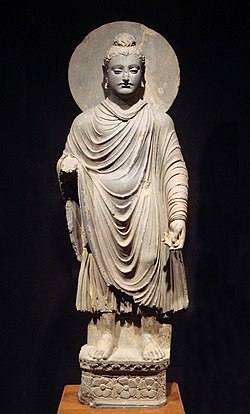
The interaction of Greek and South Asian cultures resulted in Greco-Buddhist art, combining elements of Greek artistic traditions with Buddhist subject matter.
Image source: Greco-Buddhist art
1 AD - 7 AD
The ramifications of the cultural exchange initiated by Alexander’s conquests extended as far as Japan.
400 - 500
Byzantine art emerged as the artistic tradition associated with the Byzantine Empire around the 5th century.
500 - 1453
Byzantine art grew from the art of ancient Greece and, before 1453, retained sight of its classical heritage.
500 - 1453
Although rooted in ancient Greek art, Byzantine art became distinguished from its classical predecessor in a number of ways.
500 - 1453
Byzantine art developed across the Byzantine Empire from approximately the 5th century until the fall of Constantinople.
1453 - 1922
The term Byzantine art can also refer to the art of people from the former Byzantine Empire under Ottoman rule after 1453.
Image source: Byzantine art
1400 - 1669
The Cretan School flourished while Crete was under Venetian rule.
1400 - 1500
The Cretan School describes a school of icon painting, also known as Post-Byzantine art, that flourished in Crete during the late Middle Ages.
1453
The Fall of Constantinople marked a major transition in the history of Byzantine and post-Byzantine Greek painting.
Image source: Fall of Constantinople
1453 - 1669
After the Fall of Constantinople, the Cretan School reached a period of exceptional importance in Greek painting.
1500 - 1600
The school’s icon-painting tradition reached its climax after the Fall of Constantinople.
1500 - 1600
The Cretan School became a central force in Greek painting during the 15th, 16th, and 17th centuries.
1650 - 1850
The Heptanese School succeeded the Cretan School as the leading school of Greek post-Byzantine painting after Crete fell to the Ottomans.
1650 - 1850
Heptanese School means the School of the Seven Islands and is also known as the Ionian Islands’ School.
1650 - 1850
The Heptanese School was based in the Ionian Islands.
1650 - 1850
The Ionian Islands, where the Heptanese School was based, were not part of Ottoman Greece.
1650 - 1850
The school flourished from the middle of the 17th century until the middle of the 19th century.
1669
Crete fell to the Ottomans in 1669, changing the circumstances in which the Cretan School operated.
1453 - 1821
After centuries of Ottoman rule, newly independent Greece inherited few opportunities for education in the arts.
Image source: Greek art
1800 - 1900
Munich was an important international center for the arts and attracted the majority of Greek artists who studied abroad in the 19th century.
1800 - 1900
The majority of Greek artists of the 19th century who pursued artistic education abroad chose Munich.
1800 - 1900
Academic and personal bonds developed between early Greek painters and the artistic world of Munich.
1800 - 1900
Connections between Greek painters and Munich artists gave birth to the Greek Munich School of academic art.
1800 - 1900
The Greek Munich School represented the development of Greek academic art during the 19th century.
1821 - 1900
Because opportunities for artistic education were limited, studying abroad became imperative for artists in newly independent Greece.
1840 - 1878
Theodoros Vryzakis specialized in historical painting within the Greek artistic environment of the 19th century.
1840 - 1878
Vryzakis was especially inspired by the 1821 Greek War of Independence, which became a major subject of his historical painting.
Or browse the full history timeline directory, with more than 2,500 topics.
This History of Greek Art timeline was generated with the help of AI, using information found on the internet.
We work hard to keep these timelines accurate, but mistakes do get through. If you spot one, email us at [email protected] and we'll fix it for future visitors.
Generate yours with AI or build it from scratch, for free.
Export your timeline, add your own events, edit or remove AI-generated events, and much more
No credit card required.
Cancel anytime.
Cancel anytime.
You can create an unlimited number of timelines with up to 10 events on each one, customize how they look, export them to PDF, PNG, PowerPoint, CSV, and Excel, and share them with a link. Paid plans raise the event limit and add features like spreadsheet imports and collaborators.
Yes. You can cancel your subscription from your account page at any time, and you will not be charged again. Your subscription stays active for the rest of the period you already paid for.
Yes. We will email you a reminder before the annual renewal, and we will also email you a receipt.
Yes. You can email us within 15 days of any payment, and we will issue you a full refund.
Check out our pricing docs or send us an email anytime: [email protected].