-
Use Cases
-
Resources
-
Pricing
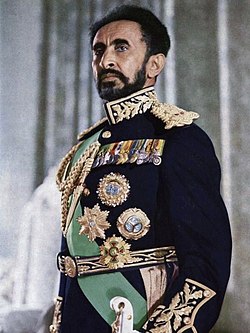
Haile Selassie I (1892–1975) was Emperor of Ethiopia from 1930 to 1974 and a defining figure in African history. Known for modernizing Ethiopia, leading resistance against Italian occupation, and becoming an icon of African independence and the Rastafari movement, his reign ended with a Marxist coup in 1974. More Less
Jul 23, 1892
% completado
Tafari Makonnen, later known as Haile Selassie, was born on July 23, 1892, in the village of Ejersa Goro near Harar, Ethiopia. He was born into the Solomonic dynasty's royal lineage as the son of Ras Makonnen Wolde Mikael, a governor and close ally of Emperor Menelik II.
Image source: Haile Selassie
Apr 11, 1910
% completado
Following the death of his father, Tafari was appointed governor (dejazmach) of Harar in 1910, taking over his father's former province. This position gave him valuable administrative experience and a regional power base that would serve him well in future political struggles.
Aug 3, 1911
% completado
Tafari married Menen Asfaw, the daughter of Jantirar Asfaw of Wollo, in August 1911. Their marriage would last for decades and produced six children, including Crown Prince Asfaw Wossen. Empress Menen became an influential figure known for her charitable work.
Image source: Menen Asfaw
1914
% completado
Empress Zewditu elevated Tafari to the rank of Ras around 1914, recognizing his growing importance within Ethiopian politics. The title placed him among the highest-ranking nobles of the empire and strengthened his position at court.
Image source: Zewditu
Sep 28, 1923
% completado
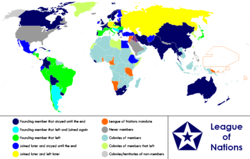
Under Tafari's diplomatic efforts, Ethiopia was admitted to the League of Nations on September 28, 1923. Membership represented a major step in securing international recognition for Ethiopian sovereignty and protecting it against European colonial ambitions, particularly those of Italy.
Image source: League of Nations
1928
% completado
In 1928, Ras Balcha Safo, a conservative general loyal to Empress Zewditu, marched on Addis Ababa with an army to challenge Tafari's authority. Through clever maneuvering rather than direct confrontation, Tafari neutralized the threat without bloodshed, further consolidating his grip on power.
Image source: Balcha Safo
Oct 7, 1928
% completado
On October 7, 1928, Tafari was crowned Negus (King) by Empress Zewditu, becoming heir apparent to the imperial throne. His power had steadily grown while the Empress's conservative supporters had been weakened through earlier political struggles.
Mar 31, 1930
% completado
On March 31, 1930, forces loyal to Ras Tafari decisively defeated the army of Ras Gugsa Welle, husband of Empress Zewditu, at the Battle of Anchem. Gugsa died in battle, and the Empress herself passed away shortly afterward, clearing the path for Tafari's coronation as emperor.
Image source: Battle of Anchem
Nov 2, 1930
% completado
On November 2, 1930, Tafari Makonnen was crowned Emperor of Ethiopia, taking the regnal name Haile Selassie I, meaning 'Power of the Trinity.' The lavish coronation ceremony in Addis Ababa drew dignitaries from around the world and marked the beginning of one of Africa's most consequential reigns.
1930
% completado
Beginning with his 1930 coronation, followers in Jamaica came to view Haile Selassie as the messiah returned, founding the Rastafari religious movement. Although he never claimed divinity, the movement spread globally through reggae music, making the emperor a spiritual icon for millions.
Image source: Rastafari
1931
% completado
As part of his modernization program, Haile Selassie established the Bank of Ethiopia in 1931, the country's first national bank. It introduced a national currency and laid foundations for Ethiopia's financial system.
Image source: National Bank of Ethiopia
Jul 16, 1931
% completado
Haile Selassie introduced Ethiopia's first constitution in July 1931, establishing a two-chambered parliament appointed by the emperor. While it centralized power in the monarchy, the constitution was a landmark step toward modern governance and helped unify the empire's diverse regions under central authority.
Image source: 1931 Constitution of Ethiopia
1932
% completado
Emperor Haile Selassie issued decrees in 1932 working toward the abolition of slavery, a practice long entrenched in Ethiopian society. He continued efforts after restoration in 1941, formally ending the institution and improving Ethiopia's international standing.
Image source: Slavery in Ethiopia
Nov 13, 1945
% completado
Ethiopia became a founding member of the United Nations on November 13, 1945, reaffirming its sovereign status after the Italian occupation. The emperor leveraged the UN to secure international partnerships and development assistance for his rebuilding nation.
Image source: Ethiopia and the United Nations
1959
% completado
In 1959, Haile Selassie secured the autocephaly of the Ethiopian Orthodox Church from the Coptic Patriarchate of Alexandria. An Ethiopian-born patriarch was appointed, fulfilling a centuries-old aspiration for full ecclesiastical independence.
Image source: Ethiopian Orthodox Tewahedo Church
May 25, 1963
% completado
Addis Ababa hosted the founding summit of the Organization of African Unity on May 25, 1963, with Haile Selassie playing a leading role as elder statesman of African independence. The OAU headquarters were established in Addis Ababa, honoring Ethiopia's unique status as an uncolonized African nation.
Image source: Organisation of African Unity
Oct 4, 1963
% completado
On October 4, 1963, Haile Selassie delivered a landmark speech to the United Nations General Assembly condemning racial discrimination, later famously sampled in Bob Marley's song 'War.' The speech championed equality until 'the philosophy which holds one race superior... is finally discredited and abandoned.'
Oct 3, 1935
% completado
On October 3, 1935, Fascist Italy under Benito Mussolini invaded Ethiopia from Eritrea and Somaliland without a formal declaration of war. Despite fierce Ethiopian resistance, Italian forces used overwhelming firepower, including aircraft and poison gas, against poorly armed Ethiopian defenders.
Image source: Second Italo-Ethiopian War
1936
% completado
The League of Nations declared Italy's actions a violation but imposed only weak sanctions that excluded oil and coal, failing to halt the invasion. The crisis exposed the League's impotence and became a symbol of appeasement preceding World War II.
1936
% completado
Time magazine named Haile Selassie its Man of the Year for 1935, published in January 1936, recognizing his defiance of Mussolini's invasion. The designation brought worldwide attention to Ethiopia's plight and cemented his stature on the global stage.
Mar 31, 1936
% completado
The Battle of Maychew on March 31, 1936, was the final major battle of the war, where Haile Selassie personally led his army against Italian forces. Despite initial successes, the Ethiopian army was defeated by superior Italian weaponry, effectively sealing the fate of Ethiopian independence temporarily.
May 2, 1936 - Jan 19, 1941
% completado
Facing inevitable defeat, Haile Selassie went into exile on May 2, 1936, traveling via Djibouti to Europe. He settled primarily in Bath, England, during his five-year exile, continuing to lobby internationally for Ethiopia's liberation.
Image source: Haile Selassie's speech to the League of Nations (1936)
May 5, 1936 - Apr 6, 1941
% completado
Italian troops captured Addis Ababa on May 5, 1936, and Mussolini proclaimed the annexation of Ethiopia into Italian East Africa. Occupation lasted nearly five years, marked by brutal repression and guerrilla resistance by Ethiopian patriots (Arbegnoch).
Image source: Italian East Africa
Jun 30, 1936
% completado
On June 30, 1936, Haile Selassie delivered a powerful speech before the League of Nations in Geneva, warning that 'today it is us; tomorrow it will be you.' His eloquent denunciation of aggression and use of chemical weapons made him an international symbol of resistance against fascism.
Jan 18, 1941 - May 5, 1941
% completado
With British support during the East African campaign of World War II, Haile Selassie returned to Ethiopia in January 1941 to lead the liberation struggle. Allied and Ethiopian patriot forces retook Addis Ababa on May 5, 1941, exactly five years after its fall, restoring the emperor to his throne.
Image source: East African campaign (World War II)
Dec 13, 1960 - Dec 17, 1960
% completado
While the emperor was abroad, the Neway brothers led a coup attempt by the Imperial Bodyguard in December 1960, seeking to install Crown Prince Asfaw Wossen and enact reforms. Loyalist forces, backed by the church and military, crushed the revolt within days, but the plot revealed deep discontent among educated elites.
Image source: 1960 Ethiopian coup attempt
Apr 21, 1966
% completado
On April 21, 1966, Haile Selassie visited Jamaica, where he was greeted at Kingston airport by tens of thousands of Rastafarians in an ecstatic welcome. The visit, now celebrated as Grounation Day, legitimized the Rastafari community in Jamaican society and remains legendary in the movement's history.
Image source: Haile Selassie
1973 - 1974
% completado
A devastating famine in the Wollo province killed tens of thousands between 1973 and 1974. Media reports exposing the government's slow response shattered the image of the imperial regime and galvanized opposition among students, soldiers, and urban workers.
Image source: 1983–1985 famine in Ethiopia
Feb 1974 - Sep 1974
% completado
Throughout 1974, mutinies spread through the army, teachers' strikes paralyzed schools, and mass protests erupted over inflation and inequality. A committee of military officers known as the Derg seized effective control, stripping the emperor of his powers step by step.
Image source: Ethiopian Revolution
Sep 12, 1974
% completado
On September 12, 1974, the Derg formally deposed Haile Selassie, ending more than four decades of his rule and centuries of Solomonic monarchy. The elderly emperor was placed under house arrest at the National Palace as Ethiopia moved toward revolutionary Marxist rule.
Image source: Derg
Aug 27, 1975
% completado
Haile Selassie died on August 27, 1975, while held in detention by the Derg, officially attributed to respiratory complications though many believe he was murdered. His death at age 83 marked the end of an era; his remains were secretly buried and only recovered decades later.
Nov 5, 2000
% completado
On November 5, 2000, Haile Selassie received a state funeral at Holy Trinity Cathedral in Addis Ababa, 25 years after his death. The ceremony honored his legacy as a father of African unity and a symbol of anti-colonial resistance, drawing mourners and Rastafarians from around the world.
Or browse the full history timeline directory, with more than 2,000 topics.
This Haile Selassie timeline was generated with the help of AI, using information found on the internet.
We work hard to keep these timelines accurate, but mistakes do get through. If you spot one, email us at [email protected] and we'll fix it for future visitors.
Generate yours with AI or build it from scratch, for free.
Export your timeline, add your own events, edit or remove AI-generated events, and much more
No credit card required.
Cancel anytime.
Cancel anytime.
You can create an unlimited number of timelines with up to 10 events on each one, customize how they look, export them to PDF, PNG, PowerPoint, CSV, and Excel, and share them with a link. Paid plans raise the event limit and add features like spreadsheet imports and collaborators.
Yes. You can cancel your subscription from your account page at any time, and you will not be charged again. Your subscription stays active for the rest of the period you already paid for.
Yes. We will email you a reminder before the annual renewal, and we will also email you a receipt.
Yes. You can email us within 15 days of any payment, and we will issue you a full refund.
Check out our pricing docs or send us an email anytime: [email protected].