-
Use Cases
-
Resources
-
Pricing
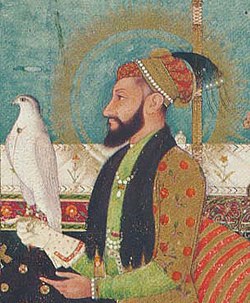
Shah Jahan was the fifth emperor of the Mughal Empire in India, ruling from 1628 to 1658. He is best remembered as a great patron of architecture, commissioning iconic monuments such as the Taj Mahal, built as a tomb for his beloved wife Mumtaz Mahal, as well as the Jama Masjid of Delhi and parts of the Red Fort. His reign is often considered the golden age of Mughal art and architecture. More Less
Jan 5, 1592
% complete
Shahab-ud-Din Muhammad Khurram, the future Emperor Shah Jahan, was born on 5 January 1592 in Lahore, present-day Pakistan. He was the ninth child and third son of Prince Salim (later Jahangir) and his chief consort, Jagat Gosain.
1605
% complete
In 1605, as Akbar lay on his deathbed, young Khurram remained by his bedside and refused to move even after his mother tried to retrieve him, showing his deep attachment to his grandfather.
Image source: Shah Jahan
1605
% complete
After the death of his grandfather Akbar in 1605, Khurram's father succeeded to the throne after crushing a rebellion by Prince Khusrau. Khurram then returned to the care of his mother, Jagat Gosain, whom he loved immensely.
Image source: Jahangir
1608
% complete
Jahangir granted the sarkar of Hissar-e-Feroza, which had traditionally been the fief of the heir-apparent, to Khurram in 1608, giving official sanction to his status as heir-apparent.
1616
% complete
His mansab was increased from 12000/6000 to 15000/7000, equaling that of his brother Parvez, and was further increased to 20000/10000 in 1616. On Khurram's departure to Deccan, Jahangir awarded him the title Shah Sultan Khurram.
1622
% complete
Several years before Jahangir's death in 1627, coins began to be struck containing Nur Jahan's name along with Jahangir's name. Minting coins was one of the two prerogatives of sovereignty for the legitimacy of a Muslim monarchy.
Image source: Nur Jahan
1622
% complete
Sensing the danger posed to his status as heir-apparent from Nur Jahan's growing influence, Khurram raised an army and marched against his father in 1622, but did not succeed and eventually lost the favour of his father.
Mar 1623
% complete
The rebellious Prince Khurram was defeated at Bilochpur in March 1623, forcing him to flee and seek refuge elsewhere in the empire as imperial forces pursued him.
Nov 1623 - Apr 20, 1624
% complete
In November 1623, Khurram found safe asylum in Bengal Subah after he was driven from Agra and the Deccan. At Akbarnagar, he defeated and killed the then Subahdar of Bengal, Ibrahim Khan Fath-i-Jang, on 20 April 1624.
1626
% complete
Although the prince was forgiven for his errors in 1626, tensions between Nur Jahan and her stepson continued to grow beneath the surface, setting the stage for the succession struggle after Jahangir's death.
Oct 1627
% complete
Upon the death of Jahangir in October 1627, a struggle developed between Khurram and his half-brother Shahryar Mirza for the throne. The wazir Asaf Khan, a quiet partisan of Prince Khurram, acted forcefully to forestall his sister Nur Jahan's plans to place Prince Shahryar on the throne.
1628
% complete
After defeating his youngest brother Shahryar Mirza, Shah Jahan crowned himself emperor at the Agra Fort in 1628, becoming the fifth Mughal Emperor and beginning a reign that would last three decades.
Image source: Agra Fort
Jan 23, 1628
% complete
Upon Shah Jahan's orders, several executions took place on 23 January 1628, eliminating potential rivals to the throne as he consolidated his grip on power following the death of his father.
1607
% complete
In 1607, Khurram became engaged to Arjumand Banu Begum (1593–1631), also known as Mumtaz Mahal, meaning 'The Exalted One of the Palace'. The prince would have to wait five years before the marriage took place.
1611
% complete
In 1611, Khurram's father married Nur Jahan, the widowed daughter of a Persian noble. She gradually became an active participant in all decisions made by Jahangir and gained extreme powers in administration.
1612
% complete
In 1612 (1021 AH), aged 20, Khurram married Mumtaz Mahal on a date selected by the court astrologers as most conducive to ensuring a happy marriage. He also married other Persian princesses, Izz un-Nisa Begum and the daughter of Muzaffar Husain Mirza Safawi.
Apr 8, 1619
% complete
On the death of his mother Jagat Gosain in Akbarabad on 8 April 1619, Khurram was recorded to be inconsolable by Jahangir and mourned for 21 days.
Image source: Jagat Gosain
Jun 7, 1631
% complete
Mumtaz Mahal died at the young age of 38 on 7 June 1631 upon giving birth to Princess Gauhar Ara Begum in Burhanpur, Deccan, of a postpartum haemorrhage causing considerable blood-loss after thirty hours of painful labor. Her death later inspired the construction of the Taj Mahal.
Image source: Mumtaz Mahal
1615
% complete
Khurram participated in military campaigns against the Sisodia Rajputs of Mewar. In 1615, he presented Kunwar Karan Singh, Amar Singh's heir, to Jahangir, and exchanged turbans with the Maharana; that turban is still preserved in Pratap Museum, Udaipur.
1617
% complete
In 1617, Khurram was directed to deal with the Lodis in the Deccan to secure the Empire's southern borders and restore imperial control over the region. On his return, after successes in these campaigns, he performed koronush before Jahangir, who rose from his seat to embrace him.
1622
% complete
In 1622, Shah Jahan sent Raja Vikramjit, the Governor of Gujarat, to subdue the Kolis of Ahmedabad. Later, between 1632 and 1635, four viceroys were appointed in an effort to manage the Kolis' activities.
Image source: Indian Rebellion of 1857
1630 - 1632
% complete
A devastating famine broke out in 1630–1632 in Deccan, Gujarat and Khandesh as a result of three main crop failures. Shah Jahan dealt with this humanitarian catastrophe during the early years of his reign.
1631
% complete
Shah Jahan gave orders in 1631 to Qasim Khan, the Mughal viceroy of Bengal, to drive out the Portuguese from their trading post at Port Hooghly, responding to Portuguese activities in the region.
1632
% complete
In 1632, Shah Jahan captured the fortress at Daulatabad, Maharashtra, and imprisoned Husein Shah of the Nizam Shahi Kingdom of Ahmednagar, extending Mughal dominance over the Deccan.
Image source: Daulatabad Fort
Sep 25, 1632
% complete
On 25 September 1632, the Mughal Army raised imperial banners and gained control over the Bandel region, and the garrison was punished, completing the campaign against the Portuguese at Hooghly.
Image source: Siege of Hooghly
1635 - 1636
% complete
Golconda submitted to Mughal authority in 1635 and then Bijapur in 1636, bringing the major Deccan sultanates under nominal Mughal suzerainty during Shah Jahan's reign.
Image source: Golconda
Dec 23, 1635
% complete
On 23 December 1635, Shah Jahan issued a farman ordering the Agra Church to be demolished, reflecting tensions in religious policy during his reign.
1637
% complete
The small Maratha kingdom of Baglana straddled the main route from Surat and the western ports to Burhanpur in the Deccan. In 1637, Shah Jahan decided on its complete annexation, ending centuries of subservience to one Muslim ruler or another.
Image source: Shah Jahan
1637 - Jun 1640
% complete
Shah Jahan sent an embassy to the Ottoman court in 1637, and received the ambassador in June 1640. Murad IV met Mughal ambassadors Mir Zarif and Mir Baraka while encamped in Baghdad, who presented 1000 pieces of finely embroidered cloth and armor.
Image source: Ottoman Empire
1638
% complete
Shah Jahan and his sons obtained the Fall of Kandahar (1638) and succeeded in the Siege of Bost (1638) from the Safavids, prompting retaliation by the Persians led by Abbas II of Persia, who recaptured Kandahar in 1649.
Image source: Fall of Kandahar (1638)
1644
% complete
In 1644, the Mughal prince Aurangzeb was appointed as the viceroy, proceeding to become engaged in religious disputes, such as the destruction of a Jain temple in Ahmedabad. Prince Murad Bakhsh was later appointed viceroy in 1654.
Image source: Aurangzeb
1646 - 1647
% complete
Shah Jahan launched an invasion of Central Asia from 1646 to 1647 against the Khanate of Bukhara. Mughal forces occupied Badakhshān and Balkh in 1646, but Balkh was relinquished in 1647, ending the costly campaign.
Image source: Khanate of Bukhara
1647
% complete
The Shah Jahan Mosque in Thatta, Sindh province of Pakistan (100 km / 60 miles from Karachi), was built during the reign of Shah Jahan in 1647. It has been on the tentative UNESCO World Heritage List since 1993.
Image source: Shah Jahan Mosque, Thatta
1651
% complete
An inscription from Makrana, Nagaur District, dating back to 1651 AD, mentions Mirza Ali Baig, who was likely a local governor under Shah Jahan's rule, attesting to the administration of the empire.
Image source: Makrana
1656 - 1657
% complete
Aurangzeb defeated Golconda in 1656 and then Bijapur in 1657, further consolidating Mughal control over the Deccan late in Shah Jahan's reign.
Sep 1657
% complete
In September 1657, the ailing Shah Jahan appointed his eldest son Dara Shikoh as his successor, triggering rivalry among his sons that would plunge the empire into civil war.
Image source: Dara Shikoh
1658 - 1659
% complete
The appointment of Dara Shikoh led to the Mughal war of succession (1658–1659) between Shah Jahan's three sons. Aurangzeb emerged victorious, becoming the sixth emperor and executing all of his surviving brothers, including Crown Prince Dara Shikoh.
Image source: Mughal war of succession (1658–1659)
1658
% complete
After Shah Jahan fell ill in 1658, his daughter Jahanara Begum had a significant influence in the Mughal administration. Dara Shikoh also assumed the role of regent in his father's stead, incurring the animosity of his brothers.
Image source: Jahanara Begum
Jul 1658 - Jan 1666
% complete
After Shah Jahan recovered from his illness in July 1658, Aurangzeb had him imprisoned inside the Agra Fort, where he remained until his death in January 1666, spending his final years gazing upon the Taj Mahal built for Mumtaz Mahal.
Jan 1666 - Jan 22, 1666
% complete
In January 1666, Shah Jahan fell ill and died on 22 January 1666, ending the life of the fifth Mughal Emperor, remembered as 'Shah Jahan the Magnificent' and the builder of the Taj Mahal.
Or browse the full history timeline directory, with more than 2,000 topics.
This Shah Jahan timeline was generated with the help of AI, using information found on the internet.
We work hard to keep these timelines accurate, but mistakes do get through. If you spot one, email us at [email protected] and we'll fix it for future visitors.
Generate yours with AI or build it from scratch, for free.
Export your timeline, add your own events, edit or remove AI-generated events, and much more
No credit card required.
Cancel anytime.
Cancel anytime.
You can create an unlimited number of timelines with up to 10 events on each one, customize how they look, export them to PDF, PNG, PowerPoint, CSV, and Excel, and share them with a link. Paid plans raise the event limit and add features like spreadsheet imports and collaborators.
Yes. You can cancel your subscription from your account page at any time, and you will not be charged again. Your subscription stays active for the rest of the period you already paid for.
Yes. We will email you a reminder before the annual renewal, and we will also email you a receipt.
Yes. You can email us within 15 days of any payment, and we will issue you a full refund.
Check out our pricing docs or send us an email anytime: [email protected].