-
Use Cases
-
Resources
-
Pricing
Hannah Arendt (1906–1975) was a German-born Jewish political philosopher who fled Nazi Germany and became one of the most influential thinkers of the 20th century. Her major works include 'The Origins of Totalitarianism' (1951), 'The Human Condition' (1958), and 'Eichmann in Jerusalem' (1963), in which she coined the phrase 'the banality of evil.' She taught at several American universities and shaped modern debates on power, authority, revolution, and political action. More Less
Oct 14, 1906
% complete
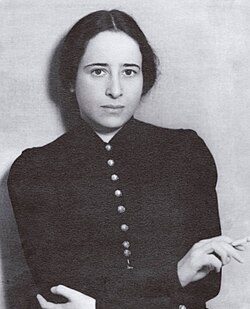
Hannah Arendt was born into a secular Jewish family in Linden, a district of Hanover, Germany. Her parents were Paul Arendt, an engineer, and Martha Cohn. The family soon moved to Königsberg, East Prussia (now Kaliningrad), where she spent her childhood.
Image source: Hannah Arendt
1913
% complete
Paul Arendt died when Hannah was only seven years old, after suffering from progressive paralysis caused by syphilis contracted years earlier. This loss deeply affected her childhood and left her mother as her sole parent during the turbulent years of World War I.
1924 - 1926
% complete
Arendt began her university studies in theology and philosophy at Marburg, where she became the student and lover of philosopher Martin Heidegger, who was married. Their intense relationship profoundly influenced her intellectual development and continued intermittently for years.
Image source: Martin Heidegger
1929
% complete
Under Karl Jaspers at the University of Heidelberg, Arendt completed her doctoral dissertation on the concept of love in the thought of Saint Augustine, later published as 'Love and Saint Augustine.' The work explored themes of natality, worldliness, and sociality that would recur throughout her career.
Image source: Love and Saint Augustine
Sep 16, 1929
% complete
Arendt married her fellow philosophy student and writer Günther Stern, who later took the pen name Günther Anders. The marriage ended in divorce in 1937 as both their lives were upended by the rise of Nazism.
Image source: Günther Anders
1933
% complete
Arendt fled Nazi Germany without papers, traveling via Czechoslovakia and Switzerland to France, where she lived in exile for eight years. In Paris she worked for Jewish refugee organizations, including Youth Aliyah, helping young Jews emigrate to Palestine.
Jan 30, 1933
% complete
After Hitler came to power, Arendt, working with the German Zionist movement, gathered evidence of antisemitic propaganda for underground networks. She was briefly arrested by the Gestapo but released, after which she decided she could no longer remain in Germany.
Image source: Adolf Hitler's rise to power
Jan 16, 1940
% complete
Arendt married Heinrich Blücher, a former Spartacist and self-educated German philosopher and poet. Blücher became her lifelong intellectual companion, and their marriage lasted until his death in 1970.
Image source: Heinrich Blücher
May 1940 - May 22, 1941
% complete
After France fell, Arendt was interned as an enemy alien at the Gurs camp in Vichy France. She escaped amid the chaos following the armistice, obtained emergency visas, and fled via Portugal to the United States, arriving in New York with her husband and mother.
Image source: Gurs internment camp
Oct 31, 1970
% complete
Heinrich Blücher died of a heart attack after decades of marriage. Arendt was devastated by the loss of her closest intellectual partner and confidant, and friends noted she never fully recovered from his death.
1951
% complete
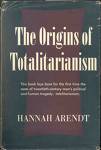
Her first major book traced antisemitism, imperialism, and totalitarianism, arguing that Stalinism and Nazism were novel forms of government rooted in terror and ideology. The work established her international reputation as one of the foremost political thinkers of her era.
Image source: The Origins of Totalitarianism
1958
% complete
In this landmark work, Arendt analyzed labor, work, and action within the vita activa, arguing for the recovery of public political action against modern society's absorption in labor and consumption. She introduced influential concepts such as natality and the public realm.
Image source: Human condition
1961
% complete
This collection of essays, subtitled 'Six Exercises in Political Thought,' examined topics including tradition, authority, freedom, education, and culture, exploring how modernity broke with the Western tradition of political thought.
1963
% complete
Arendt compared the American and French Revolutions, arguing that the American Revolution succeeded because it focused on founding freedom and constitutional government, while the French Revolution collapsed into violence driven by social questions and compassion turned to rage.
Image source: On Revolution
Feb 1963
% complete
Reporting on Adolf Eichmann's trial in Jerusalem for The New Yorker, Arendt introduced her controversial concept of 'the banality of evil,' portraying Eichmann as a thoughtless bureaucrat rather than a demonic monster. The reports provoked fierce debate in Jewish and intellectual circles.
Image source: Eichmann in Jerusalem
1968
% complete
A collection of portraits of intellectuals including Walter Benjamin, Bertolt Brecht, Rosa Luxemburg, and Karl Jaspers, reflecting Arendt's conviction that even in dark times, individuals can illuminate the world through thought and speech.
Image source: Dark Phoenix (film)
1972
% complete
This collection brought together Arendt's essays on civil disobedience, violence, lying in politics, and the Pentagon Papers, offering penetrating analyses of American political crises in the late 1960s and early 1970s, including the Vietnam War era.
Image source: Crises of the Republic
Dec 10, 1951
% complete
Arendt naturalized as a United States citizen and served as executive director of Jewish Cultural Reconstruction, an organization that salvaged and redistributed heirless Jewish cultural property in Europe after the Holocaust.
1952
% complete
The Guggenheim Fellowship enabled Arendt to pursue research on Marxist thought and totalitarianism, supporting the studies that would eventually produce 'The Human Condition' and other major writings.
1959 - 1967
% complete
Arendt taught as a visiting professor at several leading American universities, becoming the first woman appointed full professor at Princeton in 1959, and holding positions at Berkeley and the University of Chicago's Committee on Social Thought.
Image source: University of Chicago
1967 - 1975
% complete
Arendt held a distinguished professorship at the Graduate Faculty of Political and Social Science of the New School for Social Research in New York until her death, teaching generations of students in the institution founded by exiled scholars.
Image source: The New School
1971 - 1972
% complete
Amid the Pentagon Papers controversy, Arendt published influential essays on lying in politics and wrote widely cited reflections on civil disobedience, contributing a distinct theoretical voice to debates about dissent in American democracy.
Image source: Pentagon Papers
1973 - 1974
% complete
At the University of Aberdeen, Arendt delivered two series of Gifford Lectures titled 'Thinking and Moral Considerations' material that formed the basis of her unfinished final work, 'The Life of the Mind,' examining thinking, willing, and judging.
Image source: Gifford Lectures
1968
% complete
Arendt accepted this major German award in Frankfurt, delivering an address on Lessing and friendship, marking her complicated reconciliation with postwar Germany and its cultural establishment.
Image source: Friedenspreis des Deutschen Buchhandels
1975
% complete
Arendt received Denmark's prestigious Sonning Prize for contributions to European civilization, recognizing her stature as one of the twentieth century's most important political thinkers shortly before her death.
Dec 4, 1975
% complete
Arendt died of a heart attack at age 69 in her New York apartment while finishing 'The Life of the Mind.' She was buried alongside Heinrich Blücher at Bard College Cemetery, near Annandale-on-Hudson, New York.
1976
% complete
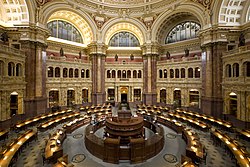
Arendt's personal papers, manuscripts, and correspondence were deposited at the Library of Congress, establishing a permanent scholarly archive that has supported decades of research on her life and work.
Image source: Library of Congress
1978
% complete
Her friend Mary McCarthy edited and published the unfinished two volumes on Thinking and Willing; the planned third volume on Judging remained unwritten. The work cemented Arendt's late-career turn toward the life of the mind and its moral implications.
Image source: The Life of the Mind
1982
% complete
Young-Bruehl's 'Hannah Arendt: For Love of the World' became the standard biography, drawing on extensive archival sources and interviews to chronicle Arendt's life from Königsberg through her exile to her American career.
Image source: Hannah Arendt
1995
% complete
Ongoing publications of Arendt's letters and papers, including correspondence with figures like Mary McCarthy and Karl Jaspers, fueled renewed scholarly interest and reassessment of her life and ideas in the 1990s.
2012
% complete
Von Trotta's biographical film starring Barbara Sukowa dramatized the Eichmann trial period of Arendt's life and the controversies surrounding 'Eichmann in Jerusalem,' introducing her story to new international audiences.
Image source: Hannah Arendt (film)
Or browse the full history timeline directory, with more than 2,000 topics.
This Hannah Arendt timeline was generated with the help of AI, using information found on the internet.
We work hard to keep these timelines accurate, but mistakes do get through. If you spot one, email us at [email protected] and we'll fix it for future visitors.
Generate yours with AI or build it from scratch, for free.
Export your timeline, add your own events, edit or remove AI-generated events, and much more
No credit card required.
Cancel anytime.
Cancel anytime.
You can create an unlimited number of timelines with up to 10 events on each one, customize how they look, export them to PDF, PNG, PowerPoint, CSV, and Excel, and share them with a link. Paid plans raise the event limit and add features like spreadsheet imports and collaborators.
Yes. You can cancel your subscription from your account page at any time, and you will not be charged again. Your subscription stays active for the rest of the period you already paid for.
Yes. We will email you a reminder before the annual renewal, and we will also email you a receipt.
Yes. You can email us within 15 days of any payment, and we will issue you a full refund.
Check out our pricing docs or send us an email anytime: [email protected].