-
Use Cases
-
Resources
-
Pricing
1800 - 1899
During the 19th century, church patronage diminished in Europe while private patronage from the public became increasingly capable of providing artists with a livelihood. This shift helped create conditions for experimentation beyond established religious and academic subjects.
Image source: Patronage

1800 - 1899
Artistic independence advanced during the 19th century. Greater autonomy from traditional institutions and patrons allowed artists to pursue personal visual languages, contributing to the conditions from which abstraction emerged.
Image source: Modern art
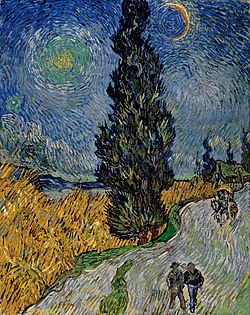
1871
Georgiana Houghton organized an exhibition of her spirit drawings in 1871. Her use of abstract shapes corresponded to the unnatural nature of her subject, anticipating abstraction at a time when the concept had not yet been established.
Image source: Georgiana Houghton

1872
In Nocturne in Black and Gold: The Falling Rocket, James McNeill Whistler placed greater emphasis on visual sensation than on the precise depiction of objects. The 1872 painting was an early intimation of a new approach to art.
Image source: Nocturne in Black and Gold – The Falling Rocket

1880 - 1910
Expressionist artists produced emotionally charged paintings as reactions to contemporary experience and to Impressionism and other conservative directions in late-19th-century painting. Their emphasis on subjective perception helped prepare the way for abstraction.
1880 - 1910
Edvard Munch and James Ensor drew principally on Post-Impressionist influences, yet their emotionally intensified and non-naturalistic approaches were instrumental to the advent of abstraction in the 20th century.
Image source: Expressionism

1890 - 1910
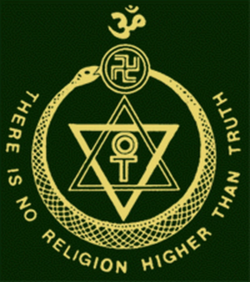
In late-19th-century Eastern Europe, mysticism and early modernist religious philosophy, including ideas associated with the theosophist Mme. Blavatsky, contributed to the intellectual climate surrounding early abstraction.
Image source: Theosophy
1900 - 1920
The mystical teachings of Georges Gurdjieff and P. D. Ouspensky influenced the early formation of geometric abstract styles, including the developing work of Piet Mondrian and his colleagues in the early 20th century.
1900 - 1910
In the early years of the 20th century, the Theosophical Society popularized ancient wisdom associated with the sacred books of India and China. This circulation of spiritual ideas contributed to the symbolic and mystical dimensions of modernist abstraction.
Image source: Theosophical Society

1900 - 1914
Around the turn of the century, cultural connections among artists in major European cities became highly active. Artists exchanged ideas and work while striving to create an art form equal to the high aspirations of modernism.
This History of Abstract Art timeline was generated with the help of AI, using information found on the internet.
We work hard to keep these timelines accurate, but mistakes do get through. If you spot one, email us at [email protected] and we'll fix it for future visitors.
Generate yours with AI or build it from scratch, for free.