-
Use Cases
-
Resources
-
Pricing
4000 BC
Rock art in the Sahara of Niger preserves carvings dating back approximately 6,000 years, providing early evidence of artistic activity in sub-Saharan Africa.
Image source: Rock art
2600 BC
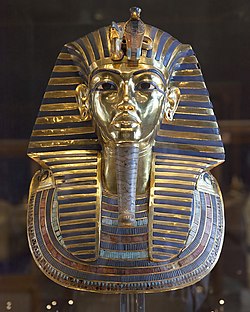
Around 2600 BC, Egyptian carving reached a maturity and technical peak that was not surpassed for roughly another 1,500 years, until the reign of Ramesses II.
Image source: Art of ancient Egypt
1500 BC - 500 AD
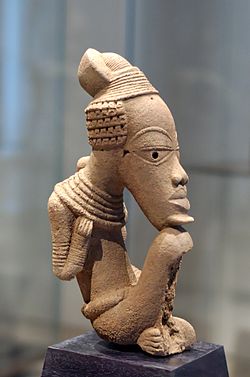
The Nok culture appeared in northern Nigeria around 1500 BC and vanished under unknown circumstances around 500 AD. Its material remains are especially known for terracotta sculptures discovered near Nok in Kaduna State.
Image source: Nok culture
600 BC - 1600 AD
The Sao civilization existed in Middle Africa from approximately the 6th century BC until as late as the 16th century AD. Its communities lived around the Chari River and Lake Chad in territories later associated with Cameroon and Chad.
Image source: Sao civilisation
9 AD
Bronze artifacts found at Igbo Ukwu and dated to the 9th century are among the earliest known Igbo artworks, demonstrating sophisticated metalworking in West Africa.
Image source: Igbo-Ukwu
10 AD
Around the 10th century, more complex methods of producing art developed in sub-Saharan Africa. Notable advances included the bronze work of Igbo Ukwu and the terracotta and metalwork associated with Ile Ife.
Image source: African art
500 BC - 1 AD
The pre-Axumite Iron Age culture of Ethiopia, dating from about the 5th century BCE to the 1st century CE, was influenced by the Kingdom of Kush and settlers from Arabia. It produced stone architecture including the temple ruins at Yeha.
1 BC - 10 AD
The powerful Kingdom of Aksum emerged in the 1st century BCE and dominated Ethiopia until the 10th century. It became largely Christian from the 4th century, shaping the region’s artistic traditions.
Image source: Kingdom of Aksum
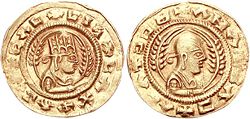
4 AD
From the 4th century AD, Aksum became very largely Christian. This religious transformation established a major foundation for Ethiopian church art and illuminated manuscripts.
4 AD - 20 AD
Ethiopian art from the 4th to the 20th century developed in two broad groupings. The Ethiopian Orthodox Tewahedo Church, predominant for more than 1,500 years, maintained a close relationship with Coptic Christianity, making Coptic art a formative influence.
Image source: Ethiopian art
4 AD - 6 AD
The Ethiopian Garima Gospels, dated to the 4th–6th centuries AD, contain illuminated scenes that imitate contemporary Byzantine style. These manuscript paintings predate the earliest surviving Ethiopian church paintings.
Image source: Garima Gospels
11 AD
Although Ethiopian church paintings may date to the introduction of Christianity in the 4th century, the earliest surviving examples come from Debre Selam Mikael in the Tigray Region and date to the 11th century AD.
12 AD
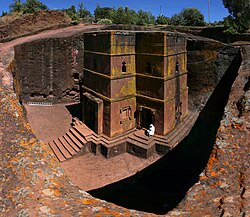
Paintings in the rock-hewn churches of Lalibela date to the 12th century AD and represent important surviving examples of Ethiopia’s Christian visual tradition.
Image source: Lalibela
13 AD
Nearby Genete Maryam preserves church paintings dated to the 13th century AD, extending the documented history of Ethiopian religious painting.
16 AD
In the 16th century, Muslim invasions caused considerable destruction of Ethiopian churches and their contents, affecting the survival of religious artworks.
16 AD
From the 16th century, Roman Catholic church art and European art more generally began to exert influence on Ethiopian artistic production.
20 AD
In the 20th century, Western artists and architects were commissioned by the Ethiopian government and trained local students. More fully Westernized art developed alongside continuing traditional church art.
12 AD - 14 AD
West African bronze and brass casting developed highly naturalistic royal heads and other figures, especially around the Bini town of Benin City and in the artistic tradition associated with Ile Ife, from the 12th to the 14th centuries.
13 AD
Collectively, surviving Benin plaques and related objects form some of the best-known examples of Benin art. Edo artists created these works from the 13th century onward.
Image source: Art of the Kingdom of Benin
17 AD - 19 AD
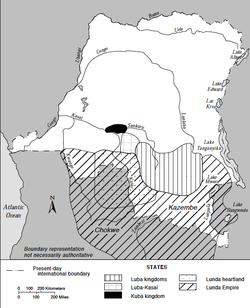
The Kuba Kingdom flourished between the 17th and 19th centuries in the region bordered by the Sankuru, Lulua, and Kasai rivers in the southeast of the modern Democratic Republic of the Congo.
Image source: Kuba Kingdom
17 AD
In the 17th century, the area of present-day Ghana was a center for trade and cultural exchange, creating conditions for artistic and cultural interaction.
Image source: History of Ghana
18 AD
The political arrangement in the Ghanaian region lasted until the early 18th century, when the leader Osei Tutu initiated extensive expansion that unified smaller states.
1075 AD - 1220 AD
The Kingdom of Mapungubwe was a pre-colonial state in Southern Africa from 1075 to 1220. It lay at the confluence of the Shashe and Limpopo rivers, south of Great Zimbabwe.
Image source: Kingdom of Mapungubwe
1400 AD - 1900 AD
Akan gold weights were small metal sculptures produced from 1400 to 1900. Some represented proverbs, adding a narrative dimension uncommon in African sculpture, while royal regalia included sculpted gold elements.
Image source: Akan goldweights
1585 AD - 1889 AD
The Kingdom of Luba, or Luba Empire, was a pre-colonial Central African state from 1585 to 1889. It arose in the marshy grasslands of the Upemba Depression in what is now southern Democratic Republic of the Congo.
Image source: Luba Empire
15 AD
During the 15th century, Portugal engaged in trade with the Sapi culture near the Ivory Coast in West Africa, bringing the culture into documented contact with European commerce.
19 AD
Since the late 19th century, increasing amounts of African art entered Western collections. The finest pieces were often displayed within narratives of European colonial history.
19 AD - 20 AD
During and after the 19th- and 20th-century colonial period, Western observers frequently characterized African art as primitive, a term carrying negative assumptions about development and poverty.
20 AD
Since the late 20th century, artists such as Ibrahim El-Salahi and Fathi Hassan have emerged as significant early figures in the development of contemporary Black African art.
1897 AD
In 1897, most Benin plaques and other objects in the collection were taken by a British force during the Benin Expedition, as British control in southern Nigeria was being consolidated.
1900 AD - 1930 AD
At the beginning of the 20th century, art historians including Carl Einstein, Michał Sobeski, and Leo Frobenius published influential works that treated African art as an aesthetic object rather than only an ethnographic one.
1900 AD - 1930 AD
Artists’ study of and response to African art at the beginning of the 20th century helped stimulate Western interest in abstraction, formal organization, and psychological expression. African forms influenced artists such as Pablo Picasso, Amedeo Modigliani, and Henri Matisse.
1968 AD
In 1968, Edward Said Tingatinga began painting on wooden sheets with enamel colors. This marked the recognized beginning of Tinga Tinga art.
1969 AD
In 1969, Ibrahim El-Salahi created the metal sculpture Grazing at Shendi. Composed of geometric shapes, the work connects to his memory of his homeland.
1977 AD
The Museum of African Art in Belgrade opened in 1977 because of Yugoslavia’s relations with many African countries, strengthened through the Non-Aligned Movement.
2018 AD
The display of African art and artifacts in European museums has long been controversial. France’s 2018 Report on the restitution of African cultural heritage became a key moment and contributed to increased returns of artifacts.
Image source: Report on the restitution of African cultural heritage
Or browse the full history timeline directory, with more than 2,500 topics.
This History of African Art timeline was generated with the help of AI, using information found on the internet.
We work hard to keep these timelines accurate, but mistakes do get through. If you spot one, email us at [email protected] and we'll fix it for future visitors.
Generate yours with AI or build it from scratch, for free.
Export your timeline, add your own events, edit or remove AI-generated events, and much more
No credit card required.
Cancel anytime.
Cancel anytime.
You can create an unlimited number of timelines with up to 10 events on each one, customize how they look, export them to PDF, PNG, PowerPoint, CSV, and Excel, and share them with a link. Paid plans raise the event limit and add features like spreadsheet imports and collaborators.
Yes. You can cancel your subscription from your account page at any time, and you will not be charged again. Your subscription stays active for the rest of the period you already paid for.
Yes. We will email you a reminder before the annual renewal, and we will also email you a receipt.
Yes. You can email us within 15 days of any payment, and we will issue you a full refund.
Check out our pricing docs or send us an email anytime: [email protected].