-
Use Cases
-
Resources
-
Pricing
700 - 799
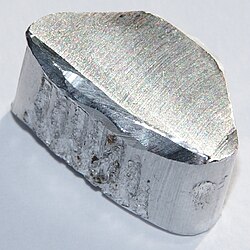
Alum mining and trade expanded across the Islamic world and the Mediterranean. Artisans used it as a mordant in textiles, an ingredient in leather processing, and a practical chemical material centuries before aluminum metal could be isolated.
Image source: Alum

1556
In De re metallica, Georgius Agricola documented mining and metallurgical practices, including the production and uses of alum. His work helped preserve and systematize European knowledge of aluminum-bearing minerals.
Image source: Georgius Agricola

1754
German chemist Andreas Sigismund Marggraf obtained a distinct earth from alum and recognized it as chemically different from lime. This alumina-related work helped establish the material later understood as aluminum oxide.
Image source: Andreas Sigismund Marggraf

1787
Antoine Lavoisier listed alumina among substances that might be oxides of undiscovered metals. His new chemical framework made the search for metallic aluminum a defined scientific problem.
Image source: Aluminium
1808
Humphry Davy attempted to decompose alumina electrochemically and proposed names including alumium and aluminum for the unknown metal. He did not isolate a usable sample, but his experiments popularized the metal’s scientific identity.
Image source: Humphry Davy

1825
Danish physicist Hans Christian Ørsted treated anhydrous aluminum chloride with potassium amalgam and reported a metallic residue. The material was impure, but the experiment is widely credited as the first preparation of aluminum metal.
Image source: Hans Christian Ørsted

1827
Friedrich Wöhler improved the reduction of aluminum chloride with potassium and obtained aluminum as a gray powder. His work clarified the metal’s properties and supplied material for early scientific study.
Image source: Friedrich Wöhler

This History of Aluminum timeline was generated with the help of AI, using information found on the internet.
We work hard to keep these timelines accurate, but mistakes do get through. If you spot one, email us at [email protected] and we'll fix it for future visitors.
Generate yours with AI or build it from scratch, for free.