-
Use Cases
-
Resources
-
Pricing
1869
Francis Galton proposed behavioral genetics in 1869. The proposal, associated with Galton's broader interest in heredity and individual differences, helped establish an intellectual background for later attempts to explain behavior scientifically.
Image source: Behavioural genetics
1898
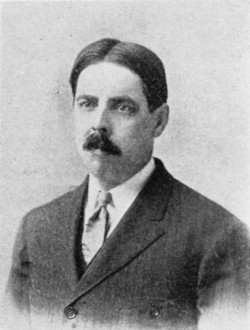
In the late nineteenth century, Edward Thorndike pioneered the law of effect. His procedure used consequences to strengthen or weaken behavior and became an important precursor to later behaviorist accounts of learning.
Image source: Edward Thorndike
1924
In a 1924 publication, John B. Watson devised methodological behaviorism. It rejected introspective methods and sought to understand behavior by measuring observable behaviors and events.
1945
In 1945, B. F. Skinner proposed that covert behavior, including cognition and emotions, is subject to the same controlling variables as observable behavior. This became the basis of his philosophy of radical behaviorism.
1953
Skinner's 1953 work is among the publications identified as treating cultural occurrences as a central subject of behavior analysis. It contributed to the broader attempt to apply a science of behavior to human affairs.
Image source: Human behavior
1969
In an essay republished in his 1969 book Contingencies of Reinforcement, Skinner argued that humans could construct linguistic stimuli that would acquire control over behavior in the same way as external stimuli.
Image source: Reinforcement
1972
Rescorla and Wagner demonstrated in 1972, particularly in classical conditioning, that competition is an essential complement to contiguity. Their work challenged accounts that treated simple temporal pairing as sufficient to explain conditioning.
1974
Skinner's 1974 work is among the publications associated with behavior analysis's examination of cultural occurrences. It also formed part of his broader effort to explain behavior through behavioral principles rather than introspective mental causes.
1975
In 1975, Lewis White Beck criticized Skinnerian behaviorism's reliance on a “machine theory” of human beings. He argued that the theory was self-stultifying and pointed to creative thought, free will, and reasoning as challenges to treating people as machines.
Image source: Lewis White Beck
1991
Ying Zhang and John Staddon presented a formal argument in 1991 concerning operant conditioning. They proposed that contiguity combined with competition among action tendencies could serve as an assignment-of-credit mechanism for detecting genuine instrumental contingency between a response and its reinforcer.
1993
Staddon found in 1993 that Skinner's theory had two significant deficiencies, including downplaying the processes that generate novel behaviors. He argued that Skinner emphasized reinforcement as the determinant of response selection while overlooking behavioral variation.
2003
Burgos highlighted in 2003 the potential peril of pragmatism as discussed in philosophy, science, behaviorism, and behavior analysis. He argued that tolerance for anything deemed useful could permit nonsensical claims.
Image source: Pragmatism
2007
Burgos contended in 2007 that pragmatism engenders a relativism contradicting the emphasis on science as the paramount path to knowledge.
1920
John B. Watson and Rosalie Rayner conducted the Little Albert experiment in 1920. Drawing on Ivan Pavlov's theory of respondent conditioning, they applied conditioning to elicit a fearful crying reflex in a human infant. The study later became associated with the analysis of covert behavior and was criticized by B. F. Skinner because he believed aversive stimuli should be tested only with animals.
Image source: Little Albert experiment
1938
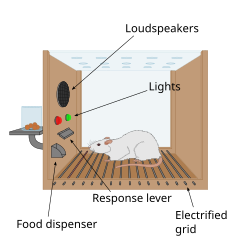
B. F. Skinner developed operant conditioning in 1938. It describes learning in which the frequency of a behavior is controlled by consequences that alter future behavior.
1959
In 1959, Skinner observed the emotions of two pigeons, noting that they appeared angry because their feathers ruffled. The observation illustrates his willingness to analyze apparent emotional behavior through observable behavior.
Image source: B. F. Skinner
1953
From its inception, behavior analysis centered examination on cultural occurrences. Skinner's 1953 work is identified as part of this continuing emphasis on understanding cultural phenomena through behavioral principles.
1959
The study “The psychiatric nurse as a behavioral engineer,” published in 1959, demonstrated the effectiveness of a token economy in reinforcing more adaptive behavior among hospitalized patients with schizophrenia and intellectual disability.
1961
Behavior analysis continued its examination of cultural occurrences in work identified with 1961. This sustained the field's effort to extend behavioral analysis beyond individual learning to cultural phenomena.
1964
The American Psychological Association's subdivision for Behavior Analysis, APA Division 25, has existed since 1964. Its creation provided formal organizational recognition for behavior analysis within American psychology.
Image source: American Psychological Association
1971
Skinner's 1971 work is included among the publications through which behavior analysis continued examining cultural occurrences. It reflects the application of behavioral principles to cultural practices and social life.
1974
Research on applied animal behavior has frequently appeared in Applied Animal Behaviour Science since the journal's founding in 1974. The journal represents an established venue for applying behavioral research to animals.
1986
Following Glenn's influential 1986 work, “Metacontingencies in Walden Two,” numerous research efforts explored behavior analysis in cultural contexts through the concept of the metacontingency.
Image source: Behaviorism
1990
Since the late 1990s and throughout the twenty-first century, early applied behavior analysis interventions have been identified as the treatment of choice by the US Surgeon General, the American Academy of Pediatrics, and the US National Research Council.
1991
Rider expressed concern in 1991 about reduced communication between the experimental analysis of behavior and applied behavior analysis, identifying an internal division within the broader field.
Image source: Applied behavior analysis
2003
Glenn argued in 2003 that understanding the origins and development of cultures requires going beyond evolutionary principles governing species characteristics and behavioral principles governing individual learned behavior. She called for analysis at a major cultural level.
2015
A 2015 finding reported substantial evidence in healthcare and health psychology that personalized health interventions yield greater effectiveness than standardized approaches.
2018
Staddon argued in 2018, as cited by Araiba in 2019, that diversification in social science can hinder healthy and open scientific communication and critique among specialized areas.
1957
Skinner's 1957 book Verbal Behavior laid out a vocabulary and theory for the functional analysis of verbal behavior. The book was intended to understand human behavior rather than simply emphasize language development, and it was strongly criticized in a review by Noam Chomsky.
Image source: Verbal Behavior
1959
Noam Chomsky's 1959 critique of behaviorism and empiricism more generally initiated what would become known as the cognitive revolution. The criticism challenged behaviorist explanations of language and human thought.
Image source: Noam Chomsky
1964
Formal recognition of the emerging cognitive field included the establishment of George Mandler's Center for Human Information Processing in 1964. The institution represented the growing importance of information-processing approaches that contrasted with behaviorism.
1970
In the second half of the twentieth century, behaviorism was largely eclipsed as a result of the cognitive revolution. Cognitive psychology increasingly replaced behaviorism as an explanatory theory by treating internal mental states as explanations for observable behavior.
Or browse the full history timeline directory, with more than 2,500 topics.
This History of Behaviorism timeline was generated with the help of AI, using information found on the internet.
We work hard to keep these timelines accurate, but mistakes do get through. If you spot one, email us at [email protected] and we'll fix it for future visitors.
Generate yours with AI or build it from scratch, for free.
Export your timeline, add your own events, edit or remove AI-generated events, and much more
No credit card required.
Cancel anytime.
Cancel anytime.
You can create an unlimited number of timelines with up to 10 events on each one, customize how they look, export them to PDF, PNG, PowerPoint, CSV, and Excel, and share them with a link. Paid plans raise the event limit and add features like spreadsheet imports and collaborators.
Yes. You can cancel your subscription from your account page at any time, and you will not be charged again. Your subscription stays active for the rest of the period you already paid for.
Yes. We will email you a reminder before the annual renewal, and we will also email you a receipt.
Yes. You can email us within 15 days of any payment, and we will issue you a full refund.
Check out our pricing docs or send us an email anytime: [email protected].