-
Use Cases
-
Resources
-
Pricing
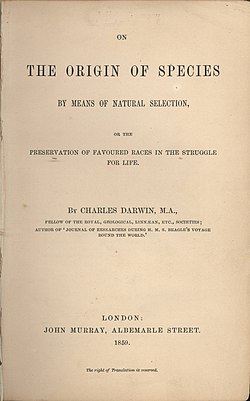
The history of botany traces humanity's study of plants from ancient Greek and Roman scholars such as Theophrastus, through the medieval herbal tradition, to the scientific revolution of classification with Carl Linnaeus, the evolutionary insights of Charles Darwin, and modern breakthroughs in plant genetics, molecular biology, and ecology. More Less
300 BC
Theophrastus, a student of Aristotle, wrote Enquiry into Plants (Historia Plantarum), classifying around 500 plant species by their forms and uses. Often called the father of botany, he established the first systematic approach to studying plants.
Image source: Historia Plantarum (Theophrastus)

70 AD
Pedanius Dioscorides compiled De Materia Medica, a five-volume encyclopedia of herbal medicine describing roughly 600 plants and their medicinal properties. It remained the authoritative reference on pharmacology for over 1,500 years.
Image source: De materia medica

77 AD
Roman author Pliny the Elder completed his encyclopedic Naturalis Historia, which included extensive material on plants, their uses, and agricultural practices. It became one of the most influential scientific works in medieval Europe.
Image source: Natural History (Pliny)

1240
Arab botanist Ibn al-Baitar authored Al-Jami fi al-Adwiya al-Mufrada, cataloguing more than 1,400 medicinal plants and remedies. His work synthesized Greek, Persian, and Arabic botanical knowledge and influenced later European herbals.
Image source: Ibn al-Baytar

1530 - 1536
Otto Brunfels published Herbarum vivae eicones, featuring accurate, life-like woodcut illustrations of plants. Considered one of the fathers of modern botany, his work marked a departure from uncritical reliance on ancient texts.
Image source: Otto Brunfels

1542
Leonhart Fuchs published De historia stirpium, an illustrated catalogue of about 500 plants with precise descriptions. Its detailed woodcuts set a new standard for botanical accuracy in identification.
Image source: De historia stirpium commentarii insignes

1544
Luca Ghini established the world's first university botanical garden in Pisa under Cosimo I de' Medici. These living collections allowed systematic cultivation and study of plants, including newly discovered species from the Americas.
Image source: Orto botanico di Pisa

1593
Botanist Carolus Clusius was appointed director of the Hortus Botanicus at Leiden University, where he cultivated tulips and other exotic species. His work helped spark the famous Dutch tulip mania and advanced European horticulture.
Image source: Hortus Botanicus Leiden

1623
Gaspard Bauhin's Pinax theatri botanici classified thousands of plants using a two-word naming convention that anticipated binomial nomenclature. It served as a key reference for Linnaeus a century later.
Image source: Gaspard Bauhin

1665
Using a microscope, Robert Hooke examined cork tissue and coined the term 'cell' in his book Micrographia. This observation laid the groundwork for cell biology and transformed the study of plant structure.
Image source: Micrographia

This History of Botany timeline was generated with the help of AI, using information found on the internet.
We work hard to keep these timelines accurate, but mistakes do get through. If you spot one, email us at [email protected] and we'll fix it for future visitors.
Generate yours with AI or build it from scratch, for free.