-
Use Cases
-
Resources
-
Pricing
330 BC
% complete
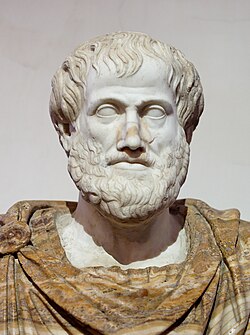
A central part of Aristotle's zoological work was his examination of animal structure, in which he dissected and compared the bodies of many species to understand how organisms were built and how their parts functioned together.
Image source: Aristotle
330 BC
% complete
Aristotle also studied development in animals, including embryology, observing how organisms grew and matured. These observations on vital phenomena made him a pioneering figure in the study of life processes.
Image source: Zoology
330 BC
% complete
In the fourth century BC, Aristotle looked at animals as living organisms, studying their structure, development and vital phenomena. His approach treated animals as subjects worthy of systematic scientific investigation rather than mere curiosities.
320 BC
% complete
Working without modern instruments, Aristotle reached some conclusions about animals that later proved false. Nevertheless, his authority was so great that his errors persisted for centuries.
200 - 1500
% complete
In Europe, Galen's work on anatomy remained largely unsurpassed and unchallenged up until the 16th century. His writings shaped medical teaching for well over a thousand years before being seriously questioned.
Image source: Galen
400 - 1500
% complete
For many centuries it was considered heretical to challenge any of Aristotle's views. As a result, the study of anatomy stultified, with scholars repeating ancient teachings rather than making fresh observations of their own.
1250
% complete
Albertus Magnus's general approach was surprisingly modern. He wrote, 'For it is [the task] of natural science not simply to accept what we are told but to inquire into the causes of natural things,' anticipating later empirical science.
Image source: Albertus Magnus
1250
% complete
In the 13th century, Albertus Magnus produced commentaries and paraphrases of all Aristotle's works, transmitting classical learning to medieval Europe and adding his own observations alongside the ancient sources.
1250
% complete
Albertus Magnus's books on topics like botany, zoology, and minerals included information from ancient sources, but also the results of his own investigations, marking an important step toward empirical natural history.
1550
% complete
During the 16th century, anatomists began to question Galen's long-unrivaled work, opening the way for direct observation and dissection to replace reliance on ancient texts in the study of animal structure.
Image source: History of anatomy
1551 - 1558
% complete
Gessner's Historia animalium spanned some 4,500 pages and was published in four volumes between 1551 and 1558, becoming one of the first modern zoological works and laying groundwork for later naturalists.
Image source: Historia animalium (Gessner book)
1551
% complete
An early pioneer of Renaissance zoology was Conrad Gessner, whose monumental encyclopedia of animals, Historia animalium, began appearing in 1551. The work compiled everything then known about the animal world.
1700 - 1800
% complete
Having previously been the realm of gentlemen naturalists, over the 18th century zoology began its transformation into an increasingly professional scientific discipline practiced by trained specialists.
1800 - 1900
% complete
Over the 19th century, zoology became an increasingly professional scientific discipline, moving out of the drawing rooms of amateur collectors and into universities, museums, and research institutions.
1800
% complete
At the start of the 19th century, the broad pursuit of natural history transitioned into the more rigorous discipline of biology, mirroring changes that would later professionalize zoology itself.
Image source: History of biology
1820 - 1859
% complete
Developments in embryology during the decades before Darwin revealed deep similarities in the early development of different animals, providing important evidence that would later support evolutionary theory.
Image source: Embryology
1820 - 1859
% complete
Paleontology uncovered fossils of creatures unlike any living species, showing that animal life had changed over time. These results were among the strands later synthesized into Darwin's theory of evolution.
Image source: Paleontology
1850 - 1900
% complete
The latter half of the 19th century saw great achievements in comparative anatomy, with leading figures comparing the structures of many animal groups. Many consider the era's greatest comparative anatomist the finest of that half-century.
Image source: Comparative anatomy
Nov 24, 1859
% complete
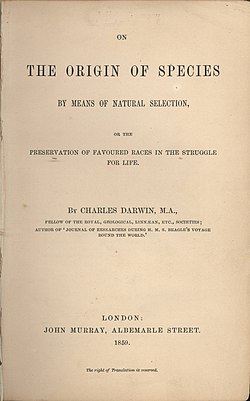
In 1859 Charles Darwin published his theory of evolution by natural selection, synthesizing developments in zoology, embryology, and paleontology. He placed organic evolution on a new footing by explaining the processes by which it can occur.
Image source: On the Origin of Species
Nov 24, 1859
% complete
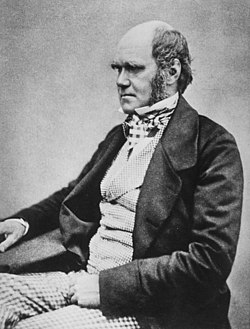
Beyond proposing a mechanism, Darwin provided extensive observational evidence that evolution had actually occurred, transforming zoology by giving naturalists a unifying framework for interpreting the diversity of animal life.
Image source: Charles Darwin
1860 - 1900
% complete
Alongside the fall of spontaneous generation came the rise of germ theory of disease at the end of the 19th century, which identified microorganisms as causes of illness, though the mechanism of inheritance remained a mystery.
Image source: Germ theory of disease
1860 - 1900
% complete
The end of the 19th century saw the fall of spontaneous generation, the old idea that living things could arise from non-living matter. Careful experimentation finally discredited the notion, reshaping biological thought.
Image source: Spontaneous generation
1865
% complete
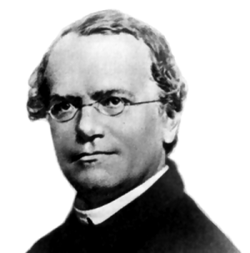
The basis for modern genetics began with the work of Gregor Mendel on pea plants in 1865. Through careful breeding experiments he uncovered the laws of inheritance, although the significance of his work was not realized at the time.
Image source: Gregor Mendel
1865 - 1900
% complete
Despite its fundamental importance, Mendel's 1865 work went largely unnoticed by the scientific community for decades, leaving the mechanism of inheritance an unsolved mystery as the 19th century drew to a close.
1900
% complete
In the early 20th century, the rediscovery of Mendel's work led to the rapid development of genetics, as scientists recognized that his pea experiments had revealed the fundamental rules of heredity.
Image source: Mendelian inheritance
1920 - 1930
% complete
In the early decades of the 20th century, population genetics developed as mathematical methods were applied to the frequencies of genes within populations, bridging Mendelian inheritance and evolutionary change.
Image source: Population genetics
1930
% complete
By the 1930s, the combination of population genetics and natural selection in the modern synthesis created evolutionary biology as a unified discipline, reconciling Darwinian theory with Mendelian genetics.
Image source: Modern synthesis (20th century)
1953
% complete
Following the 1953 discovery of DNA's structure, molecular biology opened up, leading to major advances in cell biology, developmental biology and molecular genetics, and increasing interest across the biological sciences.
Image source: Molecular biology
Apr 25, 1953
% complete
With the determination of the double helical structure of DNA by Francis Crick and James Watson, aided by Rosalind Franklin's work, the realm of molecular biology opened up. Their description of the molecule's interactions jump-started molecular research.
Image source: Nucleic acid double helix
1984 - 2000
% complete
Following the development of DNA fingerprinting techniques in the late 20th century, the application of these techniques in zoology increased the understanding of animal populations, enabling studies of relatedness, diversity, and conservation.
Image source: DNA profiling
1997
% complete
A merging draft known as BioCode was published in 1997 in an attempt to standardize biological nomenclature across disciplines, but it has yet to be formally adopted by the scientific community.
Or browse the full history timeline directory, with more than 2,000 topics.
This History of Zoology timeline was generated with the help of AI, using information found on the internet.
We work hard to keep these timelines accurate, but mistakes do get through. If you spot one, email us at [email protected] and we'll fix it for future visitors.
Generate yours with AI or build it from scratch, for free.
Export your timeline, add your own events, edit or remove AI-generated events, and much more
No credit card required.
Cancel anytime.
Cancel anytime.
You can create an unlimited number of timelines with up to 10 events on each one, customize how they look, export them to PDF, PNG, PowerPoint, CSV, and Excel, and share them with a link. Paid plans raise the event limit and add features like spreadsheet imports and collaborators.
Yes. You can cancel your subscription from your account page at any time, and you will not be charged again. Your subscription stays active for the rest of the period you already paid for.
Yes. We will email you a reminder before the annual renewal, and we will also email you a receipt.
Yes. You can email us within 15 days of any payment, and we will issue you a full refund.
Check out our pricing docs or send us an email anytime: [email protected].