-
Use Cases
-
Resources
-
Pricing
Barbara McClintock (1902–1992) was an American scientist and cytogeneticist whose pioneering research on maize (corn) genetics revolutionized our understanding of heredity. She discovered transposons—'jumping genes'—which demonstrated that genes can move within and between chromosomes. Initially met with skepticism, her work was later recognized as foundational to modern genetics, earning her the Nobel Prize in Physiology or Medicine in 1983, making her the first woman to win an unshared Nobel Prize in that category. More Less
Jun 16, 1902
% complete
Barbara McClintock was born Eleanor McClintock on June 16, 1902, in Hartford, Connecticut, the third of four children born to homeopathic physician Thomas Henry McClintock and Sara Handy McClintock. Her sisters Marjorie and Mignon were born in October 1898 and November 1900, respectively.
Image source: Barbara McClintock
Jan 1, 1908
% complete
In 1908, the McClintock family moved to Brooklyn, where Barbara completed her secondary education at Erasmus Hall High School.
Jan 1, 1919
% complete
McClintock graduated from Erasmus Hall High School in Brooklyn in 1919. Although she was almost prevented from starting college, her father allowed her to enroll just before registration began.
Image source: Erasmus Hall High School
Jan 1, 1919
% complete
McClintock matriculated at Cornell University in 1919 and began her studies at Cornell's College of Agriculture.
Image source: Cornell University
Jan 1, 1921
% complete
McClintock's interest in genetics began when she took her first course in that field in 1921, sparking a lifelong passion for the subject.
Jan 1, 1922
% complete
Impressed by McClintock's interest in genetics, Hutchison telephoned to invite her to participate in the graduate genetics course at Cornell in 1922. She later said, 'I remained with genetics thereafter.'
Jan 1, 1923
% complete
McClintock studied botany at Cornell, receiving her BSc degree in 1923.
Jan 1, 1925
% complete
McClintock earned her MS in botany in 1925. Though it was long reported that women could not major in genetics at Cornell, recent research revealed that women were permitted to earn graduate degrees in Cornell's Plant Breeding Department during her time there.
Jan 1, 1927
% complete
McClintock received her PhD in botany from Cornell University in 1927, officially awarded in botany despite her focus on genetics.
Jan 1, 1929
% complete
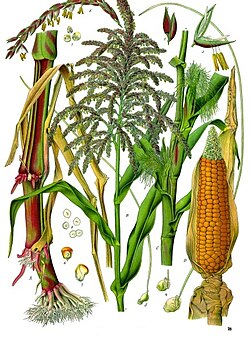
McClintock's 1929 Genetics paper on the characterization of triploid maize chromosomes triggered scientific interest in maize cytogenetics. Marcus Rhoades attributed to her 10 of the 17 significant advances made by Cornell scientists between 1929 and 1935.
Image source: Maize
Jan 1, 1930
% complete
In 1930, McClintock was the first person to describe the cross-shaped interaction of homologous chromosomes during meiosis.
Image source: Meiosis
Jan 1, 1931
% complete
It is often reported that McClintock published the first genetic map for maize in 1931, showing the order of three genes on maize chromosome 9; however, her professor C. Hutchison had published the first genetic linkage maps for chromosome 9 in 1921 and 1922. Her map confirmed that gene arrangement was consistent with Hutchison's linkage map.
Image source: Genetic linkage
Jan 1, 1931
% complete
McClintock found the first ring chromosome in maize in 1931, though the first ring chromosome had been reported by Mikhail Sergeevich Navashin, whom she cited in her first study with Stadler.
Image source: Ring chromosome
Jun 1, 1931 - Aug 31, 1932
% complete
During the summers of 1931 and 1932, McClintock worked at the University of Missouri with geneticist Lewis Stadler, who introduced her to the use of X-rays as a mutagen.
Image source: University of Missouri
Jan 1, 1933 - Dec 31, 1934
% complete
McClintock received a fellowship from the Guggenheim Foundation that made possible six months of training in Germany during 1933 and 1934. Evidence shows she returned to work at Cornell after spending only five months in Germany.
Jan 1, 1933
% complete
In 1933, McClintock established that cells can be damaged when nonhomologous recombination occurs.
Image source: Homologous recombination
Jan 1, 1936
% complete
In 1936, McClintock accepted an Assistant Professorship offered to her by Lewis Stadler in the Department of Botany at the University of Missouri in Columbia.
Jan 1, 1940 - Jun 30, 1942
% complete
In 1940, McClintock wrote to Charles Burnham, 'I have decided that I must look for another job.' She believed she would not gain tenure at Missouri, even though according to some accounts she knew she would be offered a promotion in spring 1942.
Feb 1, 1941
% complete
In early 1941, McClintock took a leave of absence from Missouri in hopes of finding a position elsewhere.
Dec 1, 1941
% complete
In December 1941, McClintock was offered a temporary research position by Milislav Demerec, the newly appointed acting director of the Carnegie Institution of Washington's Department of Genetics at Cold Spring Harbor Laboratory.
Image source: Cold Spring Harbor Laboratory
Jan 1, 1943
% complete
Although hesitant to make a long-term commitment, McClintock accepted the invitation and became a permanent member of the Cold Spring Harbor Laboratory staff in 1943.
Jan 1, 1944
% complete
In 1944, McClintock undertook a cytogenetic analysis of Neurospora crassa at the suggestion of George Beadle, who used the fungus to demonstrate the one gene–one enzyme relationship.
Image source: Neurospora crassa
Jul 1, 1944
% complete
In the summer of 1944 at Cold Spring Harbor Laboratory, McClintock began systematic studies on the mechanisms of the mosaic color patterns of maize seed and the unstable inheritance of this mosaicism.
Jan 1, 1948 - Dec 31, 1950
% complete
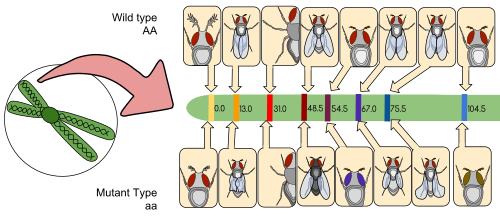
Between 1948 and 1950, McClintock developed a theory by which these mobile elements regulated the genes by inhibiting or modulating their action.
Image source: Transposable element
Feb 1, 1948
% complete
In early 1948, McClintock made the surprising discovery that both Dissociation (Ds) and Activator (Ac) could transpose, or change position, on the chromosome—a landmark finding in genetics.
Jan 1, 1950
% complete
In 1950, McClintock reported her work on Ac/Ds and her ideas about gene regulation in a paper entitled 'The origin and behavior of mutable loci in maize,' published in Proceedings of the National Academy of Sciences.
Image source: Proceedings of the National Academy of Sciences of the United States of America
Jul 1, 1951
% complete
In summer 1951, McClintock presented her paper 'The origin and behavior of mutable loci in maize' at the annual symposium at Cold Spring Harbor Laboratory.
Jan 1, 1953
% complete
Based on reactions of other scientists to her work, McClintock felt she risked alienating the scientific mainstream, and from 1953 was forced to stop publishing accounts of her research on controlling elements.
Jan 1, 1953 - Dec 31, 1960
% complete
McClintock published a paper in Genetics in 1953 where she presented all her statistical data, and undertook lecture tours to universities throughout the 1950s to speak about her work.
Jan 1, 1957
% complete
In 1957, McClintock received funding from the National Academy of Sciences to start research on indigenous strains of maize in Central America and South America.
Jan 1, 1960 - Dec 31, 1969
% complete
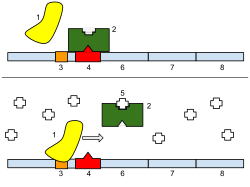
The importance of McClintock's contributions was revealed in the 1960s, when the work of French geneticists François Jacob and Jacques Monod described the genetic regulation of the lac operon, a concept she had demonstrated with Ac/Ds in 1951.
Image source: Lac operon
Jan 1, 1961
% complete
Following Jacob and Monod's 1961 Journal of Molecular Biology paper 'Genetic regulatory mechanisms in the synthesis of proteins,' McClintock wrote an article for American Naturalist comparing the lac operon and her work on controlling elements in maize.
Jan 1, 1967
% complete
McClintock officially retired from her position at the Carnegie Institution in 1967 and was made a Distinguished Service Member of the Carnegie Institution of Washington.
Image source: Carnegie Institution for Science
Jan 1, 1939
% complete
McClintock was elected vice-president of the Genetics Society of America in 1939, an early sign of her growing prominence in the field.
Jan 1, 1944
% complete
In 1944, in recognition of her prominence in genetics, McClintock was elected to the National Academy of Sciences—only the third woman to be elected.
Image source: National Academy of Sciences
Jan 1, 1945
% complete
The year after being elected to the National Academy of Sciences, McClintock became the first female president of the Genetics Society of America, having been elected its vice-president in 1939.
Jan 1, 1947
% complete
In 1947, McClintock received the Achievement Award from the American Association of University Women.
Image source: American Association of University Women
Jan 1, 1959
% complete
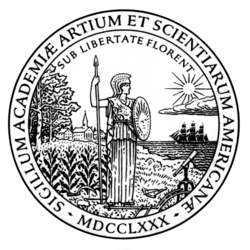
McClintock was elected a Fellow of the American Academy of Arts and Sciences in 1959.
Image source: American Academy of Arts and Sciences
Jan 1, 1967
% complete
Jan 1, 1970
% complete
Three years after receiving the Kimber Genetics Award, McClintock was given the National Medal of Science by Richard Nixon in 1970.
Image source: National Medal of Science
Jan 1, 1973
% complete
In 1973, Cold Spring Harbor Laboratory named a building in McClintock's honor.
Jan 1, 1978
% complete
Jan 1, 1981
% complete
In 1981, McClintock became the first recipient of the MacArthur Foundation Grant, and was also awarded the Albert Lasker Award for Basic Medical Research, the Wolf Prize in Medicine and the Thomas Hunt Morgan Medal by the Genetics Society of America.
Jan 1, 1983
% complete
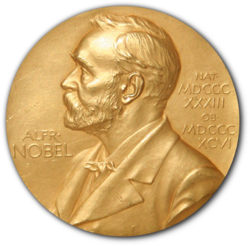
Most notably, McClintock received the Nobel Prize in Physiology or Medicine in 1983 for the discovery of genetic transposition—the first woman to win that prize unshared and the first American woman to win any unshared Nobel Prize in the sciences. As of 2025, she remains the only woman to have received an unshared Nobel Prize in that category.
Image source: Nobel Prize in Physiology or Medicine
Jan 1, 1986
% complete
In 1986, McClintock was inducted into the National Women's Hall of Fame.
Image source: National Women's Hall of Fame
Jan 1, 1989
% complete
McClintock was elected a Foreign Member of the Royal Society (ForMemRS) in 1989.
Image source: Royal Society
Jan 1, 1993
% complete
McClintock received the Benjamin Franklin Medal for Distinguished Achievement in the Sciences of the American Philosophical Society in 1993. She had been previously elected to the APS in 1946.
Image source: American Philosophical Society
Jan 1, 1983
% complete
Physicist Evelyn Fox Keller published a biography of McClintock titled A Feeling for the Organism in 1983, which brought McClintock's story to the public. During her final years, McClintock led a more public life.
Image source: Barbara McClintock
Jan 1, 1987
% complete
An anthology of McClintock's 43 publications, The Discovery and Characterization of Transposable Elements: The Collected Papers of Barbara McClintock, was published in 1987.
Jan 1, 1989
% complete
McClintock was featured in a 1989 four-stamp issue from Sweden illustrating the work of eight Nobel Prize-winning geneticists.
Image source: Postage stamp
Sep 2, 1992
% complete
McClintock died of natural causes in Huntington, New York, on September 2, 1992, at the age of 90. She never married or had children.
Jan 1, 2001
% complete
In 2001, science historian Nathaniel C. Comfort published a second biography of McClintock.
May 4, 2005
% complete
On May 4, 2005, the United States Postal Service issued the 'American Scientists' commemorative postage stamp series, a set of four 37-cent self-adhesive stamps featuring McClintock among other American scientists.
Image source: United States Postal Service
Jan 1, 2011
% complete
Some of McClintock's personality and scientific achievements were referred to in Jeffrey Eugenides's 2011 novel The Marriage Plot, which tells the story of a yeast geneticist named Leonard who has bipolar disorder.
Image source: The Marriage Plot
Jan 1, 2015 - Mar 31, 2018
% complete
Judith Pratt wrote a play about McClintock called MAIZE, which was read at Artemesia Theatre in Chicago in 2015 and produced in Ithaca, NY, home of Cornell University, in February–March 2018.
Jan 1, 2021
% complete
Rachel Pastan's novel In the Field (2021) is an imaginative re-creation of the scientist's solitude, dedication, and unconventional career, drawing inspiration from McClintock's life.
Jan 1, 2022
% complete
A 103,835 square-foot residence hall at Cornell University was named for McClintock in 2022.
Jan 1, 2024
% complete
In 2024, From Chromosomes to Mobile Genetic Elements: The Life and Work of Nobel Laureate Barbara McClintock, a biography by Lee B. Kass, was published.
May 1, 2024
% complete
In May 2024, a plant species, Stellaria mcclintockiae, was named after McClintock, continuing her enduring scientific legacy.
Image source: Stellaria
Or browse the full history timeline directory, with more than 2,000 topics.
This Barbara McClintock timeline was generated with the help of AI, using information found on the internet.
We work hard to keep these timelines accurate, but mistakes do get through. If you spot one, email us at [email protected] and we'll fix it for future visitors.
Generate yours with AI or build it from scratch, for free.
Export your timeline, add your own events, edit or remove AI-generated events, and much more
No credit card required.
Cancel anytime.
Cancel anytime.
You can create an unlimited number of timelines with up to 10 events on each one, customize how they look, export them to PDF, PNG, PowerPoint, CSV, and Excel, and share them with a link. Paid plans raise the event limit and add features like spreadsheet imports and collaborators.
Yes. You can cancel your subscription from your account page at any time, and you will not be charged again. Your subscription stays active for the rest of the period you already paid for.
Yes. We will email you a reminder before the annual renewal, and we will also email you a receipt.
Yes. You can email us within 15 days of any payment, and we will issue you a full refund.
Check out our pricing docs or send us an email anytime: [email protected].