
-
Use Cases
-
Resources
-
Pricing
CRISPR (Clustered Regularly Interspaced Short Palindromic Repeats) is a groundbreaking gene-editing technology derived from a natural bacterial immune defense system. First identified in the late 1980s and functionally characterized in the 2000s, CRISPR-Cas9 was adapted for genome editing in 2012 by Jennifer Doudna and Emmanuelle Charpentier. Since then, it has transformed genetics research, enabled treatments for genetic diseases like sickle cell anemia, sparked ethical debates over human embryo editing, and earned its pioneers the 2020 Nobel Prize in Chemistry. More Less
2000
% complete
Spanish microbiologist Francisco Mojica recognized that the mysterious repeated sequences appeared across many bacteria and archaea and coined the term CRISPR (Clustered Regularly Interspaced Short Palindromic Repeats). He later hypothesized they might serve as a form of acquired immunity against viruses.
Image source: Francisco Mojica
2005
% complete
Three independent research groups, including Mojica's, published studies showing that spacer sequences within CRISPR loci matched viral DNA, demonstrating that CRISPR functions as an adaptive immune system in bacteria, storing fragments of invading phage DNA to recognize and destroy future infections.
Image source: CRISPR
Mar 2007
% complete
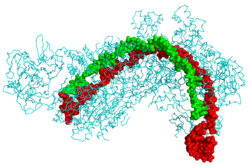
Rodolphe Barrangou and Philippe Horvath at Danisco, working with Sylvain Moineau, provided experimental evidence that Streptococcus thermophilus uses CRISPR to acquire resistance against bacteriophages, confirming CRISPR as an adaptive immune system and sparking commercial interest in food industry applications.
Aug 2008
% complete
John van der Oost and colleagues showed that CRISPR RNAs (crRNAs) guide Cas proteins to complementary target DNA sequences, revealing the RNA-guided mechanism of interference that would later inspire genome engineering tools.
Jun 28, 2012
% complete
Jennifer Doudna and Emmanuelle Charpentier published a groundbreaking paper in Science demonstrating that the Cas9 protein could be programmed with a single guide RNA to cut any chosen DNA sequence. This work established CRISPR-Cas9 as a programmable tool for precise genome editing.
Image source: CRISPR gene editing
Jan 2013
% complete
Feng Zhang at the Broad Institute published research showing that the CRISPR-Cas9 system could be used to edit genes in human cells, alongside similar papers from George Church's lab at Harvard, opening the door to therapeutic applications of the technology.
Image source: Feng Zhang
Sep 2015
% complete
Emmanuelle Charpentier and Jennifer Doudna received the Breakthrough Prize in Life Sciences for developing CRISPR-Cas9 as a transformative genome-editing technology, marking growing recognition of the field's significance among major scientific awards.
Image source: Emmanuelle Charpentier
Oct 2017
% complete
David Liu's lab at Harvard introduced base editing, a refinement of CRISPR that allows precise single-letter changes to DNA without creating double-strand breaks, expanding the toolkit for correcting point mutations underlying many genetic diseases.
Image source: David R. Liu
Oct 2019
% complete
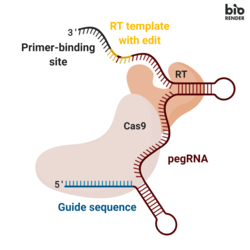
David Liu's laboratory announced prime editing, a versatile technique that can make all twelve possible base-to-base conversions plus small insertions and deletions without double-strand breaks, described as a 'search-and-replace' tool for the genome.
Image source: Prime editing
Oct 7, 2020
% complete
Emmanuelle Charpentier and Jennifer Doudna shared the Nobel Prize in Chemistry for the development of CRISPR-Cas9 genome editing, cementing the technology's status as one of the most significant scientific advances of the century. Notably excluded were other pioneers like Feng Zhang.
Image source: List of Nobel laureates in Chemistry
Jan 2014
% complete
Researchers in China reported the birth of the first monkeys edited using CRISPR-Cas9, targeting genes involved in metabolism and immune regulation. The achievement demonstrated that CRISPR could be used to create genetically modified primates, raising both excitement and ethical concerns.
Nov 2015
% complete
Researchers at UC San Diego and elsewhere demonstrated CRISPR-based gene drives capable of spreading genetic modifications through wild insect populations. The technology raised hopes for eliminating malaria-carrying mosquitoes while prompting concerns about ecological risks.
Image source: Gene drive
Oct 2016
% complete
Oncologist Lu You in Chengdu treated the first human patient with CRISPR-edited cells, injecting T cells engineered to knock out PD-1 into a lung cancer patient, making China the first country to administer a CRISPR-based therapy to a person.
Oct 2016
% complete
A team at the University of Pennsylvania launched the first U.S. clinical trial using CRISPR-Cas9, modifying patients' T cells ex vivo to fight cancer by disabling PD-1 and engineering cells to target tumors, marking CRISPR's entry into American human medicine.
Aug 2017
% complete
Shoukhrat Mitalipov's team at Oregon Health & Science University reported successfully correcting the MYBPC3 gene mutation responsible for hypertrophic cardiomyopathy in viable human embryos, though subsequent analyses questioned some of the findings, intensifying scrutiny of embryo editing.
Image source: Assisted reproductive technology
Jul 2019
% complete
Vertex Pharmaceuticals and CRISPR Therapeutics dosed the first patient with CTX001, an experimental therapy editing blood stem cells to treat sickle cell disease. The patient became free of severe pain crises, heralding the promise of curative CRISPR therapies.
Image source: CRISPR Therapeutics
May 2020
% complete
Researchers including Feng Zhang and Doudna adapted CRISPR systems such as SHERLOCK and DETECTR into rapid diagnostic tests for SARS-CoV-2 during the pandemic, showcasing CRISPR's utility beyond gene editing in molecular detection.
Mar 2021
% complete
Editas Medicine reported preliminary data from the BRILLIANCE trial, the first attempt to deliver CRISPR directly inside the human body. Patients with inherited blindness received subretinal injections of CRISPR components designed to edit the CEP290 gene in retinal cells.
Jun 2021
% complete
Vertex Pharmaceuticals and CRISPR Therapeutics advanced exa-cel (CTX001) through late-stage clinical trials, reporting continued positive results for both sickle cell disease and beta thalassemia, positioning it to become potentially the first approved CRISPR-based medicine.
Jun 26, 2021
% complete
Intellia Therapeutics and Regeneron published landmark Phase 1 data showing that a single intravenous infusion of NTLA-2001, a lipid nanoparticle delivering CRISPR machinery to the liver, dramatically reduced levels of transthyretin protein in patients with amyloidosis — proving systemic in vivo CRISPR editing was possible.
Image source: Intellia Therapeutics
Apr 2014
% complete
The Broad Institute was awarded foundational U.S. patents for CRISPR-Cas9 applications in eukaryotic cells under a fast-track process, igniting a high-stakes patent dispute with the University of California over who deserved credit and control of the lucrative technology.
Image source: CRISPR gene editing
Apr 2015
% complete
A team led by Junjiu Huang at Sun Yat-sen University reported editing the HBB gene in nonviable human embryos using CRISPR, becoming the first study to modify human embryos. The work sparked global debate about the ethics of germline modification and calls for moratoriums.
Image source: He Jiankui affair
Nov 2015
% complete
The University of California filed an interference proceeding against the Broad Institute's CRISPR patents, launching one of the most consequential scientific patent battles in history, known informally as the 'CRISPR war' between teams associated with Doudna and Zhang.
Dec 2015
% complete
Scientists, ethicists, and policymakers gathered in Washington, D.C., for the first International Summit on Human Gene Editing, organized partly in response to Chinese embryo-editing work. The summit concluded that germline editing should not proceed until safety and ethical issues were resolved.
Apr 2016
% complete
The USDA determined that a CRISPR-edited white button mushroom developed at Penn State did not require regulatory approval because it contained no foreign DNA, setting an important precedent for lighter regulation of gene-edited agricultural products in the United States.
Image source: Regulation of genetic engineering
Feb 2017
% complete
A National Academies of Sciences and National Academy of Medicine report concluded that clinical trials of heritable germline editing could be permitted in narrow circumstances once stringent safety and ethical conditions were met, providing a framework for future policy debates.
Image source: Human genetic enhancement
Nov 25, 2018
% complete
Chinese scientist He Jiankui shocked the world by announcing the birth of twin girls whose genomes he had edited with CRISPR to resist HIV infection. He was widely condemned by the scientific community and later sentenced to prison for illegal medical practice, triggering international calls for stricter oversight.
Dec 2018
% complete
In response to the He Jiankui scandal, the WHO established an expert advisory committee to develop global standards and governance frameworks for human genome editing, aiming to prevent rogue experimentation and coordinate international oversight.
Image source: World Health Organization
Jul 12, 2021
% complete
The World Health Organization issued its first comprehensive recommendations on human genome editing, urging countries to establish registries of trials, strengthen oversight, and prohibit unsafe or unethical experiments following two years of expert consultation.
Image source: Genome editing
Sep 10, 2021
% complete
The U.S. Patent Trial and Appeal Board ruled that the Broad Institute's patents for CRISPR-Cas9 in eukaryotic cells were distinct from earlier University of California claims, a major victory for the Zhang-associated team, though appeals continued afterward.
Or browse the full history timeline directory, with more than 2,000 topics.
This History of CRISPR timeline was generated with the help of AI, using information found on the internet.
We work hard to keep these timelines accurate, but mistakes do get through. If you spot one, email us at [email protected] and we'll fix it for future visitors.
Generate yours with AI or build it from scratch, for free.
Export your timeline, add your own events, edit or remove AI-generated events, and much more
No credit card required.
Cancel anytime.
Cancel anytime.
You can create an unlimited number of timelines with up to 10 events on each one, customize how they look, export them to PDF, PNG, PowerPoint, CSV, and Excel, and share them with a link. Paid plans raise the event limit and add features like spreadsheet imports and collaborators.
Yes. You can cancel your subscription from your account page at any time, and you will not be charged again. Your subscription stays active for the rest of the period you already paid for.
Yes. We will email you a reminder before the annual renewal, and we will also email you a receipt.
Yes. You can email us within 15 days of any payment, and we will issue you a full refund.
Check out our pricing docs or send us an email anytime: [email protected].