-
Use Cases
-
Resources
-
Pricing
The history of calculus traces the development of one of mathematics' most powerful tools, from early ideas of infinitesimals in ancient Greece through the independent discoveries of Isaac Newton and Gottfried Wilhelm Leibniz in the 17th century, to its rigorous formalization and widespread modern applications. More Less
300 AD
% complete
The method of exhaustion was independently invented in China by Liu Hui in the 4th century AD in order to find the area of a circle.
Image source: Liu Hui
450 AD
% complete
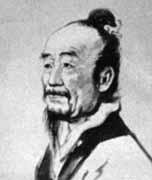
In the 5th century, Zu Chongzhi established a method that would later be called Cavalieri's principle to find the volume of a sphere.
Image source: Zu Chongzhi
1000 AD - 1040 AD
% complete
In the Middle East, Hasan Ibn al-Haytham, Latinized as Alhazen (c. 965 – c. 1040 AD), extended Archimedes' method of exhaustion, finding the volume of the solid of revolution formed by rotating a parabola around a line perpendicular to its axis.
Image source: Ibn al-Haytham
1150 AD - 1185 AD
% complete
The Indian mathematician Bhaskara II (1114–1185) devised a way of working with infinitesimals applied to trigonometry.
Image source: Bhāskara II
1185 AD
% complete
Roshdi Rashed has argued that the 12th century mathematician Sharaf al-Dīn al-Tūsī must have used the derivative of cubic polynomials in his Treatise on Equations.
Image source: Sharaf al-Din al-Tusi
1325 AD - 1375 AD
% complete
The mathematical study of continuity was revived in the 14th century by the Oxford Calculators and French collaborators such as Nicole Oresme.
Image source: Oxford Calculators
1350 AD - 1425 AD
% complete
Madhava of Sangamagrama in the 14th century, and later mathematicians of the Kerala school, stated components of calculus such as the Taylor series and infinite series approximations.
Image source: Madhava of Sangamagrama
1615 AD
% complete
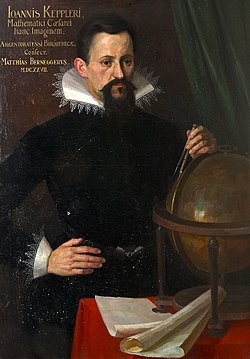
Johannes Kepler's work Stereometrica Doliorum published in 1615 formed the basis of integral calculus.
Image source: Johannes Kepler
1630 AD - 1670 AD
% complete
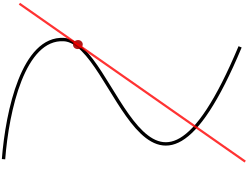
In the 17th century, European mathematicians Isaac Barrow, René Descartes, Pierre de Fermat, Blaise Pascal, John Wallis and others discussed the idea of a derivative.
Image source: Derivative
1635 AD
% complete
A significant work was a treatise inspired by Kepler's methods published in 1635 by Bonaventura Cavalieri on his method of indivisibles. Archimedes had previously computed similar results in The Method, but that treatise was lost until its rediscovery in the early 20th century.
Image source: Bonaventura Cavalieri
1636 AD
% complete
In Methodus ad disquirendam maximam et minima and in De tangentibus linearum curvarum distributed in 1636, Fermat introduced the concept of adequality, which represented equality up to an infinitesimal error term.
1643 AD
% complete
Torricelli extended Cavalieri's work to other curves such as the cycloid, and then the formula was generalized to fractional and negative powers by Wallis in 1656.
Image source: Evangelista Torricelli
1656 AD
% complete
Building on Torricelli's extensions of Cavalieri's method, John Wallis generalized the formula to fractional and negative powers in 1656.
Image source: John Wallis
1659 AD
% complete
In a 1659 treatise, Fermat is credited with an ingenious trick for evaluating the integral of any power function directly.
Image source: Pierre de Fermat
1670 AD
% complete
The combination of differentiation and integration was achieved by John Wallis, Isaac Barrow, and James Gregory, the latter two proving predecessors to the second fundamental theorem of calculus around 1670.
Image source: Fundamental theorem of calculus
1664 AD
% complete
By 1664 Newton had made his first important contribution by advancing the binomial theorem, which he had extended to include fractional and negative exponents.
Image source: Binomial theorem
1665 AD - 1700 AD
% complete
Infinitesimal calculus was developed in full in the late 17th century by Isaac Newton and Gottfried Wilhelm Leibniz independently of each other, building on the work of their contemporaries.
Image source: History of calculus
May 20, 1665 - 1666 AD
% complete
Newton formulated his calculus between 1664 and 1666, later describing this period as 'the prime of my age for invention.' A manuscript dated May 20, 1665 showed that Newton had already developed the calculus to the point where he could compute the tangent and curvature at any point of a continuous curve. During plague-induced isolation, the first written conception of fluxionary calculus was recorded in De Analysi per Aequationes Numero Terminorum Infinitas.
Image source: Isaac Newton
1671 AD
% complete
In an effort to give calculus a more rigorous explication and framework, Newton compiled in 1671 the Methodus Fluxionum et Serierum Infinitarum. It was not published until 1736.
Image source: Method of Fluxions
1672 AD
% complete
In 1672, Leibniz met the mathematician Huygens who convinced Leibniz to dedicate significant time to the study of mathematics.
Image source: Gottfried Wilhelm Leibniz
1673 AD
% complete
By 1673 Leibniz had progressed to reading Pascal's Traité des sinus du quart de cercle, and it was during his largely autodidactic research that Leibniz said 'a light turned on'.
Oct 25, 1675 - Nov 11, 1675
% complete
In the manuscripts of 25 October to 11 November 1675, Leibniz recorded his discoveries and experiments with various forms of notation, including the dy/dx notation still used today.
1676 AD
% complete
This revised calculus of ratios continued to be developed and was maturely stated in the 1676 text De Quadratura Curvarum where Newton came to define the present day derivative as the ultimate ratio of change, defined as the ratio between evanescent increments purely at the moment in question.
Image source: Taylor series
1685 AD - 1687 AD
% complete
The calculus of variations began with Newton's minimal resistance problem, which Newton formulated and solved in 1685 and published in his Principia in 1687. It was the first problem in the field to be formulated and correctly solved.
Image source: Calculus of variations
1696 AD - 1697 AD
% complete
It was followed by the brachistochrone curve problem of Johann Bernoulli (1696), which Bernoulli solved using the principle of least time but not the calculus of variations, whereas Newton did solve it in 1697, pioneering the field with his work on both problems.
Image source: Brachistochrone curve
1700 AD - 1716 AD
% complete
An argument over priority led to the Leibniz–Newton calculus controversy, which continued until the death of Leibniz in 1716. Initial accusations were made by students and supporters at the turn of the century, but after 1711 both men became personally involved, accusing each other of plagiarism. The dispute led to a rift in the European mathematical community lasting over a century.
Image source: Leibniz–Newton calculus controversy
1691 AD
% complete
The first proof of Rolle's theorem was given by Michel Rolle in 1691 using methods developed by the Dutch mathematician Johann van Waveren Hudde.
Image source: Rolle's theorem
1733 AD
% complete
Euler's contributions to the calculus of variations began in 1733, and his Elementa Calculi Variationum gave to the science its name.
Image source: Leonhard Euler
1748 AD
% complete
One of the first and most complete works on both infinitesimal and integral calculus was written in 1748 by Maria Gaetana Agnesi.
Image source: Maria Gaetana Agnesi
1773 AD
% complete
To Lagrange (1773) we owe the introduction of the theory of the potential into dynamics, although the name 'potential function' and the fundamental memoir of the subject are due to Green (1827, printed in 1828).
1786 AD
% complete
Joseph Louis Lagrange contributed extensively to the theory of the calculus of variations, and Adrien-Marie Legendre (1786) laid down a method, not entirely satisfactory, for the discrimination of maxima and minima.
Image source: Adrien-Marie Legendre
1800 AD
% complete
Antoine Arbogast (1800) was the first to separate the symbol of operation from that of quantity in a differential equation.
1810 AD - 1837 AD
% complete
To this discrimination Brunacci (1810), Carl Friedrich Gauss (1829), Siméon Denis Poisson (1831), Mikhail Vasilievich Ostrogradsky (1834), and Carl Gustav Jacob Jacobi (1837) have been among the contributors.
Image source: Carl Gustav Jacob Jacobi
1814 AD
% complete
Francois-Joseph Servois (1814) seems to have been the first to give correct rules on the subject of operational symbols in differential equations.
Image source: François-Joseph Servois
1816 AD
% complete
Legendre's great table appeared in 1816, contributing significantly to mathematical analysis.
1820 AD - 1857 AD
% complete
Cauchy early undertook the general theory of determining definite integrals, and the subject has been prominent during the 19th century. He also stated the mean value theorem in its modern form, along with Bernard Bolzano.
Image source: Augustin-Louis Cauchy
1828 AD
% complete
The name 'potential function' and the fundamental memoir of the subject are due to Green (1827, printed in 1828).
Image source: George Green (mathematician)
1839 AD
% complete
To the subject Lejeune Dirichlet has contributed an important theorem (Liouville, 1839), which has been elaborated by Liouville, Catalan, Leslie Ellis, and others.
Image source: Peter Gustav Lejeune Dirichlet
1842 AD - 1844 AD
% complete
An important general work is that of Sarrus (1842) which was condensed and improved by Augustin Louis Cauchy (1844).
1848 AD
% complete
Charles James Hargreave (1848) applied these methods in his memoir on differential equations, and George Boole freely employed them.
1850 AD - 1897 AD
% complete
Other valuable treatises were written by Strauch (1849), Jellett (1850), Otto Hesse (1857), Alfred Clebsch (1858), and Carll (1885), but perhaps the most important work of the century is that of Karl Weierstrass.
Image source: Karl Weierstrass
Or browse the full history timeline directory, with more than 2,000 topics.
This History of Calculus timeline was generated with the help of AI, using information found on the internet.
We work hard to keep these timelines accurate, but mistakes do get through. If you spot one, email us at [email protected] and we'll fix it for future visitors.
Generate yours with AI or build it from scratch, for free.
Export your timeline, add your own events, edit or remove AI-generated events, and much more
No credit card required.
Cancel anytime.
Cancel anytime.
You can create an unlimited number of timelines with up to 10 events on each one, customize how they look, export them to PDF, PNG, PowerPoint, CSV, and Excel, and share them with a link. Paid plans raise the event limit and add features like spreadsheet imports and collaborators.
Yes. You can cancel your subscription from your account page at any time, and you will not be charged again. Your subscription stays active for the rest of the period you already paid for.
Yes. We will email you a reminder before the annual renewal, and we will also email you a receipt.
Yes. You can email us within 15 days of any payment, and we will issue you a full refund.
Check out our pricing docs or send us an email anytime: [email protected].