-
Use Cases
-
Resources
-
Pricing
The history of timekeeping traces humanity's efforts to measure and track time, beginning with ancient astronomical observations and sundials, advancing through mechanical clocks, pendulums, and quartz technology, and culminating in today's ultra-precise atomic clocks that underpin modern navigation, science, and global communication. More Less
3500 BC
% complete
Ancient Egyptians erected monumental obelisks whose moving shadows allowed them to divide the day into parts, providing one of the earliest known methods of tracking time based on the sun's position.
Image source: Obelisk
2000 BC
% complete
The Sumerians of Mesopotamia created some of the earliest water clocks, known as clepsydras, which measured time by the regulated flow of water from one vessel to another, enabling timekeeping at night and on cloudy days.
Image source: Water clock
1500 BC
% complete
Egyptian astronomers divided daylight into ten hours plus twilight hours, and later added twelve nighttime hours, establishing the 24-hour day structure that remains the foundation of modern timekeeping.
Image source: Hour
1400 BC
% complete
Babylonian mathematicians adopted a base-60 number system that they applied to astronomy and time measurement, giving rise to the division of hours into 60 minutes and minutes into 60 seconds still used today.
Image source: Sexagesimal
600 BC
% complete
In ancient China, incense clocks measured time by the slow, steady burning of calibrated incense sticks or seals, offering an elegant and fragrant alternative to water clocks for both domestic and ceremonial use.
Image source: Incense clock
270 BC
% complete
Ctesibius of Alexandria designed a sophisticated clepsydra with a constant-flow regulator and a dial display, dramatically improving the accuracy of water clocks in the Hellenistic world.
Image source: Ctesibius
1000
% complete
Medieval mariners relied on marine sandglasses to measure intervals of time at sea, using them to track watch shifts and estimate speed, as flowing sand was less affected by the motion of waves than water clocks.
Image source: Marine sandglass
1300
% complete
Towering weight-driven mechanical clocks with verge escapements began appearing in European cathedrals and town halls, marking a revolutionary shift from natural phenomena to engineered mechanisms for measuring time.
Image source: Clock
1330
% complete
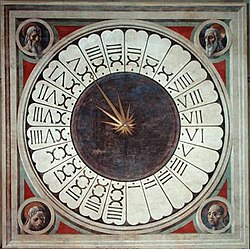
Abbot Richard of Wallingford constructed a remarkably complex astronomical clock at St Albans Abbey in England, capable of predicting celestial positions and eclipses, showcasing the growing sophistication of medieval horology.
Image source: Richard of Wallingford
1410
% complete
Clockmakers Mikuláš of Kadaň and Jan Šindel completed the Prague Orloj, the world's oldest astronomical clock still operating, displaying celestial data alongside the time and becoming a symbol of medieval engineering.
Image source: Prague astronomical clock
1430
% complete
The invention of the mainspring enabled smaller, portable spring-driven clocks, freeing timekeeping from heavy weights and paving the way for personal timepieces.
Image source: Mainspring
1510
% complete
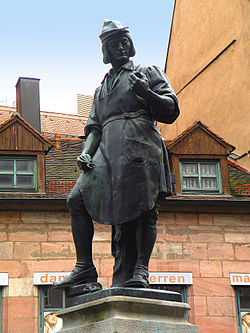
Nuremberg locksmith Peter Henlein is credited with producing some of the first wearable watches, small drum-shaped 'Nuremberg eggs' that made personal timekeeping fashionable among Europe's elite.
Image source: Peter Henlein
1602
% complete
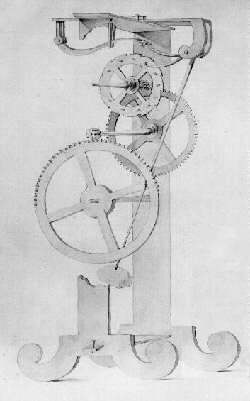
Galileo Galilei observed that a pendulum swings with a consistent period regardless of amplitude, laying the scientific groundwork for pendulum-based timekeeping decades before its practical application.
Image source: Pendulum clock
1656
% complete
Dutch scientist Christiaan Huygens patented the first pendulum clock, improving timekeeping accuracy from minutes per day to seconds per day and revolutionizing both science and daily life.
Image source: Christiaan Huygens
1675
% complete
King Charles II established the Royal Observatory at Greenwich to improve navigation and produce accurate star charts, eventually becoming the reference point for the prime meridian and Greenwich Mean Time.
Image source: Royal Observatory, Greenwich
1675
% complete
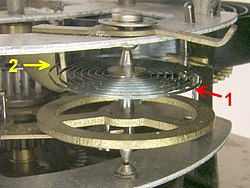
Christiaan Huygens developed the spiral balance spring for watches, greatly improving their accuracy and making portable timepieces reliable enough for scientific observation and navigation.
Image source: Balance spring
1730
% complete
English carpenter-turned-clockmaker John Harrison began his decades-long quest to build a sea-going clock accurate enough to determine longitude, transforming maritime navigation and saving countless lives.
Image source: John Harrison
1761
% complete
John Harrison's H4 chronometer proved accurate enough during a transatlantic voyage to solve the longitude problem, earning recognition after years of dispute with the Board of Longitude.
Image source: Marine chronometer
1840
% complete
British railway companies adopted Greenwich Mean Time across their networks to create reliable timetables, gradually replacing local solar times and standardizing time nationwide.
Image source: Railway time
1880
% complete
The Statutes (Definition of Time) Act made GMT the legal standard time throughout Great Britain, cementing Greenwich's role as the world's temporal reference point.
Image source: Greenwich Mean Time
Nov 18, 1883
% complete
American and Canadian railroads implemented four standardized time zones on what became known as the Day of Two Noons, replacing hundreds of chaotic local times with a coherent continental system.
Image source: Time zone
Oct 1884 - Nov 1884
% complete
Delegates from 25 nations met in Washington, D.C., and voted to adopt the Greenwich meridian as the prime meridian, creating a unified global framework for longitude and standardized time zones.
Image source: International Meridian Conference
1890
% complete
German clockmaker Clemens Riefler produced pendulum clocks accurate to milliseconds per day, which served as national time standards in observatories worldwide until superseded by quartz technology.
Image source: Riefler escapement
1921
% complete
The Shortt–Synchronome clock, using a master free pendulum slaved to a slave clock, achieved accuracy of about one second per year, becoming the most precise mechanical timekeeper ever built.
Image source: Shortt–Synchronome clock
1927
% complete
Bell Telephone Laboratories engineers Warren Marrison and J.W. Horton built the first quartz crystal oscillator clock, exploiting the stable vibrations of quartz to achieve unprecedented accuracy.
Image source: Quartz clock
1949
% complete
The U.S. National Bureau of Standards unveiled the first atomic clock, using ammonia molecules as its frequency reference, inaugurating an era of timekeeping based on fundamental physics rather than mechanics.
Image source: Atomic clock
1955
% complete
Louis Essen and Jack Parry at Britain's National Physical Laboratory built the first accurate caesium beam atomic clock, whose extraordinary stability led directly to the redefinition of the second.
Image source: Caesium standard
1967
% complete
The General Conference on Weights and Measures redefined the second as 9,192,631,770 oscillations of the caesium-133 atom, anchoring humanity's unit of time to an unchanging property of nature.
Image source: Second
Jan 1, 1972
% complete
UTC replaced GMT as the world's civil time standard, combining atomic timekeeping with occasional leap seconds to stay aligned with Earth's rotation, and now underpins global communications and navigation.
Image source: Coordinated Universal Time
1995
% complete
With full operational capability, the GPS constellation broadcasted atomic-clock-derived time signals worldwide, enabling nanosecond-level synchronization for navigation, finance, telecommunications, and science.
Image source: Global Positioning System
2015
% complete
Strontium optical lattice clocks demonstrated accuracy losing only about one second over 15 billion years, far exceeding caesium standards and prompting discussions of redefining the second once again.
Image source: Atomic clock
Or browse the full history timeline directory, with more than 2,000 topics.
This History of Timekeeping timeline was generated with the help of AI, using information found on the internet.
We work hard to keep these timelines accurate, but mistakes do get through. If you spot one, email us at [email protected] and we'll fix it for future visitors.
Generate yours with AI or build it from scratch, for free.
Export your timeline, add your own events, edit or remove AI-generated events, and much more
No credit card required.
Cancel anytime.
Cancel anytime.
You can create an unlimited number of timelines with up to 10 events on each one, customize how they look, export them to PDF, PNG, PowerPoint, CSV, and Excel, and share them with a link. Paid plans raise the event limit and add features like spreadsheet imports and collaborators.
Yes. You can cancel your subscription from your account page at any time, and you will not be charged again. Your subscription stays active for the rest of the period you already paid for.
Yes. We will email you a reminder before the annual renewal, and we will also email you a receipt.
Yes. You can email us within 15 days of any payment, and we will issue you a full refund.
Check out our pricing docs or send us an email anytime: [email protected].