-
Use Cases
-
Resources
-
Pricing
Dhaka, the capital and largest city of Bangladesh, has a history spanning over four centuries. Founded in the early 1600s as a Mughal administrative center and famed for its muslin trade, Dhaka served as a capital under the Mughals, declined during British colonial rule, became the intellectual heart of the Bengali nationalist movement, witnessed the 1971 Liberation War, and grew into one of the world's largest and most densely populated megacities. More Less
1000
% complete
The area around present-day Dhaka developed as a modest trading and riverine settlement along the Buriganga River, benefiting from its location at the junction of trade routes in the Bengal delta.
Image source: History of Dhaka
1100 - 1204
% complete
Hindu Sen kings controlled the region around Dhaka, establishing administrative centers and temples before Muslim conquests transformed Bengal's political landscape.
Image source: Sena dynasty
1204
% complete
Turkic general Bakhtiyar Khalji defeated the Sen dynasty, bringing the Dhaka region under Muslim rule and beginning centuries of Islamic governance in Bengal.
Image source: Muhammad Bakhtiyar Khalji
1338
% complete
Fakhruddin Mubarak Shah founded an independent sultanate in eastern Bengal with its capital at Sonargaon near modern Dhaka, making the area a hub of commerce and administration.
Image source: Sonargaon
1346
% complete
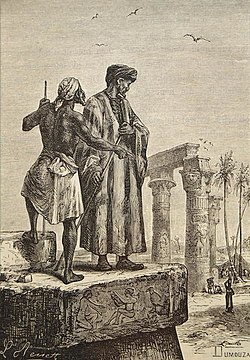
The Moroccan traveler Ibn Battuta passed through Sonargaon during his journeys, describing it as a flourishing port and center of trade on the routes to Southeast Asia.
Image source: Ibn Battuta
1576
% complete
The Mughal Empire defeated the last independent Sultan of Bengal at the Battle of Rajmahal, initiating the gradual extension of Mughal authority into the Dhaka region.
Image source: Bengal Subah
1610
% complete
Subahdar Islam Khan Chishti transferred the provincial capital from Rajmahal to Dhaka, renaming it Jahangirnagar after Emperor Jahangir and launching its rise as a great city.
Image source: Islam Khan I
1663 - 1688
% complete
Under Subahdar Shaista Khan, Dhaka flourished as a wealthy metropolis with a population approaching one million, famed for its muslin trade, mosques, and grand architecture.
Image source: Shaista Khan
1678
% complete
Prince Muhammad Azam Shah started building Lalbagh Fort, an unfinished Mughal fort complex that remains one of Dhaka's most famous landmarks.
Image source: Lalbagh Fort
1680
% complete
The Seven Dome Mosque was constructed during the late Mughal period, reflecting Dhaka's rich tradition of mosque architecture and religious life.
Image source: Sat Gambuj Mosque
1717
% complete
Murshid Quli Khan moved the Bengal capital to Murshidabad, triggering a long decline in Dhaka's political importance and population through the eighteenth century.
Image source: Murshidabad
1765
% complete
After the Battle of Buxar, the Mughal emperor granted the East India Company revenue collection rights over Bengal, Bihar, and Orissa, bringing Dhaka under Company control.
Image source: Diwani
1793
% complete
The Company established a factory and administrative presence in Dhaka as colonial institutions gradually replaced Mughal structures in the decaying city.
Image source: Dhaka
1800 - 1830
% complete
Dhaka's legendary fine cotton muslin, once prized worldwide, collapsed under competition from British machine-made textiles, devastating the city's weavers and economy.
Image source: Muslin
1864
% complete
The British created the Dhaka Municipal Committee, introducing modern civic administration, sanitation, and urban planning to the city.
Image source: Dhaka South City Corporation
1885
% complete
A railway line connecting Dhaka to the port of Narayanganj opened, reviving the city's commercial links and spurring economic growth.
Image source: Eastern Bengal Railway
Oct 16, 1905
% complete
The British partitioned Bengal, creating a new province with Dhaka as its capital, which triggered a wave of building, investment, and renewed prominence for the city.
Image source: Partition of Bengal (1905)
1906
% complete
Lord Curzon laid the foundation for Curzon Hall, an Indo-Saracenic building intended for a university that later became part of the University of Dhaka.
Image source: Curzon Hall
Dec 12, 1911
% complete
British authorities annulled the 1905 partition following nationalist protests, returning Bengal's unity but stripping Dhaka of its capital role and slowing its growth.
Image source: Partition of Bengal (1905)
Jul 1, 1921
% complete
Established by the Dacca University Act, the University of Dhaka became the premier institution of higher learning in East Bengal and later a cradle of Bengali nationalism.
Image source: University of Dhaka
Mar 1940
% complete
The Muslim League's session in Dhaka endorsed the Lahore Resolution calling for independent states for Muslims of India, energizing support for Pakistan in Bengal.
Image source: Lahore Resolution
Aug 14, 1947
% complete
With Indian independence and partition, Dhaka became the capital of East Bengal in the new Dominion of Pakistan, transforming it into a major administrative city.
Image source: Partition of India
1952
% complete
Students in Dhaka protested against Urdu being imposed as the sole state language; police fired on demonstrators on Feb 21, 1952, a date now commemorated as International Mother Language Day.
Image source: Bengali language movement
1966
% complete
Sheikh Mujibur Rahman of Dhaka-based politics put forward six demands for autonomy for East Pakistan, galvanizing Bengali nationalist sentiment against West Pakistani dominance.
Image source: Six point movement
Nov 12, 1970
% complete
A catastrophic cyclone killed up to half a million people in East Pakistan; the perceived inadequate government response deepened resentment ahead of the December elections.
Image source: 1970 Bhola cyclone
Dec 7, 1970
% complete
Sheikh Mujibur Rahman's Awami League swept East Pakistan's seats, winning an absolute majority nationally, but the transfer of power was stalled, provoking mass unrest in Dhaka.
Image source: 1970 Pakistani general election
Mar 25, 1971
% complete
The Pakistani army launched a brutal crackdown on Dhaka's civilians, intellectuals, and students, killing thousands and igniting the nine-month war for Bangladeshi independence.
Image source: Operation Searchlight
Apr 17, 1971
% complete
Bangladeshi leaders formally proclaimed independence at Baidyanathtala (Mujibnagar), organizing resistance while Dhaka remained occupied by Pakistani forces.
Image source: Provisional Government of Bangladesh
Dec 16, 1971
% complete
General A. A. K. Niazi surrendered to joint Bangladeshi-Indian forces at the Ramna Race Course in Dhaka, marking Victory Day and the birth of independent Bangladesh.
Image source: Pakistani Instrument of Surrender
Aug 15, 1975
% complete
Founding president Sheikh Mujibur Rahman and most of his family were killed in a military coup at his Dhanmondi residence in Dhaka, plunging the nation into years of instability.
Image source: Assassination of Sheikh Mujibur Rahman
1982
% complete
Louis Kahn's monumental National Assembly Building in Sher-e-Bangla Nagar was completed, becoming an architectural icon of Dhaka and the seat of Bangladesh's parliament.
Image source: Jatiya Sangsad Bhaban
Dec 1985
% complete
Dhaka hosted the founding summit that established SAARC, positioning the city as a regional diplomatic center and birthplace of South Asian cooperation efforts.
Image source: South Asian Association for Regional Cooperation
Dec 6, 1990
% complete
Mass street protests centered in Dhaka forced military ruler H. M. Ershad to resign, restoring parliamentary democracy in Bangladesh.
Image source: 1990 Bangladesh mass uprising
2000
% complete
Rapid migration and economic growth made Dhaka one of the world's fastest-growing megacities, bringing both prosperity and severe challenges of congestion, flooding, and housing shortages.
Apr 24, 2013
% complete
An eight-story building housing garment factories collapsed in Savar, on Dhaka's outskirts, killing more than 1,100 people and prompting global scrutiny of Bangladesh's garment industry.
Image source: Rana Plaza collapse
Dec 28, 2022
% complete
Bangladesh's first metro rail line began operations in Dhaka, connecting Uttara to Motijheel and offering relief to one of the world's most congested cities.
Image source: Dhaka Metro Rail
Or browse the full history timeline directory, with more than 2,000 topics.
This History of Dhaka timeline was generated with the help of AI, using information found on the internet.
We work hard to keep these timelines accurate, but mistakes do get through. If you spot one, email us at [email protected] and we'll fix it for future visitors.
Generate yours with AI or build it from scratch, for free.
Export your timeline, add your own events, edit or remove AI-generated events, and much more
No credit card required.
Cancel anytime.
Cancel anytime.
You can create an unlimited number of timelines with up to 10 events on each one, customize how they look, export them to PDF, PNG, PowerPoint, CSV, and Excel, and share them with a link. Paid plans raise the event limit and add features like spreadsheet imports and collaborators.
Yes. You can cancel your subscription from your account page at any time, and you will not be charged again. Your subscription stays active for the rest of the period you already paid for.
Yes. We will email you a reminder before the annual renewal, and we will also email you a receipt.
Yes. You can email us within 15 days of any payment, and we will issue you a full refund.
Check out our pricing docs or send us an email anytime: [email protected].