-
Resources
-
Pricing
The history of embryology traces how scientists have explained prenatal development, from ancient observations and philosophical theories to modern cellular, genetic, and molecular discoveries. More Less
Build a timeline like this one in minutes, for free. Start Yours →
Part of our collection of science timelines.
500 BC - 401 BC
Empedocles held that the embryo derives and receives its blood from four vessels: two arteries and two veins. Plutarch described this view in the 1st century AD.
Image source: Empedocles
500 BC - 401 BC
According to writings attributed to Tertullian, Herophilus described the ovaries and fallopian tubes and dissected embryos, although his account did not extend beyond anatomical observations already associated with Aristotle.
Image source: Herophilos
400 BC - 301 BC
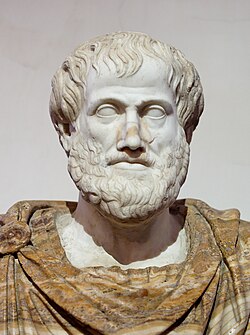
Aristotle wrote more extensively on embryology than any other pre-modern author. He introduced classifications, compared development across animals, examined sexual characteristics, and related embryonic development to mechanistic processes.
Image source: Aristotle
1 CE - 399
The ancient Buddhist Garbhāvakrāntisūtra contains an account of human embryonic development, making it an early textual source on the subject.
Image source: Embryology
200 - 299
Galen fostered ideas about generation while maintaining that Aristotle was correct that the incitation of life was provided by the male, particularly through semen.
Image source: Galen
200 - 299
Origen proposed one of the early Christian positions concerning embryological generation. The position became increasingly rejected after the fourth century.
Image source: Origen
500 - 699
After the seventh century, Chalcedonian discussion on embryology was slight, and the few works that touched on the topic supported synhyparxis.
500 - 599
In the early sixth century, Sergius of Reshaina devoted himself to translating Greek medical works into Syriac and became the most important figure in that translation process.
1000 - 1099
Avicenna attempted to reconcile Aristotelian and Galenic accounts of embryological development, continuing the long medieval engagement with classical theories.
Image source: Avicenna
1200 - 1299
The medieval commentator Nachmanides rejected the idea that the female contributed materially to embryonic generation.
Image source: Nachmanides
1700 - 1723
A notion originating with Greek writers—that male embryos developed faster than female embryos—persisted across many authors until Andreas Ottomar Goelicke experimentally disproved it in 1723.
1500 - 1699
As agriculture and animal breeding became important to nobles and working people, scholars increasingly questioned Aristotelian theories in favor of empirical approaches.
Image source: Embryology
1625
Hieronymus Fabricius ab Aquapendente published the first pictures of embryo development in De formatione ovi et pulli. The work is sometimes regarded as the first illustrated descriptive text on embryology.
Image source: Hieronymus Fabricius
1651
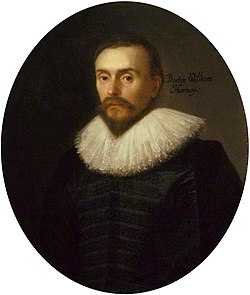
William Harvey coined “epigenesis” in Exercitationes de Generatione Animalium, building on Aristotelian ideas that organisms develop progressively rather than simply enlarging from a preformed miniature.
Image source: William Harvey
1668
Francesco Redi found that lower forms of life such as insects required eggs for reproduction. His experiments challenged spontaneous generation and supported empirical investigations of reproduction.
Image source: Francesco Redi
1673
Needham credited Marcello Malpighi with reviving preformationism. Malpighi tentatively believed that the egg and embryo contained an organism from conception, but at a scale too small to see.
Image source: Marcello Malpighi
1674
Nicolas Malebranche first put forth the particular preformationist idea that a miniature organism existed within the sperm.
Image source: Nicolas Malebranche
1677
Antonie van Leeuwenhoek was the first to see spermatozoa in semen under a microscope. He advocated preformationism and believed each sperm cell contained a miniature homunculus.
Image source: Antonie van Leeuwenhoek
1700 - 1799
As recently as the eighteenth century, the prevailing Western view of human embryology was preformation: the belief that sperm contained a preformed miniature infant, or homunculus, that simply increased in size.
Image source: Preformationism
1745
Charles Bonnet discovered parthenogenesis in aphids. The finding showed that development could occur without sperm and was taken as evidence supporting ovist preformationism.
Image source: Charles Bonnet
1759
Caspar Friedrich Wolff formulated the modern version of epigenesis in Theoria generationis, arguing that embryonic structures arise progressively during development.
Image source: Caspar Friedrich Wolff
1804
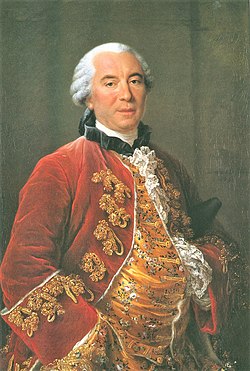
Georges Buffon proposed a corpuscular theory of generation as an alternative to both straightforward preformation and classical epigenetic accounts.
Image source: Georges-Louis Leclerc, Comte de Buffon
1800 - 1899
Improved microscopy in the nineteenth century showed that embryos took shape through progressive steps. Epigenesis consequently displaced preformation as the favored explanation among embryologists.
1800 - 1899
By the end of the nineteenth century, preformation had largely given way to forms of predeterminism. These views held that the organism’s form was fixed from the beginning even though no physical homunculus existed.
1800 - 1999
Fixing, sectioning, and staining tissue made histology the foundation of descriptive embryology through the nineteenth and early twentieth centuries. Chemical staining also improved comparative embryology.
Image source: Histology
1817
Christian Heinrich Pander first described membrane folding in embryos. His work prompted Karl Ernst von Baer to begin investigations that led to major advances in developmental embryology.
Image source: Christian Heinrich Pander
1820 - 1880
The development of cell theory by various researchers between 1820 and 1880 undermined preformationism by showing that embryos grow through the creation of new cells rather than merely enlarging pre-existing structures.
Image source: Cell theory
1828 - 1837
Between 1828 and 1837, Karl Ernst von Baer published Über Entwickelungsgeschichte der Thiere. His 1828 book is often called the beginning of modern scientific embryology and became a model for nineteenth-century embryology.
Image source: Karl Ernst von Baer
1874
In direct response to Haeckel, Wilhelm His Sr. argued that mechanical forces, rather than evolutionary remnants, could produce embryonic form.
1875 - 1880
Between 1875 and 1880, scientists established the basic mechanism of fertilization: spermatozoa or pollen cells enter an ovum or ovule, their pronuclei fuse, and mitotic divisions begin.
Image source: Fertilisation
1875
Charles Darwin and Ernst Haeckel treated recapitulation as evidence for evolution. Haeckel summarized the idea in 1875 as the “biogenetic law”: “ontogeny recapitulates phylogeny.”
Image source: Recapitulation theory
1876
Oscar Hertwig observed the fusion of sperm and egg nuclei in sea urchins, providing a landmark observation in the developing understanding of fertilization.
Image source: Oscar Hertwig
1888
Wilhelm Roux promoted Entwicklungsmechanik, or developmental mechanics, in 1888. The approach favored experiments on the causal mechanisms of development over purely comparative description.
Image source: Wilhelm Roux
1900 - 1999
At the dawn of the twentieth century, embryologists disagreed over whether the nucleus or cytoplasm was the primary determinant of development. Edmund Beecher Wilson emphasized the nucleus, while Thomas Hunt Morgan emphasized cytoplasmic factors.
Image source: Developmental biology
1909
Ethel Browne Harvey found that grafting the body wall of a white Hydra viridis onto a green hydra induced development of a green hydra, supporting the existence of formative influences in development.
1910
In experiments published in 1910, Roux destroyed half of a two-cell frog embryo and found that the remaining cell formed a half-embryo. The result supported the idea that early cells could have predetermined developmental roles.
1910
Thomas Hunt Morgan became an early supporter of gene theory in 1910, alongside Edmund Beecher Wilson and Theodor Boveri, helping connect heredity with developmental processes.
Image source: Thomas Hunt Morgan
1924
Hans Spemann and Hilde Mangold published an experiment demonstrating the organizer effect, in which transplanted embryonic tissue induced the formation of complex structures. Spemann received the Nobel Prize in 1935.
1926
Morgan characterized genetics as the study of trait transmission and embryology as the study of trait expression. This distinction reflected a major debate over whether genetics and embryology should be integrated or treated as separate fields.
1932 - 1933
Johannes Holtfreter discovered that many other embryonic parts, whether dead or alive, could induce complex structures when transplanted. His results broadened understanding of embryonic induction.
Image source: Johannes Holtfreter
1938 - 1949
Between 1938 and 1949, Salome Gluecksohn-Waelsch investigated connections between specific genes and embryonic organizers, helping bridge genetics and experimental embryology.
Image source: Salome Gluecksohn-Waelsch
1950
Hamburger described experimental biology as having a commanding presence during the first half of the twentieth century but being largely exhausted by the 1950s as research shifted toward cellular, subcellular, and molecular levels.
1952
In a 1952 paper, Alan Turing proposed a reaction-diffusion system in which homogeneous solutions could interact to form stable structures. The model became an important quantitative idea for explaining biological pattern formation.
Image source: Alan Turing
1969
Beginning with a 1969 paper, Roy J. Britten and Eric Davidson developed a theoretical framework for gene regulatory networks, in which genes trigger transcription of other genes in regulated sequences shaped by evolutionary pressure.
Image source: Gene regulatory network
1975 - 1999
According to Kate MacCord and Jane Maienschein, researchers only explicitly attempted to unite development and evolution in a single framework during the late twentieth century.
Image source: Evolutionary developmental biology
1983
The term evolutionary developmental biology, or evo-devo, was coined in 1983. The field formally joined evolutionary questions with developmental biology, although evolutionary embryology had existed for at least a century.
1989
Mario R. Capecchi, Martin Evans, and Oliver Smithies introduced knockout techniques in 1989. These methods eliminate selected genes from organisms, allowing researchers to test gene functions in development.
Image source: Gene knockout
2000
By 2000, stem cell research, cloning, and synthetic biology were being used to construct and study embryos, extending embryology into experimental and engineered systems.
Image source: Synthetic biology
2000 - 2099
High-throughput techniques developed in the twenty-first century led to omics approaches, enabling mass association of genes with developmental processes.
Image source: Omics
Build a timeline like this one in minutes, for free. Start Yours →
Or browse the full history timeline directory, with more than 2,500 topics.
This History of Embryology timeline was generated with the help of AI, using information found on the internet.
We work hard to keep these timelines accurate, but mistakes do get through. If you spot one, email us at [email protected] and we'll fix it for future visitors.
Generate yours with AI or build it from scratch, for free.
Export your timeline, add your own events, edit or remove AI-generated events, and much more
No credit card required.
15-day money-back guarantee.
You can create an unlimited number of timelines with up to 10 events on each one, customize how they look, export them to PDF, PNG, PowerPoint, CSV, and Excel, and share them with a link. Timelines made with Timeline Maker AI keep every event the generator created, and you can add up to 5 events of your own. Paid plans remove the event limit, add spreadsheet imports and hide Preceden's branding, and the higher-priced plan also adds collaborators, a custom logo and a custom domain.
Yes. You can cancel your subscription from your account page at any time, and you will not be charged again. Your subscription stays active for the rest of the period you already paid for.
Yes. We email you a reminder 15 days before your annual renewal, and we email you a receipt after every payment.
Yes. You can email us within 15 days of any payment, and we will issue you a full refund.
Check out our pricing docs or send us an email anytime: [email protected].