-
Use Cases
-
Resources
-
Pricing
The history of paleontology traces humanity's evolving understanding of prehistoric life through fossils. From early interpretations of fossils as mythological creatures or natural curiosities, the field developed into a rigorous science during the Enlightenment, with figures like Georges Cuvier establishing extinction as fact and Mary Anning making groundbreaking discoveries. The 19th century saw the first dinosaur descriptions, while the 20th century brought evolutionary synthesis, plate tectonics, and molecular techniques that transformed how scientists reconstruct ancient life on Earth. More Less
1027
% complete
In 1027, the Persian naturalist Ibn Sina (known as Avicenna in Europe) proposed an explanation of how the stoniness of fossils was caused in The Book of Healing. He modified this into the theory of petrifying fluids (succus lapidificatus), which was elaborated on by Albert of Saxony in the 14th century and accepted in some form by most naturalists by the 16th century.
Image source: The Book of Healing
1088
% complete
In 1088 AD, Shen Kuo (1031–1095) of the Song dynasty discovered preserved petrified bamboos found underground in Yan'an, Shanbei region, Shaanxi. He used marine fossils found in the Taihang Mountains to infer geological processes such as geomorphology and shifting seashores, and proposed a theory of climate change based on evidence from petrified bamboo.
Image source: Shen Kuo

1500 - 1519
% complete
Leonardo da Vinci (1452–1519), in an unpublished notebook, concluded that some fossil sea shells were the remains of shellfish. His interpretation appears extraordinarily innovative, as he surpassed three centuries of scientific debate on the nature of body fossils.
Image source: Leonardo da Vinci
1500 - 1600
% complete
As a result of a new emphasis on observing, classifying, and cataloging nature, 16th-century natural philosophers in Europe began to establish extensive collections of fossil objects, often stored in specially built cabinets. However, most 16th-century Europeans did not recognize that fossils were the remains of living organisms, and writers such as Gesner and Georg Agricola were more interested in classifying objects by their physical and mystical properties than their origins.
Image source: History of paleontology
1565
% complete
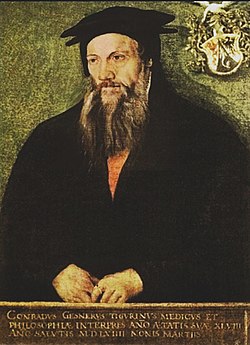
Conrad Gesner published a 1565 work on fossils that contained one of the first detailed descriptions of a cabinet and collection. Informal correspondence networks among natural philosophers and collectors became increasingly important during the 16th century and were direct forerunners of the scientific societies that would begin to form in the 17th century.
Image source: Conrad Gessner
1665
% complete
In 1665 Athanasius Kircher attributed giant bones to extinct races of giant humans in his Mundus Subterranneus, reflecting the era's uncertainty about the nature of large fossil bones.
Image source: Athanasius Kircher
1667
% complete
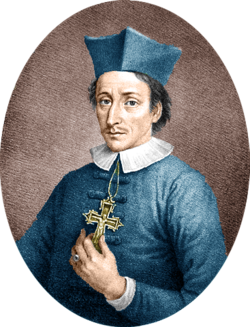
In 1667 Nicholas Steno wrote a paper about a shark head he had dissected. The result of this work was published in 1669 as Forerunner to a Dissertation on a solid naturally enclosed in a solid, which had considerable influence on the study of fossils.
Image source: Nicolas Steno
1669
% complete
Steno, who like almost all 17th-century natural philosophers believed that the earth was only a few thousand years old, resorted to the Biblical flood as a possible explanation for fossils of marine organisms that were far from the sea. Despite the influence of his Forerunner, naturalists such as Martin Lister and John Ray continued to question the organic origin of some fossils.
1778
% complete
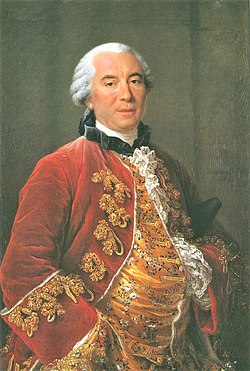
In his 1778 work Epochs of Nature Georges Buffon referred to fossils, in particular the discovery of fossils of tropical species such as elephants and rhinoceros in northern Europe, as evidence for the theory that the Earth had started out much warmer than it currently was and had been gradually cooling.
Image source: Georges-Louis Leclerc, Comte de Buffon
1793
% complete
One of the first and most important examples of museums with large natural history collections was the Museum of Natural History in Paris, which was at the center of many developments in natural history during the first decades of the 19th century. It was founded in 1793 by an act of the French National Assembly, based on an extensive royal collection plus private collections confiscated during the French Revolution, and expanded by material seized during the Napoleonic Wars.
Image source: National Museum of Natural History, France
1796
% complete
In 1796 Georges Cuvier presented a paper on living and fossil elephants comparing skeletal remains of Indian and African elephants to fossils of mammoths and an animal he would later name mastodon using comparative anatomy. In this landmark paper he also referred to a single catastrophe that destroyed life to be replaced by current forms.
Image source: Georges Cuvier
1796
% complete
Cuvier made another powerful demonstration of the power of comparative anatomy in paleontology when he presented a second paper in 1796 on a large fossil skeleton from Paraguay, which he named Megatherium and identified as a giant sloth by comparing its skull to those of two living species of tree sloth.
Image source: Megatherium
1799 - 1815
% complete
William Smith created the first geological map of England during the late 1790s and early 19th century, helping establish stratigraphy as a foundation for understanding the fossil record.
Image source: William Smith (geologist)
1804
% complete
In 1804, Cuvier identified two fossil mammal genera from the gypsum quarries of the outskirts of Paris (the Paris Basin). Unlike earlier-discovered fossil mammals like Megatherium and Mammut, these were discovered from deeper deposits instead of surface deposits, indicating older ages (late Eocene epoch).
Image source: Paris Basin
1812
% complete
The Smithsonian Libraries consider that the first edition of a work which laid the foundation to vertebrate paleontology was Georges Cuvier's Recherches sur les ossements fossiles de quadrupèdes, published in France in 1812. It included drawn reconstructions of Palaeotherium minor, Anoplotherium medium, and most famously Anoplotherium commune.
Image source: Georges Cuvier
1817
% complete
Henri Marie Ducrotay de Blainville had already coined the term paléozoologie in 1817 to refer to the work Cuvier and others were doing to reconstruct extinct animals from fossil bones.
Image source: Henri Marie Ducrotay de Blainville
Jan 1822
% complete
Referring to the second edition of Cuvier's work (1821), Blainville published in January 1822, in the Journal de physique, an article titled "Analyse des principaux travaux dans les sciences physiques, publiés dans l'année 1821". After trying some unsuccessful alternatives, he hit on "palaeontologie" in 1822, and the word was used by the editor of a French scientific journal to refer to the study of ancient living organisms through fossils.
1828
% complete
In 1828 Alexandre Brongniart's son, the botanist Adolphe Brongniart, published the introduction to a longer work on the history of fossil plants, a foundational contribution to paleobotany. The term "paleobotany" would be coined in 1884 and "palynology" in 1944.
Image source: Adolphe-Théodore Brongniart
1841
% complete
In 1841, John Phillips formally divided the geologic column into three major eras, the Paleozoic, Mesozoic, and Cenozoic, based on sharp breaks in the fossil record.
Image source: John Phillips (geologist)
1808
% complete
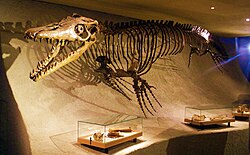
In 1808, Cuvier identified a fossil found in Maastricht as a giant marine reptile that would later be named Mosasaurus, demonstrating the existence of extinct reptiles unlike any living species.
Image source: Mosasaurus
1811
% complete
These included the first ichthyosaur skeleton to be recognized as such, which was collected in 1811, and the first two plesiosaur skeletons ever found in 1821 and 1823, discoveries that revealed the diversity of extinct marine reptiles.
Image source: Ichthyosauria
1824
% complete
That same year Gideon Mantell realized that some large teeth he had found in 1822, in Cretaceous rocks from Tilgate, belonged to a giant herbivorous land-dwelling reptile, later named Iguanodon.
Image source: Gideon Mantell
1824
% complete
In 1824, Buckland found and described a lower jaw from Jurassic deposits from Stonesfield, one of the first dinosaurs to receive a formal scientific description.
Image source: Megalosaurus
1831
% complete
Mantell published an influential paper in 1831 entitled "The Age of Reptiles" in which he summarized evidence for an extended time during which the earth had teemed with large reptiles, dividing that era into three intervals anticipating the modern Triassic, Jurassic, and Cretaceous periods. In 1832 Mantell found at Tilgate a partial skeleton of an armored reptile he called Hylaeosaurus.
1841
% complete
In 1841 the English anatomist Richard Owen created a new order of reptiles, which he called Dinosauria, for Megalosaurus, Iguanodon, and Hylaeosaurus. By 1830, a scientific consensus had formed around Cuvier's catastrophist ideas as a result of paleobotany and the dinosaur and marine reptile discoveries in Britain; in Great Britain geologists like Buckland and Robert Jameson explicitly linked the most recent catastrophe to the biblical flood.
Image source: Richard Owen
1858
% complete
A major development in the second half of the 19th century was a rapid expansion of paleontology in North America. In 1858 Joseph Leidy described a Hadrosaurus skeleton, which was the first North American dinosaur to be described from good remains. The last half of the 19th century saw tremendous expansion in paleontological activity, especially in North America.
Image source: Hadrosaurus
1844
% complete
Robert Chambers used fossil evidence in his 1844 popular science book Vestiges of the Natural History of Creation, which advocated an evolutionary origin for the cosmos as well as for life on earth. Earlier, Jean Baptiste Lamarck had used fossils to argue for his theory of the transmutation of species.
Image source: Vestiges of the Natural History of Creation
1856
% complete
Neanderthal fossils were discovered in 1856, but at the time it was not clear that they represented a different species from modern humans.
Image source: Neanderthal
1859
% complete
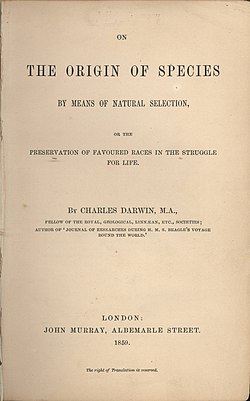
Charles Darwin's publication of On the Origin of Species in 1859 was a watershed event in all the life sciences, especially paleontology. Much of the focus of paleontology shifted to understanding evolutionary paths, including human evolution, and evolutionary theory.
Image source: On the Origin of Species
1861
% complete
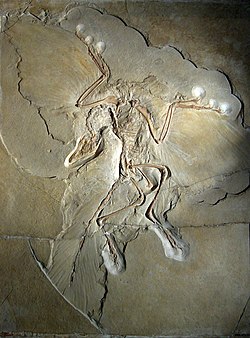
In 1861 the first specimen of Archaeopteryx, an animal with both teeth and feathers and a mix of other reptilian and avian features, was discovered in a limestone quarry in Bavaria and described by Richard Owen. Another would be found in the late 1870s and put on display at the Natural History Museum, Berlin in 1881.
Image source: Archaeopteryx
1872
% complete
Other primitive toothed birds were found by Othniel Marsh in Kansas in 1872, contributing to understanding of the evolution of birds.
Image source: Othniel Charles Marsh
1891
% complete
Eugene Dubois created a sensation with his discovery of Java Man, the first fossil evidence of a species that seemed clearly intermediate between humans and apes, in 1891.
Image source: Java Man
1909
% complete
The well-known Burgess Shale Cambrian fossil site was found in 1909 by Charles Doolittle Walcott, and another important site in Chengjiang China was found in 1912. Walcott had earlier discovered stromatolites and other fossil evidence of pre-Cambrian life in the late 19th century, though the organic origin of those fossils was disputed at the time.
Image source: Burgess Shale
1924
% complete
A series of finds throughout the 20th century in Africa, starting with Taung child in 1924, and elsewhere have helped illuminate the course of human evolution.
Image source: Taung Child
1944
% complete
In 1944 George Gaylord Simpson published Tempo and Mode in Evolution, which used quantitative analysis to show that the fossil record was consistent with the branching, non-directional patterns predicted by advocates of evolution driven by natural selection and genetic drift rather than the linear trends predicted by earlier advocates of neo-Lamarckism and orthogenesis.
1970 - 1989
% complete
Whittington, Derek Briggs, Simon Conway Morris and others sparked a renewed interest and a burst of activity including discovery of an important new fossil site, Sirius Passet, in Greenland, and the publication of a popular and controversial book, Wonderful Life by Stephen Jay Gould in 1989.
Image source: Wonderful Life (book)
1972
% complete
In 1972 Niles Eldredge and Stephen Jay Gould used fossil evidence to advocate the theory of punctuated equilibrium, which maintains that evolution is characterized by long periods of relative stasis and much shorter periods of relatively rapid change.
Image source: Punctuated equilibrium
1980
% complete
The 20th century saw a major renewal of interest in mass extinction events and their effect on the course of the history of life. This was particularly true after 1980 when Luis and Walter Alvarez put forward the Alvarez hypothesis claiming that an impact event caused the Cretaceous–Paleogene extinction event, which killed off the non-avian dinosaurs along with many other living things.
Image source: Alvarez hypothesis
1990 - 2000
% complete
Near the end of the 20th century, the opening of China to systematic exploration for fossils yielded a wealth of material on dinosaurs and the origin of birds and mammals. During the 20th century, paleontological exploration intensified everywhere and ceased to be a largely European and North American activity; in the 25 years after 1969 the number of described dinosaur genera increased from 170 to 315.
2000
% complete
Prior to 1950 there was no widely accepted fossil evidence of life before the Cambrian period. By the end of the 20th century, paleobiology had established that the history of life extended back at least 3.5 billion years. Increasingly, results of paleontology and molecular biology were being brought together to reveal detailed phylogenetic trees, and fossil finds in Pakistan shed light on whale evolution.
Image source: Paleobiology
Or browse the full history timeline directory, with more than 2,000 topics.
This History of Paleontology timeline was generated with the help of AI, using information found on the internet.
We work hard to keep these timelines accurate, but mistakes do get through. If you spot one, email us at [email protected] and we'll fix it for future visitors.
Generate yours with AI or build it from scratch, for free.
Export your timeline, add your own events, edit or remove AI-generated events, and much more
No credit card required.
Cancel anytime.
Cancel anytime.
You can create an unlimited number of timelines with up to 10 events on each one, customize how they look, export them to PDF, PNG, PowerPoint, CSV, and Excel, and share them with a link. Paid plans raise the event limit and add features like spreadsheet imports and collaborators.
Yes. You can cancel your subscription from your account page at any time, and you will not be charged again. Your subscription stays active for the rest of the period you already paid for.
Yes. We will email you a reminder before the annual renewal, and we will also email you a receipt.
Yes. You can email us within 15 days of any payment, and we will issue you a full refund.
Check out our pricing docs or send us an email anytime: [email protected].