-
Use Cases
-
Resources
-
Pricing
The history of folk music traces the evolution of music passed down through oral tradition among common people. Originating in ancient communal songs, work chants, and ballads, folk music developed distinct regional styles across Europe, Africa, and the Americas. It experienced a major revival in the mid-20th century with artists like Woody Guthrie and Bob Dylan, and continues to evolve through modern singer-songwriters and world music influences. More Less
1882 - 1898
% complete
Harvard scholar Francis James Child compiled 305 traditional ballads from England and Scotland, creating the definitive scholarly collection of Anglo-American folk songs. The 'Child Ballads' became foundational texts for folklorists, musicians, and the later folk revivals on both sides of the Atlantic.
Image source: Child Ballads
Aug 1903
% complete
Cecil Sharp heard the Headington Quarry Morris Men in Oxfordshire and was inspired to begin systematically collecting English folk songs from rural singers. Over two decades he notated thousands of tunes and founded organizations that preserved and promoted traditional music.
Image source: Cecil Sharp
1910
% complete
Texas folklorist John Lomax published a landmark collection of American cowboy songs and frontier ballads, bringing American vernacular music to national attention. The book helped establish folklore studies as an academic discipline in the United States.
Jul 1933
% complete
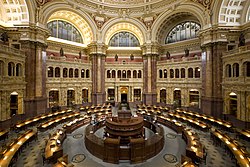
John and Alan Lomax traveled the American South with portable recording equipment, documenting work songs, blues, ballads, and spirituals for the Archive of American Folk Song. Their field recordings captured voices like Huddie 'Lead Belly' Ledbetter and Muddy Waters before fame reached them.
Image source: Library of Congress
Jan 1935
% complete
Following Lead Belly's release from prison in 1934, John and Alan Lomax promoted him as a living link to America's folk traditions. Lead Belly's performances in New York and his vast repertoire of songs like 'Goodnight, Irene' influenced generations of folk and popular musicians.
Image source: Lead Belly
Feb 23, 1940
% complete
Woody Guthrie composed what became one of America's most beloved protest songs as a response to Irving Berlin's 'God Bless America.' Guthrie's dust bowl ballads and political songwriting made him a towering figure whose influence shaped the entire folk revival movement.
Image source: This Land Is Your Land
Dec 1940 - 1943
% complete
A loosely organized group including Woody Guthrie, Pete Seeger, and Lee Hays formed to perform union organizing and anti-war songs. Though short-lived, the collective pioneered the model of politically engaged folk ensembles that inspired groups like The Weavers.
Feb 1946 - 1949
% complete
Pete Seeger established People's Songs as an organization and newsletter connecting labor organizers with topical folk music. Although it folded after three years due to financial troubles, it laid organizational groundwork for the postwar folk revival.
1950
% complete
The Weavers, featuring Pete Seeger, Ronnie Gilbert, Lee Hays, and Fred Hellerman, took Lead Belly's 'Goodnight, Irene' to the top of the pop charts. Their commercial success brought folk music into mainstream American culture and opened doors for countless folk performers.
Image source: Goodnight, Irene
1952
% complete
Experimental filmmaker Harry Smith assembled 84 recordings from 1920s and '30s country, blues, and gospel 78s into a six-LP anthology. The release became a bible for the folk revival, directly inspiring artists like Bob Dylan, Joan Baez, and the New Lost City Ramblers.
Image source: Anthology of American Folk Music
Nov 1958
% complete
The Kingston Trio's recording of the old North Carolina murder ballad sold millions and launched the commercial folk boom of the late 1950s and early 1960s. Their clean-cut image made folk palatable to mainstream audiences and college students nationwide.
Image source: Tom Dooley (song)
1959 - Nov 1960
% complete
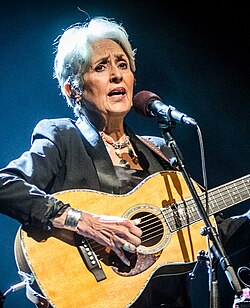
Joan Baez made a celebrated appearance at the first Newport Folk Festival in 1959 and released her acclaimed debut album in 1960. Her crystalline voice and civil rights activism made her the leading female voice of the revival and helped launch Bob Dylan's career.
Image source: Joan Baez
Jul 11, 1959
% complete
Founded by George Wein and Albert Grossman, the Newport Folk Festival became the premier showcase of American folk music. It introduced audiences to traditional artists and revival stars alike, and its stages hosted some of the most legendary moments in folk history.
Image source: Newport Folk Festival
1961
% complete
New York's Greenwich Village became the epicenter of the folk revival, with clubs like Gerde's Folk City and Cafe Wha? hosting emerging talents. Coffeehouses, record shops, and hootenannies created a vibrant scene where traditional music met contemporary songwriting.
Image source: Greenwich Village
Jan 24, 1961 - Mar 1962
% complete
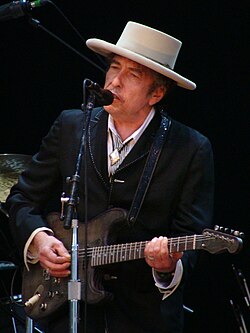
Nineteen-year-old Robert Zimmerman arrived in Greenwich Village, adopted the name Bob Dylan, and quickly built a reputation performing in Village clubs. Signed by Columbia's John Hammond in 1961, he released his self-titled debut album in March 1962, changing folk music forever.
Image source: Bob Dylan
1962
% complete
The trio Peter, Paul and Mary scored massive hits with songs like 'If I Had a Hammer' and Dylan's 'Blowin' in the Wind.' Their polished harmony singing carried folk and protest music to the widest audience yet, dominating charts and radio through the mid-1960s.
Image source: Peter, Paul and Mary
May 27, 1963
% complete
Dylan's second album featured original protest anthems like 'Blowin' in the Wind,' 'Masters of War,' and 'A Hard Rain's a-Gonna Fall.' It transformed him into the voice of a generation and proved folk songs could be powerful vehicles for contemporary social commentary.
Image source: The Freewheelin' Bob Dylan
Aug 28, 1963
% complete
Folk artists played a prominent role at the March on Washington, where Bob Dylan, Joan Baez, Odetta, and Peter, Paul and Mary performed for the massive crowd gathered at the Lincoln Memorial. Folk music had become inseparable from the civil rights movement.
Image source: March on Washington for Jobs and Freedom
Jul 25, 1965
% complete
Backed by members of the Paul Butterfield Blues Band, Dylan performed a short electric set at Newport and was famously booed by parts of the audience. His embrace of rock instrumentation symbolized folk music's evolution beyond acoustic purism and divided the folk community.
Image source: Electric Dylan controversy
Jan 1966
% complete
After their acoustic debut flopped, Paul Simon and Art Garfunkel's song was remixed with electric overdubs and reached number one. 'The Sound of Silence' exemplified how folk songwriting could thrive within rock production, bridging the two worlds.
Image source: The Sound of Silence
1945
% complete
Scottish-born singer, songwriter, and playwright Ewan MacColl became a central figure of Britain's second folk revival. He wrote hundreds of songs including 'Dirty Old Town' and 'The First Time Ever I Saw Your Face,' and later co-created the BBC Radio Ballads blending folk song with documentary sound.
Image source: Ewan MacColl
1955 - 1958
% complete
Lonnie Donegan's hit version of 'Rock Island Line' ignited a skiffle boom across Britain, inspiring thousands of teenagers—including a young John Lennon—to form bands with homemade instruments. Skiffle served as the bridge between British folk traditions and rock and roll.
Image source: Skiffle
Feb 7, 1964
% complete
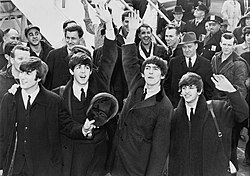
The Beatles' arrival in America marked a turning point that drew many young listeners away from folk toward electric rock. The shift set the stage for tensions between acoustic tradition and electrified experimentation that would define mid-1960s folk scenes.
Image source: Beatlemania
Dec 1969
% complete
Featuring Sandy Denny's vocals and Dave Swarbrick's fiddle, Fairport Convention's album Liege & Lief fused traditional British ballads with electric instrumentation. It defined the British folk-rock genre and inspired bands like Steeleye Span and The Albion Band.
Image source: Liege & Lief
1970 - 1975
% complete
Los Angeles's Laurel Canyon neighborhood nurtured a community of folk-influenced singer-songwriters including Carole King, James Taylor, Jackson Browne, and Joni Mitchell. Their introspective albums dominated early-1970s radio and redefined folk as personal expression rather than political statement.
Image source: Laurel Canyon, Los Angeles
Jun 1971
% complete
Canadian singer-songwriter Joni Mitchell released Blue, widely regarded as one of the greatest albums ever recorded. Its confessional lyrics and open-tuned guitar playing expanded the emotional and artistic boundaries of contemporary folk and singer-songwriter music.
Image source: Blue (Joni Mitchell album)
1985
% complete
In the mid-1980s, artists like Nanci Griffith, Suzanne Vega, and Tracy Chapman revitalized folk-informed songwriting amid synth-pop dominance. Vega's 'Tom's Diner' and Griffith's storytelling style helped establish coffeehouse folk as a vital contemporary genre.
Image source: Nanci Griffith
Jun 11, 1988
% complete
Tracy Chapman performed 'Fast Car' at Wembley Stadium during the Nelson Mandela 70th Birthday Tribute, stunning a global audience. Her self-titled debut album went multi-platinum and proved socially conscious folk songwriting still commanded mass appeal.
Image source: Tracy Chapman
2000
% complete
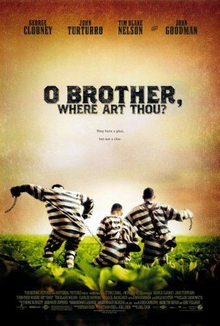
The Coen brothers' film and its T Bone Burnett-produced soundtrack introduced millions to Depression-era bluegrass, old-time, and gospel music. The multi-platinum album won the Grammy Album of the Year and fueled renewed interest in traditional American roots music.
Image source: O Brother, Where Art Thou?
2008 - 2012
% complete
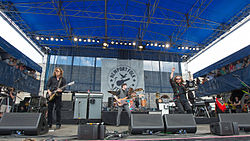
Indie folk acts like Fleet Foxes, Bon Iver, Mumford & Sons, and The Lumineers brought banjos, harmonies, and rustic aesthetics to arenas and festival stages. Mumford & Sons' 2012 Grammy Album of the Year win confirmed indie folk's place at the center of popular music.
Image source: Indie folk
Or browse the full history timeline directory, with more than 2,000 topics.
This History of Folk Music timeline was generated with the help of AI, using information found on the internet.
We work hard to keep these timelines accurate, but mistakes do get through. If you spot one, email us at [email protected] and we'll fix it for future visitors.
Generate yours with AI or build it from scratch, for free.
Export your timeline, add your own events, edit or remove AI-generated events, and much more
No credit card required.
Cancel anytime.
Cancel anytime.
You can create an unlimited number of timelines with up to 10 events on each one, customize how they look, export them to PDF, PNG, PowerPoint, CSV, and Excel, and share them with a link. Paid plans raise the event limit and add features like spreadsheet imports and collaborators.
Yes. You can cancel your subscription from your account page at any time, and you will not be charged again. Your subscription stays active for the rest of the period you already paid for.
Yes. We will email you a reminder before the annual renewal, and we will also email you a receipt.
Yes. You can email us within 15 days of any payment, and we will issue you a full refund.
Check out our pricing docs or send us an email anytime: [email protected].