-
Use Cases
-
Resources
-
Pricing
Ford Motor Company, founded by Henry Ford in 1903 in Dearborn, Michigan, transformed the automotive industry and modern manufacturing. Famous for the Model T and the moving assembly line, Ford pioneered mass production, making automobiles affordable for ordinary Americans. Over more than a century, the company has grown into a global automaker known for iconic vehicles like the Mustang and F-Series trucks, while adapting to eras of war production, globalization, and the shift toward electric vehicles. More Less
Jul 30, 1863
% complete
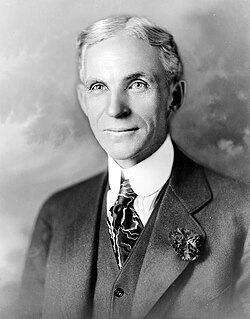
Henry Ford, the founder of the Ford Motor Company, was born on a farm in Springwells Township, Michigan. His early fascination with machinery and engines would eventually lead him to revolutionize transportation and manufacturing in America.
Image source: Henry Ford
1891
% complete
Henry Ford joined the Edison Illuminating Company in Detroit as an engineer, rising to chief engineer by 1893. The position gave him time and resources to experiment with gasoline engines, leading to his first self-propelled vehicle.
Image source: Edison Illuminating Company
Jun 4, 1896
% complete
In a shed behind his Detroit home, Henry Ford completed and test-drove his first horseless carriage, the Quadricycle. The successful run encouraged him to pursue automobile manufacturing as a career.
Image source: Ford Quadricycle
Aug 5, 1899
% complete
Henry Ford's first attempt at building a car company, the Detroit Automobile Company, was founded with backing from local investors. It produced few vehicles of inconsistent quality and was dissolved in 1901.
Image source: Detroit Automobile Company
Oct 10, 1901
% complete
Driving his own race car, Henry Ford defeated the prominent automaker Alexander Winton in a race at Grosse Pointe, Michigan. The victory attracted new investors and led to the formation of the Henry Ford Company.
Image source: Alexander Winton
Oct 25, 1902
% complete
Race driver Barney Oldfield piloted Henry Ford's powerful 999 racer to victory, generating publicity that boosted Ford's reputation and helped attract investors for his next venture.
Image source: Ford 999
Jun 16, 1903
% complete
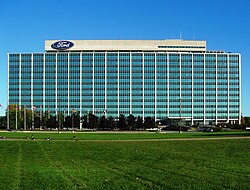
With $28,000 from twelve investors, Henry Ford founded the Ford Motor Company in Dearborn, Michigan. The company would go on to become one of the largest and most influential automakers in the world.
Image source: Ford Motor Company
Jul 23, 1903
% complete
The first production Ford Model A was sold to Dr. Ernst Pfennig, a Chicago dentist, just weeks after the company's founding. Early sales success helped establish Ford's financial footing.
Image source: Ford Model A (1903–04)
Oct 1, 1908
% complete
The Ford Model T debuted as a simple, durable, and affordable automobile designed for the average American. Over its nineteen-year production run, more than 15 million units were sold, transforming American society and mobility.
Image source: Ford Model T
Dec 1, 1913
% complete
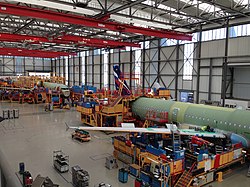
Ford introduced the moving assembly line at its Highland Park plant, reducing chassis assembly time from over 12 hours to about 93 minutes. This innovation dramatically lowered costs and revolutionized industrial manufacturing worldwide.
Image source: Assembly line
Jan 5, 1914
% complete
Henry Ford stunned the business world by doubling workers' pay to five dollars per day. The move reduced turnover, attracted thousands of job seekers to Detroit, and enabled factory workers to afford the cars they built.
Sep 26, 1926
% complete
Ford Motor Company became one of the first major American companies to adopt a five-day, 40-hour workweek, arguing that increased leisure time would benefit both workers and the economy.
May 26, 1927
% complete
After producing more than 15 million units, Ford ceased Model T production and shut down plants for months to retool for the new Model A, which offered improved styling, performance, and features.
Image source: Ford Model A (1927–1932)
1928
% complete
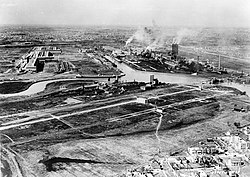
Ford's River Rouge complex in Dearborn grew into the world's largest integrated manufacturing site, where raw materials like iron ore and rubber were transformed into finished automobiles under one roof.
Image source: Ford River Rouge complex
May 31, 1929
% complete
Ford signed a technical assistance agreement with the Soviet Union to help build the Gorkovsky Avtomobilny Zavod (GAZ) plant in Nizhny Novgorod, exporting American mass-production methods abroad.
Image source: GAZ
Mar 31, 1932
% complete
Ford launched the affordable Model 18 featuring the first mass-produced V8 engine in a low-priced car. The flathead V8 became legendary among hot rodders and cemented Ford's engineering reputation during the Depression.
Image source: Ford flathead V8 engine
1942
% complete
Ford converted its massive Willow Run plant to produce B-24 Liberator bombers for World War II, eventually achieving the remarkable rate of one bomber per hour and becoming a symbol of Arsenal of Democracy output.
Image source: Willow Run
1942 - 1945
% complete
Alongside Willys-Overland, Ford manufactured the GPW version of the iconic Jeep, producing roughly 280,000 units that served Allied forces across every theater of World War II.
Image source: Willys MB
Sep 21, 1945
% complete
At age 28, Henry Ford II, grandson of the founder, assumed presidency of the struggling company from his ailing grandfather. He modernized management, hired the 'Whiz Kids,' and prepared Ford for postwar competition.
Image source: Henry Ford II
Apr 7, 1947
% complete
Henry Ford died at Fair Lane, his estate in Dearborn, at age 83. The passing of the automotive pioneer prompted tributes worldwide and marked the end of an era for the company he founded.
Jan 16, 1948
% complete
Ford launched the F-1 pickup, beginning the F-Series line that would become the best-selling truck in America and, later, the best-selling vehicle in the United States for decades running.
Image source: Ford F-Series
1955
% complete
The two-seat Thunderbird debuted as Ford's answer to the Chevrolet Corvette, creating the 'personal luxury car' segment and becoming an enduring American style icon through eleven generations.
Image source: Ford Thunderbird
Jan 17, 1956
% complete
Ford Motor Company offered shares to the public for the first time, raising approximately $640 million in what was then the largest initial public offering in American history, ending decades of family-only ownership.
Sep 4, 1957
% complete
The Edsel division was introduced after massive promotion, but the car failed to win buyers due to styling, quality issues, and an economic downturn. Production ended in 1960, making it a famous marketing failure.
Image source: Edsel
Jan 9, 1961
% complete
Ford president Robert McNamara, one of the original Whiz Kids, resigned to become U.S. Secretary of Defense under President John F. Kennedy, leaving a legacy of data-driven management at Ford.
Image source: Robert McNamara
Apr 17, 1964
% complete
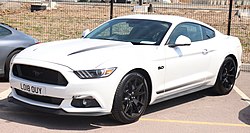
The sporty, affordable Mustang debuted simultaneously at the World's Fair and in showrooms, selling over 400,000 units in its first year and creating the 'pony car' class of American automobiles.
Image source: Ford Mustang
Jun 19, 1966
% complete
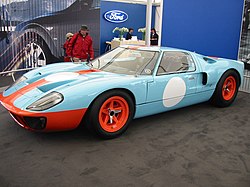
Ford achieved its long-sought victory over Ferrari at Le Mans, finishing first, second, and third. The GT40 went on to win Le Mans four consecutive years, avenging Ford's failed 1963 Ferrari acquisition bid.
Image source: Ford GT40
1977
% complete
Investigations revealed that the subcompact Pinto was prone to fuel tank ruptures and fires in rear-end collisions. The scandal, including revelations about internal cost-benefit analysis, damaged Ford's reputation and reshaped product liability law.
Image source: Ford Pinto
Jul 13, 1978
% complete
Henry Ford II dismissed Lee Iacocca, the architect of the Mustang's success, after years of power struggles. Iacocca went on to lead Chrysler back from the brink, becoming a legendary industry figure.
Image source: Lee Iacocca
1985
% complete
The aerodynamically styled Taurus became a landmark design and commercial success, briefly overtaking the Honda Accord as America's best-selling car and helping drive Ford's late-1980s revival.
Image source: Ford Taurus
Nov 1989
% complete
Ford purchased the British luxury marque Jaguar, adding prestige brands to its portfolio. Jaguar was later combined with Land Rover, acquired in 2000, before both were sold to Tata Motors in 2008.
Image source: Jaguar Cars
Oct 30, 2001
% complete
Amid declining quality and financial losses, including the Firestone tire recall crisis, CEO Jacques Nasser was replaced by William Clay Ford Jr., marking the return of a Ford family member to the top job.
Image source: William Clay Ford Jr.
Sep 5, 2006
% complete
Former Boeing executive Alan Mulally took over as CEO and implemented the 'One Ford' strategy, streamlining global operations, mortgaging company assets to raise cash, and refocusing on core Ford-branded vehicles.
Image source: Alan Mulally
2007 - 2008
% complete
As part of its restructuring, Ford divested its luxury brands: Aston Martin in 2007, followed by Jaguar and Land Rover to India's Tata Motors in 2008, raising billions to fund its turnaround.
Jun 2009
% complete
While General Motors and Chrysler received federal bailouts and filed for bankruptcy, Ford weathered the financial crisis using funds raised in 2006, emerging as the only healthy major Detroit automaker.
Image source: 2008–2010 automotive industry crisis
Jan 11, 2010
% complete
The Fusion Hybrid won the prestigious award, signaling Ford's renewed competitiveness in fuel-efficient vehicles and validating Mulally's turnaround strategy focused on quality and efficiency.
Image source: Ford Fusion Hybrid
May 22, 2017
% complete
Former Steelcase CEO Jim Hackett replaced Mark Fields, pledging to transform Ford into a mobility company focused on electrification, autonomous vehicles, and smart services.
Image source: James Hackett (businessman)
Apr 2019
% complete
Ford invested $500 million in electric vehicle startup Rivian, planning to use its skateboard platform for future models, part of a broader push into electrification.
Image source: Rivian
Nov 17, 2019
% complete
Ford revealed the Mustang Mach-E, an all-electric crossover bearing the legendary Mustang name, marking a bold step in the company's electrification strategy and expanding the brand beyond traditional sports cars.
Image source: Ford Mustang Mach-E
Oct 1, 2020
% complete
Jim Farley succeeded Jim Hackett as CEO, accelerating Ford's transition toward electric vehicles, connected services, and a leaner global business structure.
Image source: Jim Farley (businessman)
Or browse the full history timeline directory, with more than 2,000 topics.
This History of Ford timeline was generated with the help of AI, using information found on the internet.
We work hard to keep these timelines accurate, but mistakes do get through. If you spot one, email us at [email protected] and we'll fix it for future visitors.
Generate yours with AI or build it from scratch, for free.
Export your timeline, add your own events, edit or remove AI-generated events, and much more
No credit card required.
Cancel anytime.
Cancel anytime.
You can create an unlimited number of timelines with up to 10 events on each one, customize how they look, export them to PDF, PNG, PowerPoint, CSV, and Excel, and share them with a link. Paid plans raise the event limit and add features like spreadsheet imports and collaborators.
Yes. You can cancel your subscription from your account page at any time, and you will not be charged again. Your subscription stays active for the rest of the period you already paid for.
Yes. We will email you a reminder before the annual renewal, and we will also email you a receipt.
Yes. You can email us within 15 days of any payment, and we will issue you a full refund.
Check out our pricing docs or send us an email anytime: [email protected].