-
Use Cases
-
Resources
-
Pricing
Glaciology is the scientific study of glaciers and ice in all its forms. Its history spans centuries, beginning with folk observations and early naturalists' curiosity about moving ice, evolving through 19th-century theories of glacier motion, and maturing into a modern geophysical science that uses satellites and ice cores to study Earth's climate and cryosphere. More Less
1500
Leonardo da Vinci examined the debris ridges, or moraines, left by glaciers in the Italian Alps. He speculated about the movement of ice and the transport of stones, offering some of the earliest reasoned hypotheses about glacial processes.
Image source: Leonardo da Vinci

1705
Swiss scholar Johann Jakob Scheuchzer published descriptions of the glaciers of the Swiss Alps, including observations of their seasonal changes. His work brought glacial phenomena to the attention of a wider European scientific audience.
Image source: Johann Jakob Scheuchzer

1760
Genevan naturalist Horace-Bénédict de Saussure began decades of study of the glaciers around Mont Blanc, measuring their temperatures and movements. He offered a cash prize for the first ascent of Mont Blanc, which stimulated further exploration of high-alpine environments.
Image source: Horace Bénédict de Saussure

Aug 8, 1786
Jacques Balmat and Michel-Gabriel Paccard made the first ascent of Mont Blanc, opening the high glacial regions of the Alps to systematic scientific investigation. De Saussure followed with his own ascent a year later, conducting measurements on the summit.
Image source: Mont Blanc massif

1795
Scottish geologist James Hutton suggested that erratic boulders found far from mountains could have been transported by moving ice. His ideas anticipated the glacial theory but were largely overlooked until decades later.
Image source: James Hutton

1821
Swiss engineer Ignaz Venetz presented evidence that glaciers had once been vastly larger, covering much of Switzerland. He mapped former glacier extents using moraines and erratics, providing crucial evidence for the Ice Age concept.
Image source: Ignaz Venetz

1834
Jean de Charpentier published his defense of the hypothesis that erratics and moraines in the Alps were deposited by ancient expanded glaciers, building on Venetz's work and persuading other scientists, most notably Louis Agassiz.
Image source: Jean de Charpentier

1837
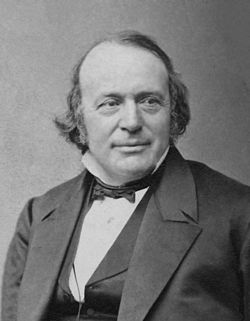
Louis Agassiz proposed that Earth had experienced a great Ice Age during which vast ice sheets covered much of Europe. His 1840 book 'Études sur les glaciers' popularized the glacial theory and transformed geology.
Image source: Louis Agassiz
1840
Agassiz's landmark monograph presented comprehensive evidence for former glaciation, describing moraines, erratics, and polished bedrock. The work established glaciology as a serious scientific discipline.
1842
Scottish physicist James David Forbes demonstrated that glaciers move by viscous flow, using stakes planted on the Mer de Glace. His measurements refuted theories that ice slid wholesale on its bed or shattered into blocks.
Image source: James David Forbes

This History of Glaciology timeline was generated with the help of AI, using information found on the internet.
We work hard to keep these timelines accurate, but mistakes do get through. If you spot one, email us at [email protected] and we'll fix it for future visitors.
Generate yours with AI or build it from scratch, for free.