-
Use Cases
-
Resources
-
Pricing
1206 - 1368
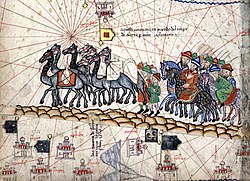
The Pax Mongolica of the thirteenth century encouraged movement, communication, commerce, and cultural exchange across much of Eurasia. Its effects helped connect regions that had previously been separated by political and geographic barriers.
Image source: Pax Mongolica
1300 - 1500
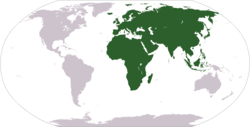
Up to the sixteenth century, even the largest systems of international exchange remained limited largely to the Old World. Europe, Asia, and Africa were connected, but the Americas and other regions were not yet integrated into these systems.
Image source: Old World
1415 - 1498
Portugal began sending exploratory voyages along the African coast and around the Cape of Good Hope. These voyages opened maritime routes that later connected Europe directly with African and Asian trading networks.
Image source: Portuguese maritime exploration

1492 - 1500
Castile joined Portugal in sending exploratory voyages across the Atlantic and into the Americas. These expeditions helped establish the intercontinental connections that transformed global trade, migration, and empire.
Image source: Spanish Empire
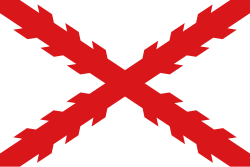
Oct 12, 1492
Christopher Columbus reached the Americas in 1492 while seeking a westward route to Asia. The voyage initiated sustained connections between the Americas and Europe and became a key turning point in the expansion of global exchange.
Image source: Christopher Columbus

1498 - 1550
Shortly before the sixteenth century, Portugal began establishing trading posts, or factories, from Africa to Asia and Brazil. These posts handled products including enslaved people, gold, spices, and timber under the royal monopoly of the House of India.
Image source: Portuguese India Armadas

1500 - 1600
European seafarers carried crops from the Americas to other parts of the world during the sixteenth century. The resulting exchange of plants, animals, diseases, and people significantly affected diets, economies, and population growth.
Image source: Columbian exchange

1500 - 1800
The period roughly spanning 1600 to 1800 is known as proto-globalization, although its maritime foundations developed during the fifteenth and sixteenth centuries. It was characterized by expanding intercontinental trade and imperial connections.
Image source: Proto-globalization

1500 - 1650
The Portuguese Empire pioneered a maritime network linking ports in Africa, Asia, and Brazil. Its trading posts and shipping routes helped establish a new phase of sustained intercontinental economic exchange.
Image source: Portuguese Empire

1500 - 1700
The Spanish Empire connected the Americas, Europe, and Asia through colonial rule, shipping routes, and the Manila galleons. These links intensified the circulation of silver, commodities, people, and ideas across oceans.
This History of Globalization timeline was generated with the help of AI, using information found on the internet.
We work hard to keep these timelines accurate, but mistakes do get through. If you spot one, email us at [email protected] and we'll fix it for future visitors.
Generate yours with AI or build it from scratch, for free.