-
Use Cases
-
Resources
-
Pricing
1508
% complete
Havana was first visited by Spaniards during Sebastián de Ocampo's circumnavigation of the island of Cuba in 1508, marking the first European contact with the site of the future capital.
Image source: Havana
1510
% complete
In 1510, the first Spanish colonists arrived from the island of Hispaniola and began the conquest of Cuba, laying the groundwork for permanent Spanish settlement on the island.
1514
% complete
Diego Velázquez de Cuéllar founded San Cristóbal de la Habana in 1514 on the southern coast of Cuba, near the present town of Surgidero de Batabanó or more likely on the banks of the Mayabeque River close to Playa Mayabeque.
1514
% complete
All attempts to found a city on Cuba's south coast failed; however, an early map of Cuba drawn in 1514 places the town at the mouth of the Mayabeque River.
1514 - 1519
% complete
Between 1514 and 1519, the city had two different establishments on the north coast, one of them at La Chorrera, today in the neighborhood of Puentes Grandes, next to the Almendares River.
1519
% complete
In 1519, Havana was established at its present location, adjacent to what was then called Puerto de Carenas, which would become the great natural harbor that fueled the city's rise.
1561
% complete
Following a royal decree in 1561, all ships headed for Spain were required to assemble their fleet in Havana Bay, making the city a major port for Atlantic shipping and greatly increasing its wealth and importance.
Image source: Spanish treasure fleet
1563
% complete
In 1563, the Capitán General, the Spanish Governor of the island, moved his residence from Santiago de Cuba to Havana by reason of that city's newly gained wealth and importance, unofficially sanctioning its status as capital of the island.
Image source: Captaincy General of Cuba
Dec 20, 1592
% complete
On December 20, 1592, King Philip II of Spain granted Havana the title of City (ciudad), formally recognizing its growing significance within the Spanish empire.
1555
% complete
The first attack and resultant burning of the city was by the French corsair Jacques de Sores in 1555, exposing Havana's vulnerability and spurring later fortification efforts.
Image source: Jacques de Sores
Nov 30, 1665
% complete
On November 30, 1665, Queen Mariana of Austria, widow of King Philip IV of Spain, ratified the heraldic shield of Cuba, which took as its symbolic motifs the first three castles of Havana: the Real Fuerza, the Tres Santos Reyes Magos del Morro and San Salvador de la Punta.
Image source: Coat of arms of Cuba
1674
% complete
In 1674, the works for the City Walls of Havana were started as part of broader fortification efforts to protect the city from attacks by pirates and rival powers.
1740
% complete
The City Walls of Havana were completed by 1740, enclosing the city after more than six decades of construction and providing substantial defensive protection.
Jun 6, 1762
% complete
The siege of Havana began on June 6, 1762, when at dawn a British fleet comprising more than 50 ships and a combined force of over 11,000 men of the Royal Navy and Army sailed into Cuban waters and made an amphibious landing east of Havana.
Image source: Siege of Havana
Jul 30, 1762
% complete
After a two-month siege, El Morro was attacked and taken by the British only after the death of the brave defender Luis Vicente de Velasco e Isla on July 30, 1762, opening the way for the capture of Havana itself.
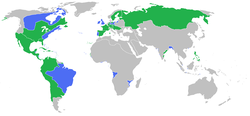
1763
% complete
Less than a year after Havana was seized by the British, the Treaty of Paris (1763) was signed by the three warring powers, ending the Seven Years' War and restoring Havana to Spanish control in exchange for Florida.
Image source: Treaty of Paris (1763)
1600 - 1699
% complete
Havana expanded greatly during the 17th century, with new buildings constructed from the finest materials, including hardwoods brought from across the island to build churches, plazas, and mansions for its growing population.
1748
% complete
The Havana Cathedral was constructed beginning in 1748 as a Jesuit church, becoming one of the most notable religious buildings in colonial Havana with its distinctive baroque facade.
Image source: Havana Cathedral
1750
% complete
By the middle of the 18th century, Havana had more than seventy thousand inhabitants and was the third-largest city in the Americas, ranking behind Lima and Mexico City but ahead of Boston and New York.
1777
% complete
After the Suppression of the Jesuits in Spanish territory in 1767, the former Jesuit church of Havana was converted in 1777 into the Parroquial Mayor church.
1788
% complete
In 1788, the Parroquial Mayor church formally became a cathedral, cementing its status as one of the principal religious landmarks of Havana.
1789 - 1790
% complete
Between 1789 and 1790 Cuba was apportioned into an individual diocese by the Roman Catholic Church, reorganizing ecclesiastical administration on the island.
Image source: Archdiocese of San Cristóbal de la Habana
Jan 15, 1796
% complete
On January 15, 1796, the remains of Christopher Columbus were transported to the island from Santo Domingo, resting in Havana until 1898 when they were transferred to Seville's cathedral after Spain's loss of Cuba.
Image source: Christopher Columbus
1800
% complete
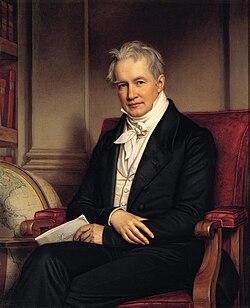
The 19th century opened with the arrival in Havana of Alexander von Humboldt, the celebrated German naturalist and explorer, who was impressed by the vitality of the port.
Image source: Alexander von Humboldt
1840 - 1899
% complete
Throughout the century, Havana was enriched by the construction of additional cultural facilities such as the Tacon Theatre, one of the most luxurious in the world, the Artistic and Literary Liceo, and the Coliseo theater.
1649
% complete
In 1649 a fatal epidemic, brought from Cartagena in Colombia, affected a third of the population of Havana, devastating the city's inhabitants.
1837
% complete
In 1837, the first railroad was constructed, a 51 km stretch between Havana and Bejucal, used for transporting sugar from the Valle de Güines to the harbor, making Cuba one of the earliest countries with railroads.
Image source: National Railway Company of Cuba
1850 - 1886
% complete
The fact that slavery was legal in Cuba until 1886 led to interest from the American South, including a plan by the Knights of the Golden Circle to create a 'Golden Circle' with a 1,200-mile radius centered on Havana.
Image source: Knights of the Golden Circle
1865
% complete
After the Confederate States of America were defeated in the American Civil War in 1865, many former slaveholders continued to run plantations by moving to Havana, where slavery remained legal until 1886.
1863
% complete
In 1863, the city walls were knocked down so that the metropolis could be enlarged, allowing the rapidly growing city to expand beyond its old defensive perimeter.
1890 - 1899
% complete
At the end of the century, the well-off classes moved to the quarter of Vedado, creating a fashionable new residential district west of Old Havana.
Image source: Vedado
Feb 15, 1898
% complete
At the end of the 19th century, Havana witnessed the final moments of Spanish colonialism in America, which ended definitively when the United States warship Maine exploded and sank in its port, giving the US the pretext to invade the island.
Image source: USS Maine (1889)
1900 - 1902
% complete
The 20th century began with Havana, and therefore Cuba, under occupation by the USA following the Spanish-American War, until formal independence in 1902.
Image source: Military Government of Cuba
1902 - 1959
% complete
During the Republican Period, from 1902 to 1959, Havana saw a new era of development with lavish hotels, casinos, nightclubs, and modern infrastructure that made it a glamorous destination known as the 'Paris of the Caribbean.'
Image source: Republic of Cuba (1902–1959)
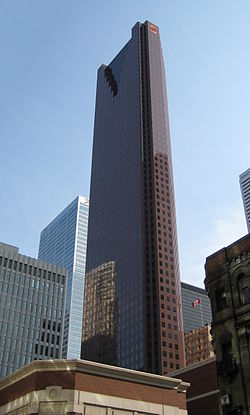
1906
% complete
In 1906 the Bank of Nova Scotia opened the first branch in Havana, Cuba, reflecting the strong North American financial presence in the booming city. By 1931 it had three branches in Havana.
Image source: Scotiabank
1958
% complete
In 1958, about 300,000 American tourists visited Havana, drawn by its nightlife, luxury hotels, and proximity to the United States, just before the Cuban Revolution transformed the city.
Image source: Tourism in Cuba
1959
% complete
After the revolution of 1959, the new government promised to improve social services, public housing, and official buildings; however, shortages followed Castro's abrupt expropriation of all private property and industry under a strong communist model backed by the Soviet Union.
Image source: Cuban Revolution
1966 - 1968
% complete
By 1966–68, the Cuban government had nationalized all privately owned business entities in Cuba, down to certain kinds of small retail forms of commerce, fundamentally reshaping Havana's economy.
Image source: United States embargo against Cuba
1991 - 1999
% complete
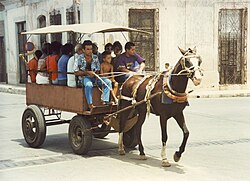
After the Soviet Union collapsed in 1991, its subsidies to Cuba ended, costing the Cuban government billions of dollars and causing a severe economic downturn. During this time, known as the Special Period, Havana's communist government survived despite worsening economic conditions.
Image source: Special Period
2008
% complete
After a decline in the early 2000s, Cuban tourism hit an all-time high of 2.7 billion dollars (USD) in 2008, bringing renewed visitors and revenue to Havana's historic streets.
May 6, 2022
% complete
In 2022, at least 40 people were killed by an explosion at the Hotel Saratoga, a historic luxury hotel in Old Havana, in one of the deadliest disasters to strike the city in recent decades.
Or browse the full history timeline directory, with more than 2,000 topics.
This History of Havana timeline was generated with the help of AI, using information found on the internet.
We work hard to keep these timelines accurate, but mistakes do get through. If you spot one, email us at [email protected] and we'll fix it for future visitors.
Generate yours with AI or build it from scratch, for free.
Export your timeline, add your own events, edit or remove AI-generated events, and much more
No credit card required.
Cancel anytime.
Cancel anytime.
You can create an unlimited number of timelines with up to 10 events on each one, customize how they look, export them to PDF, PNG, PowerPoint, CSV, and Excel, and share them with a link. Paid plans raise the event limit and add features like spreadsheet imports and collaborators.
Yes. You can cancel your subscription from your account page at any time, and you will not be charged again. Your subscription stays active for the rest of the period you already paid for.
Yes. We will email you a reminder before the annual renewal, and we will also email you a receipt.
Yes. You can email us within 15 days of any payment, and we will issue you a full refund.
Check out our pricing docs or send us an email anytime: [email protected].