-
Use Cases
-
Resources
-
Pricing
Lahore, one of the oldest cities in South Asia and the capital of Punjab province in Pakistan, has a history spanning over two millennia. Founded in antiquity—legend attributes its origins to Lava, son of the Hindu god Rama—it rose to prominence under Muslim rulers, flourished as a magnificent capital during the Mughal Empire with landmarks like the Badshahi Mosque and Lahore Fort, served as the seat of Maharaja Ranjit Singh's Sikh Empire, became a major center of British colonial administration, and played a pivotal role in the Pakistan Movement before emerging as modern Pakistan's cultural, educational, and economic heart. More Less
801
% complete
The next mention of Lahore is in the Rajputana chronicles, where the Bussas of Lahore, a Rajput tribe, are mentioned as rallying to the defence of Chittore when it was besieged by Muslim forces in the beginning of the ninth century.
1008
% complete
In 1008 AD, a confederation headed by Anandapala, son of Raja Jayapala, met the advancing army of Mahmud, son and successor of Sabaktagin, in the vicinity of Peshawar. The invader did not retain the conquests he had made.
Image source: Hindu Shahis
1021
% complete
In 1021, Mahmud appointed Malik Ayaz to the throne and made Lahore the capital of the Ghaznavid Empire, beginning an era of growth and cultural development for the city.
Image source: Malik Ayaz
1022
% complete
In 1022 AD, Mahmud suddenly marched down from Kashmir, seized Lahore without opposition, and gave it over to be plundered. Few references to Lahore exist for times before its capture by Sultan Mahmud Ghaznavi.
1045
% complete
A final effort was made by the Hindus in the reign of Modud, 1045 AD, to recover their lost sovereignty, but after a fruitless siege of six months, they retired without success.
1152
% complete
Lahore was formally made the eastern capital of the Ghaznavid empire in 1152, under the reign of Khusrau Shah.
Image source: Ghaznavids
1163
% complete
The city became the sole capital of the Ghaznavid empire in 1163 after the fall of Ghazni to outside invaders.
1187
% complete
In 1187, the Ghurids invaded Lahore, ending Ghaznavid rule over the city and bringing it under the control of the expanding Ghurid empire.
Image source: Ghurid dynasty
1206
% complete
When Sultan Qutb-ud-din Aybak was crowned here in 1206, he became the first Muslim Sultan of South Asia. Lahore was made capital of the Mamluk Dynasty of the Delhi Sultanate following the assassination of Muhammad of Ghor.
Image source: Qutb ud-Din Aibak
1217
% complete
The city first came under control of the Governor of Multan, Nasir ad-Din Qabacha, before being briefly captured by the sultan of the Mamluks in Delhi, Iltutmish, in 1217.
Image source: Iltutmish
1223
% complete
In an alliance with local Khokhars in 1223, Jalal al-Din Mangburni of the Khwarazmian dynasty captured Lahore after fleeing Genghis Khan's invasion of Khwarazm.
Image source: Jalal al-Din Mangburni
1228
% complete
Jalal al-Din fled from Lahore to capture the city of Uch Sharif after Iltutmish's armies re-captured Lahore in 1228.
1241
% complete
The Mongol army advanced and in 1241, the ancient city of Lahore was invaded by a 30,000-man cavalry, which sacked and ruined the city.
1266
% complete
In 1266, Sultan Balban reconquered Lahore from the Mongols, though in 1287 under the Mongol ruler Temür Khan, the Mongols again overran northern Punjab.
Image source: Balban
1298
% complete
In 1298, a 200,000-man Mongol army conquered Punjab, committed atrocities, then marched towards Delhi but was defeated by Malik Kafur, general of Sultan Alauddin Khalji of the Delhi Sultanate.
Image source: Alauddin Khalji
1305
% complete
The Mongols attacked Lahore again in 1305, continuing their repeated incursions into northern Punjab during this period.
1320 - 1329
% complete
Lahore briefly flourished again under the reign of Ghazi Malik of the Tughluq dynasty between 1320 and 1325, though the city was again sacked in 1329 by Tarmashirin of the Chagatai Khanate, and then again by the Mongol chief Hülechü.
Image source: Tughlaq dynasty
1342
% complete
Khokhars seized Lahore in 1342, but the city was retaken by Ghazi Malik's son, Muhammad bin Tughluq.
Image source: Muhammad bin Tughluq
1394
% complete
The weakened city fell into obscurity, and was captured once more by the Khokhars in 1394.
1398
% complete
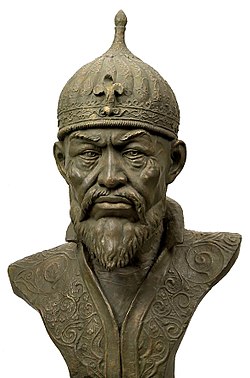
By the time Tamerlane captured the city in 1398 from Shayka Khokhar, he did not loot it because it was no longer wealthy.
Image source: Timur
1398
% complete
Timur gave control of the Lahore region to Khizr Khan, Governor of Multan, who later established the Sayyid dynasty in 1414 – the fourth dynasty of the Delhi Sultanate.
Image source: Sayyid dynasty
1432 - 1433
% complete
Lahore was briefly occupied by the Timurid Governor of Kabul in 1432–33.
Image source: History of Lahore
1441
% complete
Lahore began to be incurred upon yet again by the Khokhar tribe, so the city was granted to Bahlul Lodi in 1441 by the Sayyid dynasty in Delhi. Lodi displaced the Sayyids in 1451, establishing himself on the throne of Delhi.
Image source: Bahlul Khan Lodi
1500
% complete
Said Khan was removed from power in 1500 by Sikandar Lodi, and Lahore came under the governorship of Daulat Khan Lodi, son of Tatar Khan and former employer of Guru Nanak, founder of the Sikh faith.
Image source: Daulat Khan Lodi
1524 - 1752
% complete
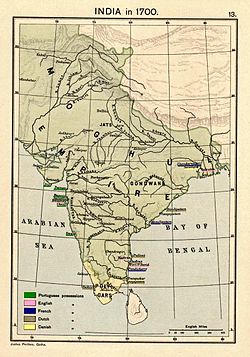
It was not until 1524 that Lahore became part of the Mughal Empire. From 1524 to 1752, Lahore remained part of the Mughal Empire.
Image source: Mughal Empire
Apr 1526
% complete
The first Battle of Panipat (April 1526) was fought between the forces of Babur and the Delhi Sultanate, paving the way for Mughal dominance in South Asia.
Image source: First Battle of Panipat
1584 - 1598
% complete
Lahore grew under emperor Babur; from 1584 to 1598, under the emperors Akbar the Great and Jahangir, the city served as the empire's capital.
Image source: Akbar
1601 - 1700
% complete
The 17th century saw the Lahore Quartet — Abu al-Barakat Munir Lahori, Muhammad Saleh Kamboh, Shaikh Inayat Allah Kamboh, and Chandar Bhan Brahman — four local scholars and poets who mutually promoted each other and engaged in the revival of Persian literacy in India.
Image source: Muhammad Saleh Kamboh
1658 - 1707
% complete
The last of the great Mughals, Aurangzeb, who ruled from 1658 to 1707, built the city's most famous monuments: the Badshahi Masjid and the Alamgiri Gate next to the Lahore Fort.
Image source: Badshahi Mosque
1670
% complete
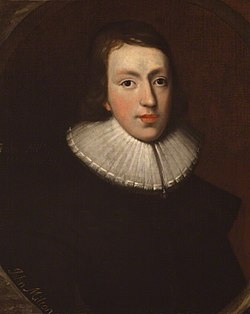
Lahore's reputation for beauty fascinated the English poet John Milton, who wrote 'Agra and Lahore, the Seat of Great Mughal' in 1670.
Image source: John Milton
1745 - 1756
% complete
During the 18th century, as Mughal power dwindled, Lahore was often invaded and government authority was lacking. The 1740s were years of chaos, and the city had nine different governors between 1745 and 1756.
Mar 1758
% complete
In March 1758, about 50,000 Maratha soldiers sieged Sirhind as part of their campaign against Afghan power in northern India.
Image source: Afghan–Maratha War
Apr 1758
% complete
Shortly after defeating the Afghans in the Battle of Delhi, the Marathas entered Lahore in 1758. In April 1758, the Marathas massacred the Afghan garrison and victoriously entered Lahore.
1759
% complete
In 1759, the Marathas and their allied forces crushed an invasion by the Durrani general Jahan Khan at the Battle of Lahore.
Image source: Dattaji Rao Scindia
1761
% complete
Ahmad Shah Durrani captured remnants of the Mughal Empire and had consolidated control over the Punjab and Kashmir regions by 1761. During the 18th century, Lahore became a province of the Afghan Empire, governed by provincial rulers with their own court.
Image source: Ahmad Shah Durrani
1761
% complete
After defeating the Durranis in the battles of Gujranwala (1761) and Sialkot, in 1761, the Sikhs attacked Lahore and besieged it.
Image source: Sikh Empire
Jul 7, 1799
% complete
On 7 July 1799, Ranjit Singh, accompanied by his mother-in-law Sada Kaur, captured Lahore.
Image source: Ranjit Singh
Apr 12, 1801
% complete
Ranjit Singh was crowned on 12 April 1801 at Lahore. During this period Sikhs and Afghans fought the Afghan-Sikh wars; the Sikhs captured the whole Punjab region including Jammu, and Maharaja Ranjit Singh established the Sikh Empire in 1801.
May 6, 1831
% complete
Syed Ahmad Barelvi was at Balakot, Mansehra District, on 6 May 1831, during the period of conflict in the region.
Image source: Syed Ahmad Barelvi
Jun 27, 1839
% complete
Ranjit Singh's death on 27 June 1839 ultimately ended his reign, while Sikh rule continued until the British gained control of the empire in 1849. Instability following his death contributed to events leading eventually to British control of the Lahore Darbar ten years later.
1841
% complete
In 1841, during the Sikh civil war, Ranjit Singh's son Sher Singh placed zamburahs or light guns atop the minarets of Badshahi Mosque to bombard supporters of Maharani Chand Kaur taking refuge in the besieged Lahore Fort, inflicting great damage to the Fort itself.
Image source: Sher Singh
1845 - 1849
% complete
The precipitating factors leading to British control included internecine fighting between the Sikhs; several rapid forfeitures of territory by Ranjit Singh's sons; the intrigues of the Dogras; and two Anglo-Sikh wars, the first in 1845–1846 and the second in 1848–1849.
Image source: First Anglo-Sikh War
Feb 1846
% complete
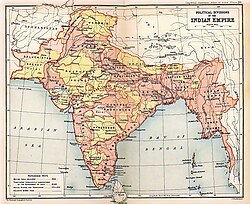
Capitalising on the disarray surrounding the succession struggles after Ranjit Singh's death, only partially diminished by war against the Sikhs on their eastern frontier, the British rode into Lahore in February 1846 and garrisoned their troops in the citadel.
Image source: British Raj
Mar 1848
% complete
In March 1848, following the British victory, Dalip Singh, Ranjit Singh's teenage son and heir to the throne, was formally deposed in Lahore.
Image source: Duleep Singh
1849 - 1947
% complete
Under British rule (1849–1947), colonial architecture in Lahore combined Mughal, Gothic and Victorian styles.
1861
% complete
The first prominent British work covering Lahore's history was History and Antiquities of Lahore (1861, reprinted in 1868) by Thomas Henry Thornton, which served as a guidebook for European visitors and influenced British officials' views of the city. An expanded edition followed in 1876 co-authored by John Lockwood Kipling.
1867
% complete
Native writers began authoring works on the city, starting with Nur Ahmad Chishti in 1867, followed by Mufti Ghulam Sarwar Qureshi Lahori's Tarikh-e Makhzan-e Punjab in 1877, Kanhaya Lal in 1884, and Syad Muhammad Latif in 1892.
1873
% complete
Other British colonial works covering the city were the Punjab Settlement Report 1865–69, published by Leslie Saunders in 1873, along with the Imperial Gazetteer. A gazetteer dedicated to the settlement, Gazetteer of the Lahore District 1883–84, was edited by Denzil Ibbetson.
1924
% complete
The first racing club, established in 1924, is called LRC or Lahore Race Club. Also in 1924, Henry Raynor Goulding's book on Lahore titled Old Lahore: Reminiscences of a Resident was published.
1927
% complete
The Hudud al-Alam was translated into English by Vladimir Fedorovich Minorsky and published in Lahore in 1927.
Dec 31, 1929
% complete
The 1929 Congress session was held at Lahore, where a resolution of 'complete independence' was moved by Pandit Nehru and passed unanimously at midnight on 31 December 1929.
Image source: Lahore Resolution
1940
% complete
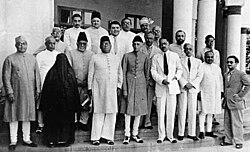
The most important session of the All India Muslim League, later the Pakistan Muslim League, was held in Lahore in 1940.
Image source: Lahore Resolution
1947
% complete
After the independence of Pakistan in 1947, the minority Hindus and Sikhs migrated to India while Muslim refugees from India settled in the Lahore District.
Image source: Pakistan Movement
1961
% complete
Khan Muhammad Waliullah Khan authored a work in 1961 titled Lahore and Its Important Monuments, documenting the city's heritage.
1965
% complete
Less than 20 years after independence, Lahore once again became a battleground in the War of 1965 between Pakistan and India.
Image source: Indo-Pakistani War of 1965
1994
% complete
In 1994, Anis Nagi published Ancient Lahore: A Brief Account of the History and Antiquities of Lahore, a reprint of the first section of a lost guidebook on Lahore likely authored by Thornton in 1860 under the instruction of Robert Montgomery.
1996
% complete
In 1996, the International Cricket Council Cricket World Cup final match was held at the Gaddafi Stadium in Lahore.
Image source: 1996 Cricket World Cup
2009
% complete
The Punjab government embarked on a major project in 2009 to restore the Royal Trail (Shahi Guzar Gah) from Akbari Gate to the Lahore Fort with the help of the World Bank under the Sustainable Development of the Walled City of Lahore (SDWCL) project.
Image source: Walled City of Lahore
Or browse the full history timeline directory, with more than 2,000 topics.
This History of Lahore timeline was generated with the help of AI, using information found on the internet.
We work hard to keep these timelines accurate, but mistakes do get through. If you spot one, email us at [email protected] and we'll fix it for future visitors.
Generate yours with AI or build it from scratch, for free.
Export your timeline, add your own events, edit or remove AI-generated events, and much more
No credit card required.
Cancel anytime.
Cancel anytime.
You can create an unlimited number of timelines with up to 10 events on each one, customize how they look, export them to PDF, PNG, PowerPoint, CSV, and Excel, and share them with a link. Paid plans raise the event limit and add features like spreadsheet imports and collaborators.
Yes. You can cancel your subscription from your account page at any time, and you will not be charged again. Your subscription stays active for the rest of the period you already paid for.
Yes. We will email you a reminder before the annual renewal, and we will also email you a receipt.
Yes. You can email us within 15 days of any payment, and we will issue you a full refund.
Check out our pricing docs or send us an email anytime: [email protected].