-
Use Cases
-
Resources
-
Pricing
Karachi, Pakistan's largest city and financial capital, has a rich history spanning from ancient coastal settlements and fishing villages to its rise as a major port under British colonial rule in the 19th century. Following Pakistan's independence in 1947, Karachi became the nation's first capital and grew rapidly through migration and industrialization, evolving into one of the world's most populous megacities. More Less
Jan 1, 700
% complete
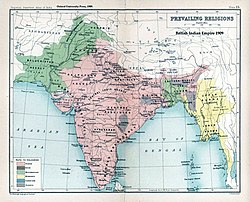
After being ruled by Hindu and Buddhist kingdoms, the area around present-day Karachi fell into Umayyad possession in the 8th century CE, bringing it under early Muslim rule.
Jan 1, 1200
% complete
The original settlement near present-day Karachi was subsequently abandoned in the 13th century, ending centuries of habitation at the site before its later re-founding.
Image source: History of Karachi
Jan 1, 1556
% complete
During the reign of Emperor Akbar in the late 16th century, the Mughal Empire extended its control over various regions of the Indian subcontinent, including areas of present-day Pakistan such as Sindh and Karachi.
Image source: Akbar
Jan 1, 1592
% complete
In 1592, the Mughals annexed Sindh, bringing areas including Karachi under direct imperial authority for the first time.
Image source: Sindh
Jan 1, 1700 - Dec 31, 1799
% complete
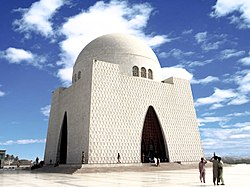
Mughal control over regions like Sindh gradually weakened in the 18th century due to internal decline and external invasions, eventually paving the way for local dynasties and later British colonization.
Image source: Mughal Empire
Jan 1, 1729
% complete
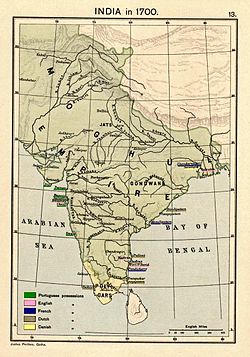
In 1729, immigrants from the silting-up port of Kharak relocated and founded Karachi near the mouth of the Hub River, establishing the town that would grow into a major port city.
Jan 1, 1742
% complete
The name Karachee was used for the first time in a Dutch document from 1742, which recorded that a merchant ship, de Ridderkerk, was shipwrecked near the original settlement.
Jan 1, 1795
% complete
In 1795, the city came under the control of the Talpur Mirs of Hyderabad, who ruled Karachi until the British occupation in 1839.
Image source: Talpur dynasty
Jan 1, 1839
% complete
The arrival of troops of the Kumpany Bahadur in 1839 spawned the foundation of the new section of the city, the military cantonment, which became a distinct part of urban Karachi.
Feb 2, 1839
% complete
On February 2, 1839, the Bombay Army under the command of John Keane occupied Karachi, ending the rule of the Talpur Mirs and beginning British dominance over the city.
Image source: John Keane, 1st Baron Keane
Feb 3, 1839
% complete
After sending several exploratory missions to the area, the British East India Company conquered the town on February 3, 1839, securing a strategic foothold on the Arabian Sea coast.
Image source: East India Company
Feb 17, 1843
% complete
The town was annexed to the British Indian Empire when Sindh was conquered by Charles James Napier at the Battle of Miani on February 17, 1843, formally integrating Karachi into colonial India.
Image source: Battle of Miani
Jan 1, 1847
% complete
In 1847, upon Napier's departure as governor, the entire province of Sindh was added to the Bombay Presidency, making Karachi administratively part of Bombay's jurisdiction.
Image source: Bombay Presidency
Jan 1, 1850 - Dec 31, 1900
% complete
Thereafter, authorities of the British Raj embarked on a large-scale modernisation of the city throughout the 19th century, intending to establish a major modern port serving as a gateway to Punjab, the western parts of British Raj, and Afghanistan.
Image source: Port of Karachi
Sep 10, 1857
% complete
When the Indian Mutiny broke out in 1857, the 21st Native Infantry stationed in Karachi declared allegiance to the rebels, joining their cause on September 10, 1857, before the uprising in the city was suppressed.
Image source: Indian Rebellion of 1857
Jan 1, 1864
% complete
In 1864, the first telegraphic message was sent from India to England when a direct telegraph connection was laid between Karachi and London, linking the city to global communication networks.
Image source: Telegraphy
Jan 1, 1865
% complete
As part of the wave of public building projects undertaken in colonial Karachi, Frere Hall was completed in 1865, becoming one of the city's most iconic Victorian-era landmarks.
Image source: Frere Hall
Dec 25, 1876
% complete
In 1876, Muhammad Ali Jinnah, the future founder of Pakistan, was born in Karachi, which by then had become a bustling city with mosques, temples, churches, courthouses, markets, paved streets, and a magnificent harbour.
Image source: Muhammad Ali Jinnah
Jan 1, 1878
% complete
In 1878, the city was connected to the rest of British India by rail, dramatically expanding trade links and cementing Karachi's role as a key commercial gateway.
Image source: Karachi Cantonment railway station
Jan 1, 1890
% complete
Among the major public building projects undertaken in colonial-era Karachi, the Empress Market was completed in 1890, becoming a landmark commercial hub of the growing city.
Image source: Empress Market
Jan 1, 1899
% complete
By 1899, Karachi had become the largest wheat exporting port in the east, reflecting the city's rise as a premier trading hub of the British Empire.
Jan 1, 1899
% complete
In 1899, the same year it reached its peak as a grain exporter, the city faced a huge cholera epidemic that devastated its rapidly growing population.
Image source: History of cholera
Jan 1, 1900
% complete
By the end of the 19th century, Karachi's population stood at about 105,000 inhabitants, a cosmopolitan mix of Muslims, Hindus, Europeans, Jews, Parsis, Iranians, Lebanese, and Goans.
Image source: Demographics of Karachi
Jan 1, 1900
% complete
By around the start of the 20th century, the city faced street congestion, prompting the laying down of South Asia's first tramway system in 1900 to ease urban transport.
Image source: Mohamedali Tramways Company
Jan 1, 1914
% complete
By 1914, Karachi had become the largest grain exporting port of the British Empire, underscoring its vital economic importance within imperial trade networks.
Jan 1, 1924
% complete
In 1924, an aerodrome was built and Karachi became the main airport of entry into the British Raj, establishing the city as a pioneering centre of aviation in South Asia.
Image source: Jinnah International Airport
Jan 1, 1927
% complete
In 1927, an airship mast was built in Karachi as part of the Imperial Airship Communications scheme, an ambitious project that was later abandoned.
Image source: Airship
Jan 1, 1936
% complete
In 1936, Sindh was separated from the Bombay Presidency and Karachi was once again made the capital of Sindh, restoring the city's provincial administrative prominence.
Image source: Sind Province (British India)
Jan 1, 1947
% complete
After independence, Hindus and Sikhs migrated to India, leading to a decline in business activity since Hindus had controlled much of Karachi's commerce, while Muslim refugees from India settled down in the city in large numbers.
Image source: Partition of India
Aug 14, 1947
% complete
In 1947, when Pakistan achieved independence, Karachi had become a bustling metropolitan city with beautiful classical and colonial European-styled buildings lining its thoroughfares, and it was designated the new nation's capital.
Image source: Pakistan Movement
Jan 1, 1951
% complete
Having become Pakistan's capital in 1947, Karachi grew rapidly as refugees arrived, and by 1951 the population had reached 1.1 million inhabitants.
Jan 1, 1959
% complete
Although the national capital shifted to Islamabad in 1959, Karachi continued to grow as Muslim refugees from India fleeing anti-Muslim pogroms, along with migrants from other parts of South Asia, came to settle in the city.
Image source: Islamabad
Jan 1, 1990
% complete
By 1990, the Karachi Division covered an expansive area of 3,365 square kilometres, reflecting decades of continuous urban expansion and growth.
Image source: Karachi Division
Jan 1, 2007
% complete
By 2007, Karachi's population reached approximately 14.5 million, making it one of the largest cities in the world and Pakistan's principal economic powerhouse.
Or browse the full history timeline directory, with more than 2,000 topics.
This History of Karachi timeline was generated with the help of AI, using information found on the internet.
We work hard to keep these timelines accurate, but mistakes do get through. If you spot one, email us at [email protected] and we'll fix it for future visitors.
Generate yours with AI or build it from scratch, for free.
Export your timeline, add your own events, edit or remove AI-generated events, and much more
No credit card required.
Cancel anytime.
Cancel anytime.
You can create an unlimited number of timelines with up to 10 events on each one, customize how they look, export them to PDF, PNG, PowerPoint, CSV, and Excel, and share them with a link. Paid plans raise the event limit and add features like spreadsheet imports and collaborators.
Yes. You can cancel your subscription from your account page at any time, and you will not be charged again. Your subscription stays active for the rest of the period you already paid for.
Yes. We will email you a reminder before the annual renewal, and we will also email you a receipt.
Yes. You can email us within 15 days of any payment, and we will issue you a full refund.
Check out our pricing docs or send us an email anytime: [email protected].