-
Use Cases
-
Resources
-
Pricing
The history of Manila spans over 500 years, beginning as a Muslim trading settlement on the Pasig River before its conquest by Spanish conquistador Miguel López de Legazpi in 1571. It served as the capital of the Spanish East Indies, a hub of the Manila-Acapulco Galleon trade, endured British occupation in 1762-1764, became an American colonial center in 1898, suffered devastation during World War II under Japanese occupation, and grew into the densely populated capital of the independent Philippines. More Less
1200 - 1299
% complete
By the thirteenth century, Maynila consisted of a fortified settlement and trading quarter near the mouth of the Pasig River, which bisects the city into the north and south.
Image source: History of Manila
1258
% complete
Based on Henson's genealogical research, later brought up by Majul in 1973 and by Santiago in 1990, a settlement in the Maynila area already existed by the year 1258.
1300 - 1399
% complete
According to the epic eulogy poem Nagarakretagama, dedicated to Maharaja Hayam Wuruk of the Madjapahit, Seludong/Selurung was listed in Canto 14 alongside Sulot (Sulu) and Kalka as territories of the empire.
Image source: Nagarakretagama
1565
% complete
Manila became the seat of the Spanish colonial government when Spain gained sovereignty over the Philippine Islands in 1565, beginning over three centuries of colonial rule.
Jun 1570
% complete
The first historically recorded battle in the region, de Goiti and his army attacked Maynila in June 1570, leading to the burning of Maynila and its annexation by Miguel López de Legazpi under the Spanish crown before he returned to Panay for logistical purposes. The Tagalogs then rebuilt Maynila.
1571
% complete
In 1571, the unity of the Luzon Empire was threatened by the uneasy alliance of the Rajah Matanda of Sapa, Lakandula of Tondo, and Rajah Sulayman, rajah muda or crown prince of Maynila and laxamana or grand admiral of the Macabebe Armada.
1571 - 1815
% complete
The Manila-Acapulco Galleon trade route between the Philippines and Mexico flourished from 1571 until 1815. The city became the center of trade between Manila and Acapulco, which lasted three centuries and brought goods from the Americas to Southeast Asia and vice versa.
Image source: Manila galleon
May 19, 1571
% complete
On May 19, 1571, López de Legazpi gave the title city to the colony of Manila, establishing Spanish presence in the settlement.
Image source: Manila
Jun 3, 1571
% complete
On June 3, 1571, Rajah Sulayman led his troops and attacked the Spaniards in a decisive battle at Bangkusay, but were defeated. The conquistador Martín de Goiti arrived from Mexico to drive out the Muslim elite, and the city was razed to the ground.
Jun 19, 1572
% complete
The title given to Manila by López de Legazpi was certified on June 19, 1572, formalizing its status as a city of the Spanish colonial realm.
1574
% complete
As a result of tensions, the Chinese revolted against the Spaniards in 1574, when a force of about 3,000 men and 62 Chinese warships under the command of Limahong attacked the city. The battle produced only minimal damage to Manila.
Image source: Limahong
Jun 19, 1591
% complete
After the commencement of the construction of a fort there, López de Legazpi made overtures of friendship with the Lakandula of Tondo, which was prudently accepted.
1595
% complete
In 1595, Manila was decreed to be the capital of the Philippines, although it had already in fact served that function practically from its founding in 1571.
1602
% complete
At various times in the following century, the Chinese rose in revolt against the Spaniards. In 1602, they set fire to Quiapo and Tondo, and for a time threatened to capture Intramuros.
1662 - 1686
% complete
The Chinese again revolted in 1662, while in 1686, a conspiracy led by Tingco plotted to kill all the Spaniards in the city.
1704
% complete
The earliest known evidence of reference to the etymology of Maynilà can be found in the third volume of John Ray's Historia Plantarum in 1704. The name is more likely in reference to indigo-yielding plants growing near the settlement rather than indigo dye trading, since the city was founded several hundred years before indigo extraction became economically important in the 18th century.
Oct 1762 - 1764
% complete
British forces conquered Manila in October 1762 during the Seven Years' War, with the city coming under British occupation until 1764. After the battle and occupation, the city was pillaged for 40 hours.
Image source: British occupation of Manila
Oct 29, 1762 - Oct 30, 1762
% complete
The terms of surrender dated 29 October 1762 were signed by Archbishop Rojo and sealed with the Spanish Royal Seal, ceding the entire archipelago to Great Britain. The British accepted this written surrender of the Spanish government from Archbishop Rojo and the Real Audiencia on 30 October 1762.
Jan 1798
% complete
In January 1798 during the French Revolutionary Wars, a British naval squadron entered Manila for reconnaissance, seizing three gunboats in the bloodless Raid on Manila.
1821
% complete
Mexican Independence in 1821 necessitated direct rule from Spain. Under direct Spanish rule, banking, industry and education flourished more than it had in the previous two centuries.
Image source: History of the Philippines (1565–1898)
1869
% complete
The opening of the Suez Canal in 1869 helped to facilitate direct trade and communications between Manila and Spain.
Image source: Suez Canal
1886
% complete
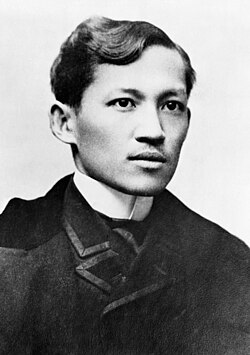
The seeds of revolution germinated in 1886 with the publication of José Rizal's book Noli Me Tangere (Touch Me Not), a novel critical of the way the Spanish friars were governing the Philippines.
Image source: Noli Me Tángere (novel)
1892
% complete
In 1892, José Rizal returned to Manila to found La Liga Filipina, a nationalistic organization advocating reform in the Philippines.
Image source: La Liga Filipina
Aug 1896
% complete
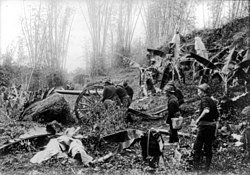
The Katipunan movement grew until open rebellion broke out in August 1896 after its discovery by the Spaniards. The Battle of Manila in 1896 did little damage to the city as a whole.
Image source: Philippine Revolution
Dec 30, 1896
% complete
Rizal became a martyr of the revolution when the Spaniards executed him by firing squad on December 30, 1896 in Bagumbayan, now Rizal Park.
Image source: José Rizal
1898
% complete
In the Treaty of Paris in 1898, Spain handed over the Philippines to the United States of America for US$20,000,000, ending 333 years of Spanish rule in the islands after over three hundred years of colonial rule.
Image source: Treaty of Paris (1898)
May 1, 1898
% complete
American troops invaded Manila in 1898, waging war with the Spaniards and Filipinos. The US Navy, under Admiral George Dewey, defeated the Spanish squadron in the Battle of Manila Bay on May 1, 1898.
Image source: Battle of Manila Bay
Feb 4, 1899
% complete
War broke out between the Filipinos and the Americans on February 4, 1899, beginning the Philippine–American War. The battle caused more than 200 Filipino casualties.
Image source: Battle of Manila (1899)
Mar 23, 1901
% complete
The Americans pursued the retreating Filipino forces province by province, until General Emilio Aguinaldo, then president of the Republic, surrendered in Palanan, Isabela on March 23, 1901.
Image source: Emilio Aguinaldo
Jul 31, 1901
% complete
Manila continued under an American military government until civil government was established for the city on July 31, 1901.
1935
% complete
In 1935, the United States government committed itself to granting the Philippines independence after a ten-year transition, a period that was extended by one year due to World War II.
Image source: Commonwealth of the Philippines
Dec 21, 1935 - Jan 3, 1942
% complete
The General Headquarters of the Philippine Commonwealth Army was stationed in Manila under the Commonwealth government, active from December 21, 1935 to January 3, 1942, when the Philippines was invaded by Japanese Imperial forces.
Dec 1941
% complete
Vargas assumed the chairmanship of the Philippine Executive Commission and was appointed Mayor of Greater Manila in December 1941. On the evening of New Year's Day 1942, a Japanese courier delivered notice that Japanese forces bivouacked at Parañaque would enter Greater Manila the following day.
Dec 24, 1941
% complete
Filipino and American combat units were ordered to withdraw from the city, and all military installations were removed on December 24, 1941 (Philippine time).
Image source: Battle of Manila (1945)
Jan 3, 1942
% complete
Japanese Imperial forces took control of the main general headquarters of the Commonwealth Army on January 3, 1942. León Guinto was later appointed mayor of Greater Manila in January 1942, succeeding Vargas.
Oct 20, 1944
% complete
On October 20, 1944, American and Philippine Commonwealth troops, led by American General Douglas MacArthur, began the reconquest of the Philippines.
Image source: Douglas MacArthur
Feb 3, 1945 - Mar 3, 1945
% complete
From February 3 to March 3, 1945, much of the city was destroyed during the Battle of Manila, the last of many battles fought in Manila's history. Between 100,000 and 500,000 civilians were killed by Japanese troops in the Manila massacre.
Mar 4, 1945 - Jun 30, 1946
% complete
Once Manila was officially liberated, the rebuilt general headquarters of the Philippine Commonwealth Army and the Philippine Constabulary was relocated to the city from March 4, 1945 to June 30, 1946, preparing military operations in Luzon against the Japanese with American help and guerrillas.
Jul 4, 1946
% complete
On July 4, 1946, the Philippine flag was raised for the first time in Rizal Park, marking Philippine independence.
Image source: Independence Day (Philippines)
1952
% complete
With Arsenio Lacson becoming the first elected mayor in 1952 — all mayors were appointed prior to this — the City of Manila underwent its Golden Age, was revitalized, and once again became the 'Pearl of the Orient', a moniker it earned before the outbreak of the war.
1960 - 1986
% complete
After Lacson's term, Antonio Villegas led the city through most of the 1960s, and Ramon Bagatsing served for nearly the entire 1970s until the 1986 People Power Revolution, becoming the longest serving Mayor of Manila. Together they are known as 'the Big Three of Manila'.
1975
% complete
During the Marcos era, Metropolitan Manila was enacted as an independent entity in 1975, encompassing several cities and towns as a separate local-regional unit and the seat of government of the Philippines.
Image source: Metro Manila
1986
% complete
After the People Power Revolution, Corazon Aquino was installed as president in 1986. During her presidency, Manila witnessed eight unsuccessful coup attempts, the most serious occurring in December 1989.
1992
% complete
In 1992, Alfredo Lim became the mayor of Manila and was known for his anti-crime crusades. When he ran for president in 1998, his vice mayor Lito Atienza was elected as city mayor.
2007
% complete
Lim defeated Atienza's son Ali in the 2007 city election and immediately reversed all of Atienza's projects, claiming they contributed little to improvements of the city.
Jul 17, 2008
% complete
Councilor Dennis Alcoreza filed human rights complaints before the Commission on Human Rights against Lim and other Manila officials on July 17, 2008. Controversies also included the resignation of 24 city officials and his bloody resolution of the Manila hostage crisis, one of the deadliest hostage crises in the Philippines.
2010
% complete
The relationship between Lim and Atienza turned bitter, with the two facing off in the 2010 city elections, in which Lim won against Atienza.
2012
% complete
A complaint was filed in 2012 by Vice Mayor Isko Moreno and 28 city councilors, which cited that statements made by Lim in a meeting were 'life-threatening' to them.
2013
% complete
During the 2013 elections, former President Joseph Estrada defeated Lim in the mayoral race despite having recently moved from neighboring San Juan, where he had served as long-time mayor.
2016 - 2019
% complete
Estrada was reelected in 2016 but lost to former actor and Vice Mayor Isko Moreno, who campaigned on a change platform and youthful image, colloquially referred to as 'Yorme' (a reversed phonemic of the word 'Mayor').
2022
% complete
In 2022, Moreno launched an ultimately unsuccessful bid for the presidency in elections held that May.
Image source: 2022 Philippine presidential election
2025
% complete
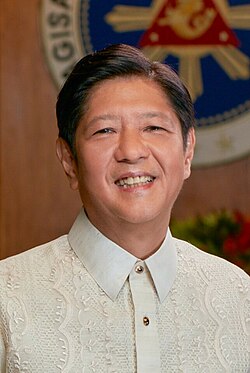
Mayor Honey Lacuna turned out to be unpopular with Manila residents, losing to Isko Moreno in the 2025 Manila local elections.
Or browse the full history timeline directory, with more than 2,000 topics.
This History of Manila timeline was generated with the help of AI, using information found on the internet.
We work hard to keep these timelines accurate, but mistakes do get through. If you spot one, email us at [email protected] and we'll fix it for future visitors.
Generate yours with AI or build it from scratch, for free.
Export your timeline, add your own events, edit or remove AI-generated events, and much more
No credit card required.
Cancel anytime.
Cancel anytime.
You can create an unlimited number of timelines with up to 10 events on each one, customize how they look, export them to PDF, PNG, PowerPoint, CSV, and Excel, and share them with a link. Paid plans raise the event limit and add features like spreadsheet imports and collaborators.
Yes. You can cancel your subscription from your account page at any time, and you will not be charged again. Your subscription stays active for the rest of the period you already paid for.
Yes. We will email you a reminder before the annual renewal, and we will also email you a receipt.
Yes. You can email us within 15 days of any payment, and we will issue you a full refund.
Check out our pricing docs or send us an email anytime: [email protected].