
-
Use Cases
-
Resources
-
Pricing
Seoul, the capital of South Korea, has served as a political and cultural center for over 2,000 years. Established as the capital of the Baekje kingdom (18 BC), it became the capital of the Joseon Dynasty in 1394 under the name Hanyang. The city endured Japanese colonial rule (1910-1945), was heavily damaged during the Korean War (1950-1953), and transformed into one of the world's largest metropolitan economies through rapid industrialization in the late 20th century. More Less
1104
% complete
In 1104, King Sukjong of the Goryeo Dynasty built a palace near present-day Gyeongbokgung, which was then referred to as Namgyeong (남경; 南京) or 'Southern Capital'.
Image source: History of Seoul
1104
% complete
The area near present-day Seoul was referred to during this period as Namgyeong, or 'Southern Capital', marking its early significance within the Goryeo Dynasty.
1394
% complete
Under the Joseon Dynasty, the capital was later called Hanseong (한성, 漢城), meaning 'Fortress city [on] the Han [River]'.
1394
% complete
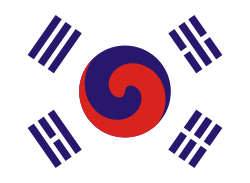
Seoul remained the capital of Korea from its designation in 1394 until the fall of the Joseon Dynasty, serving as the political and cultural center of the kingdom.
Image source: Joseon
1394
% complete
At the beginning of the Joseon Dynasty in 1394, the capital was moved to Seoul, also known as Hanyang, where it remained until the fall of the dynasty.
1880
% complete
In the late 19th century, after hundreds of years of isolation, Seoul opened its gates to foreigners and began a period of rapid modernization.
1904
% complete
In 1904, an American named Angus Hamilton visited the city and remarked: 'The streets of Seoul are magnificent, spacious, clean, admirably made and well-drained.'
1910 - 1945
% complete
While Korea was under Japanese colonial rule (1910–1945), the city was called Keijō (京城; Korean: 경성; RR: Gyeongseong; MR: Kyŏngsŏng), literally meaning 'capital city' in Hanja.
Image source: Keijō
1926 - 1995
% complete
The Government-General Building served as the seat of the colonial government of Colonial Korea until it was torn down in 1995.
Image source: Government-General of Chōsen Building
1914
% complete
In 1914, several outer districts of the prefecture were annexed to neighboring Goyang County (now Goyang City), reducing the administrative size of the prefecture.
1936
% complete
Also in 1936, some parts of former Gyeongseong districts such as Sungin and Yeonghee were recombined into the city from Goyang County.
1936
% complete
In 1936, Gyeongseong expanded itself as it annexed Yeongdeungpo from Siheung County (now Siheung City).
1949
% complete
In 1949, Seoul's administrative area expanded to Ui-dong to the north, and Guro-dong and Daerim-dong to the south, recombining areas annexed from original Seoul to Goyang County in 1914.
1963
% complete
In 1963, Seoul greatly expanded in size by annexing a number of towns and villages from several surrounding counties in Gyeonggi Province, such as Bucheon, Siheung, Gwangju, Yangju, and Gimpo.
1973 - 1981
% complete
The remaining parts of Sindo Township, Goyang, and the northern part of West Township, Siheung (today's Gwangmyeong City) were provisionally planned for annexation to Seoul.
1973
% complete
In 1973, some parts of Sindo Township in Goyang County (today's Jingwan-dong in the Eunpyeong District) were officially annexed to Seoul.
1981
% complete
The municipal annexation plan foundered, symbolized by the establishment of Gwangmyeong City in 1981 rather than annexation to Guro-gu, as the rapid growth of Seoul was a great concern for governmental officials.
Image source: Gwangmyeong
1995
% complete
In 1995, the boundary between Seoul and Gwangmyeong was rearranged, merging parts of Cheolsan 3-dong, Gwangmyeong, into the Geumcheon District of Seoul.
1950
% complete
In 1950, the Korean War broke out and Seoul changed hands between North Korean forces and South Korean forces four times, leaving the city largely destroyed at the end of the war.
Image source: Korean War
1953
% complete
After changing hands four times during the Korean War, Seoul was left largely devastated by the end of the conflict, requiring extensive reconstruction in the following decades.
Sep 17, 1988 - Oct 2, 1988
% complete
Seoul was the host city of the 1988 Summer Olympics, a landmark event that showcased South Korea's emergence on the world stage and transformed the city's infrastructure and global profile.
Image source: 1988 Summer Olympics
1995
% complete
The division plan foundered as it was expected to cause serious problems in aspects of metropolitan governance in Seoul.
1995
% complete
The former Government-General Building, once the seat of the colonial government, was demolished in 1995 as a symbolic break with the colonial past.
1995
% complete
Around the time of the 1995 municipal annexations in South Korea, the government seriously considered a division of Seoul into several municipal or metropolitan cities.
May 31, 2002 - Jun 30, 2002
% complete
Seoul served as one of the venues of the 2002 FIFA World Cup, co-hosted by South Korea and Japan, further cementing the city's status as an international hub.
Image source: 2002 FIFA World Cup
2012
% complete
Despite administrative relocations to Sejong, many important government bodies remain in Seoul, including the National Assembly and the Blue House.
Oct 29, 2022
% complete
On October 29, 2022, a deadly crowd crush occurred in Seoul during Halloween celebrations, killing at least 156 people, including at least 19 foreign nationals.
Image source: Seoul Halloween crowd crush
2004
% complete
The government estimated that the proposed move of the capital would probably not be completed before 2012, reflecting the scale of the undertaking.
Image source: Sejong City
Aug 11, 2004
% complete
On August 11, 2004, the South Korean government announced plans to relocate the capital city from Seoul to the Gongju area as of 2007, to ease population pressure on Seoul and place the government at a safer distance from North Korea in case of invasion.
Oct 21, 2004
% complete
On October 21, 2004, the Constitutional Court of Korea ruled that the special law for relocating the capital was unconstitutional, based mostly on custom law, since relocation is a serious national matter requiring a national referendum or constitutional revision, effectively ending the dispute.
Image source: Constitutional Court of Korea
Nov 1, 2004 - Dec 31, 2004
% complete
In late 2004, the South Korean government announced plans to move most national government branches, except the Executive Branch, to Gongju, evading violation of the Constitutional Court ruling while keeping Seoul as National Capital.
2007
% complete
Sejong City was founded in 2007 as part of efforts to relocate the national capital functions away from Seoul.
2011
% complete
As of 2011, preliminary work had begun on the construction of new government buildings in the Gongju area.
2012
% complete
Since 2012, the Government of South Korea has relocated numerous ministries and agencies to Sejong, though many still reside in other cities, namely Seoul.
Or browse the full history timeline directory, with more than 2,000 topics.
This History of Seoul timeline was generated with the help of AI, using information found on the internet.
We work hard to keep these timelines accurate, but mistakes do get through. If you spot one, email us at [email protected] and we'll fix it for future visitors.
Generate yours with AI or build it from scratch, for free.
Export your timeline, add your own events, edit or remove AI-generated events, and much more
No credit card required.
Cancel anytime.
Cancel anytime.
You can create an unlimited number of timelines with up to 10 events on each one, customize how they look, export them to PDF, PNG, PowerPoint, CSV, and Excel, and share them with a link. Paid plans raise the event limit and add features like spreadsheet imports and collaborators.
Yes. You can cancel your subscription from your account page at any time, and you will not be charged again. Your subscription stays active for the rest of the period you already paid for.
Yes. We will email you a reminder before the annual renewal, and we will also email you a receipt.
Yes. You can email us within 15 days of any payment, and we will issue you a full refund.
Check out our pricing docs or send us an email anytime: [email protected].