-
Use Cases
-
Resources
-
Pricing
The History of Islamic Art traces the development of artistic traditions across Muslim-ruled regions, encompassing architecture, calligraphy, textiles, ceramics, metalwork, manuscripts, and decorative arts. It reflects cultural exchange, religious practices, regional identities, and the sophisticated use of geometry, pattern, and ornament. More Less
600 - 699
Islamic art encompasses visual arts produced in the Islamic world from the 7th century to the present. Its early development drew on the diverse artistic traditions encountered as Islam expanded.
600 - 799
The origins of Islamic art lie in the early centuries of Islam, when artists adapted and synthesized Byzantine, Sasanian, and late antique Mediterranean influences into new forms.
600 - 999
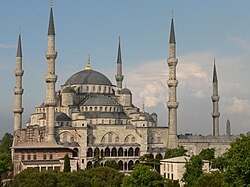
The earliest Islamic objects can be difficult to distinguish from Persian, Sasanian, and Byzantine predecessors. The conversion of populations and artists took a significant period, sometimes lasting centuries after Islam first spread.
Image source: Islamic art
750 - 1258
The Abbasid Caliphate ruled from 750 to 1258 and became a major center of Islamic cultural and artistic development.
762
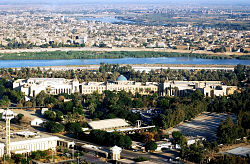
Under the Abbasids, the capital moved from Damascus to Baghdad. The new capital became a major meeting point for artistic and intellectual traditions.
Image source: Baghdad
800 - 899
Art historian Robert Hillenbrand compared the Abbasid movement of artistic influences to the foundation of an Islamic Rome. Iranian, Eurasian steppe, Chinese, and Indian sources met in this environment, while al-Ya'qubi described Baghdad as the navel of the world.
800 - 999
Beginning in the ninth century, Abbasid sovereignty was contested in provinces farthest from the Iraqi center. Regional political autonomy helped diversify artistic production across the Islamic world.
Image source: Abbasid Caliphate
836
The Abbasid capital later moved from Baghdad to Samarra, another important center in the development of Abbasid art and architecture.
Image source: Samarra
900 - 1199
Construction of the Great Mosque of Isfahan was initiated during this period and continued, in fits and starts, over several centuries.
Image source: Jameh Mosque of Isfahan
900 - 1099
The period saw the construction and growth of major cities such as Nishapur and Ghazni, demonstrating the importance of urban centers and monumental building to Islamic art.
Image source: Ghazni
900 - 1099
In Iran and northern India, the Tahirids, Samanids, Ghaznavids, and Ghurids struggled for power. Art became a vital element of their political and cultural competition.
909 - 1171
The Fatimid Caliphate ruled Egypt from 909 to 1171. It brought crafts and knowledge from politically troubled Baghdad to Cairo, strengthening the city as a center of Islamic art.
Image source: Fatimid Caliphate
1000 - 1299
At the end of the 11th century, the Berber Almoravids and Almohads successively captured much of the Maghreb and Spain, bringing Maghrebi influences into Islamic art.
Image source: Almohad Caliphate
1031 - 1091
After the fall of the Umayyads in Iberia, various autonomous taifa kingdoms emerged between 1031 and 1091. Their artistic production did not differ significantly from that of the Umayyads.
Image source: Taifa
1048 - 1194
The Seljuqs, nomads of Turkic origin from present-day Mongolia, seized Baghdad in 1048 and became a dominant political force in the Muslim world. Their Iranian rule ended in 1194, although Seljuq artistic production continued afterward.
1071
The Seljuq Turks defeated the Byzantine Empire at Manzikert in 1071 and established a sultanate in Anatolia independent of the Iranian Seljuq branch.
Image source: Battle of Manzikert
1171
In 1171, Saladin seized Fatimid Egypt and installed the transitory Ayyubid dynasty. The change transferred Egypt’s political and artistic patronage to a new ruling house.
Image source: Saladin
1200 - 1299
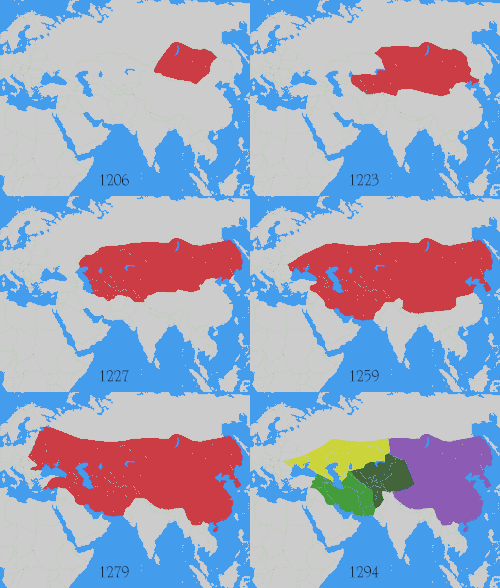
During the 13th century, Mongol forces under Genghis Khan swept through the Islamic world, reshaping political structures and the conditions under which art was produced.
Image source: Mongol invasions and conquests
1200 - 1499
From the 13th century, Anatolia was dominated by small Turkmen dynasties that progressively chipped away at Byzantine territory.
Image source: Anatolian beyliks
1206
The Indian subcontinent, partly conquered by the Ghaznavids and Ghurids, became autonomous in 1206 when the Muizzi, or slave-kings, seized power and established the Delhi Sultanate.
Image source: Delhi Sultanate
1243 - 1304
Seljuq power in Anatolia largely waned after the Mongol invasions of 1243, although coins continued to be struck in the Seljuq name until 1304.
Image source: Sultanate of Rum
1250
In 1250, the Mamluks seized Egypt from the Ayyubids. By 1261 they had also asserted themselves in Syria, creating a powerful center of architectural patronage.
Image source: Mamluk Sultanate
1250 - 1517
Mamluk rule lasted for three centuries and gave rise to abundant architectural projects. Many thousands of buildings were constructed during this period.
Image source: Mamluk architecture
1300 - 1499
A major dynasty gradually emerged in Anatolia: the Ottomans. After 1450, they are often referred to as the first Ottomans.
Image source: Ottoman Empire
1300 - 1492
Christian military victories reduced Islamic Spain by the end of the 14th century to Granada, ruled by the Nasrid dynasty, which maintained its hold until 1492.
Image source: Emirate of Granada
1300 - 1922
The Ottoman Empire continued until shortly after World War I. Its vast territory and longevity supported distinctive architecture, ceramics, Iznik ware, metalwork, jewellery, Ebru, carpets, tapestries, miniatures, and illumination.
1501 - 1786
The Safavid dynasty ruled Iran from 1501 to 1786. Its shahs’ Shi'a faith, which became the majority denomination in Persia, distinguished Safavid culture from the Ottoman and Mughal empires.
1526 - 1858
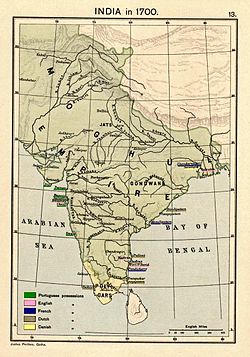
The Mughal Empire lasted in the Indian subcontinent from 1526 until technically 1858. From the late 17th century, power increasingly flowed to local rulers and European powers, especially the British Raj.
Image source: Mughal Empire
1700 - 1925
After the fall of the Safavids, the Qajars, a Turkmen tribe established for centuries along the Caspian Sea, assumed power. The dynasty survived until 1925, when it was replaced by the Pahlavis.
Image source: Qajar Iran
1100 - 1299
Book frontispieces combined Byzantine visual vocabulary, including blue and gold coloring, angelic and victorious motifs, and drapery symbolism, with Mongoloid facial types.
1200 - 1299
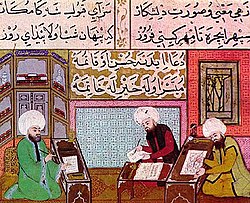
Islamic book painting witnessed its first golden age in the 13th century, especially in Syria and Iraq.
1500 - 1599
The Ottoman books of festivals contain numerous illustrations and exhibit a strong Safavid influence. They may have been inspired by books captured during the Ottoman-Safavid wars of the 16th century.
Image source: Ottoman miniature
1500 - 1599
Ottoman manuscript illustration includes two important books of festivals, or Surname-i Hümayun. One dates from the end of the 16th century and the other from the era of Sultan Murad III.
1500 - 1599
The Ottomans developed a bright red pigment known as Iznik red. It reached its height in the 16th century in tile-work and pottery, alongside transformed floral motifs derived from Chinese and Persian models.
1600 - 1699
In the 17th century, a new type of painting developed around the album, or muraqqa, reflecting changing practices of collecting and viewing individual images.
1400 - 1899
From the 15th century, smaller Islamic courts increasingly disappeared as the Ottomans, Safavids, and European powers absorbed their territories. Because Islamic art was strongly shaped by court patronage, this reduced the number of major artistic centers.
1700 - Present
From the 18th century onward, Islamic art came under increasing European influence. Contemporary artists in the Islamic world continue to engage with and reinterpret the heritage of Islamic art.
1700 - 1899
From the 18th century, Ottoman art came under considerable European influence. Ottoman artists adopted versions of Rococo, producing an enduring and often over-fussy decorative effect.
Image source: Ottoman architecture
1700 - 1899
From at least the 18th century, elite Islamic art was increasingly influenced by European styles. Applied arts often adopted Western forms or retained styles that had become established in the late 18th or early 19th centuries.
1700 - Present
The carpet industry has remained large, but it mostly uses designs originating before 1700. It also competes with machine-made imitations both locally and around the world.
1842 - 1910
European-style painting was adopted slowly in the Ottoman world. Osman Hamdi Bey, who lived from 1842 to 1910, remained for a long time a relatively solitary figure in this development.
Or browse the full history timeline directory, with more than 2,500 topics.
This History of Islamic Art timeline was generated with the help of AI, using information found on the internet.
We work hard to keep these timelines accurate, but mistakes do get through. If you spot one, email us at [email protected] and we'll fix it for future visitors.
Generate yours with AI or build it from scratch, for free.

Export your timeline, add your own events, edit or remove AI-generated events, and much more
No credit card required.
Cancel anytime.
Cancel anytime.
You can create an unlimited number of timelines with up to 10 events on each one, customize how they look, export them to PDF, PNG, PowerPoint, CSV, and Excel, and share them with a link. Paid plans raise the event limit and add features like spreadsheet imports and collaborators.
Yes. You can cancel your subscription from your account page at any time, and you will not be charged again. Your subscription stays active for the rest of the period you already paid for.
Yes. We will email you a reminder before the annual renewal, and we will also email you a receipt.
Yes. You can email us within 15 days of any payment, and we will issue you a full refund.
Check out our pricing docs or send us an email anytime: [email protected].