-
Use Cases
-
Resources
-
Pricing
622 - 632
The first mosque at Medina, established by Muhammad after the Hijra, became a foundational model for Islamic religious architecture. Its early courtyard, prayer hall, shaded portico, and communal functions influenced mosque planning across the Islamic world.
670 - 836
Founded in Tunisia and repeatedly rebuilt, the Great Mosque of Kairouan became a major center of North African Islamic architecture. Its massive walls, square minaret, hypostyle hall, and horseshoe arches influenced later Maghrebi and Andalusian buildings.
Image source: Great Mosque of Kairouan
691 - 692
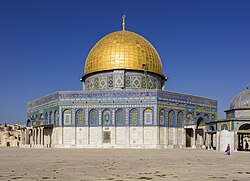
Commissioned by the Umayyad caliph Abd al-Malik in Jerusalem, the Dome of the Rock is one of the earliest surviving monuments of Islamic architecture. Its centralized plan, monumental dome, mosaics, and inscriptions combine Islamic, Byzantine, and late antique traditions.
Image source: Dome of the Rock
715
The Umayyad caliph al-Walid I transformed a Roman and Christian sacred site into the Great Mosque of Damascus. Its vast courtyard, hypostyle prayer hall, minarets, and famous golden mosaics established important precedents for congregational mosque design.
Image source: Umayyad Mosque
771 - 1500
The Jameh Mosque of Isfahan evolved through Abbasid, Seljuk, Ilkhanid, Timurid, and Safavid rebuilding. Its four-iwan courtyard, double-shell domes, brick ornament, and extensive tilework became a template for Persian mosque architecture.
Image source: Jameh Mosque of Isfahan
970 - 972
The Fatimid foundation of al-Azhar in Cairo created a major congregational mosque and educational institution. Its successive additions preserve a layered history of Fatimid, Mamluk, and Ottoman architectural forms.
Image source: Al-Azhar Mosque
990 - 1013
Built under the Fatimid caliphs al-Aziz and al-Hakim, this Cairo mosque is notable for its monumental stone façade and twin corner minarets. It helped establish the distinctive urban and ceremonial character of Fatimid Cairo.
1233 - 1234
The Abbasid caliph al-Mustansir founded this Baghdad institution as a multidenominational college. Its cruciform plan and organized teaching spaces helped define the architectural type of the Islamic madrasa.
Image source: Mustansiriyya Madrasa
1356 - 1363
Commissioned in Cairo by the Mamluk sultan Hasan, this enormous madrasa-mosque complex combines a monumental iwan courtyard with four educational institutions. Its soaring walls, domed mausoleum, and stone detailing represent the height of Mamluk architecture.
1550 - 1557
Designed by the Ottoman architect Mimar Sinan for Sultan Suleiman the Magnificent, the Süleymaniye Mosque crowns an Istanbul hilltop. Its centralized dome, semi-domes, slender minarets, courtyard, and charitable complex exemplify mature Ottoman architecture.
Image source: Süleymaniye Mosque
1568 - 1575
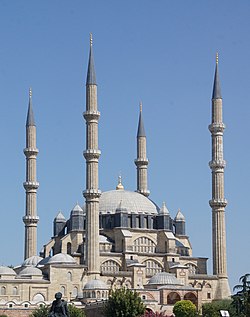
Sinan regarded the Selimiye Mosque in Edirne as his masterpiece. Its vast dome, supported by an innovative octagonal structure, dominates the interior while four slender minarets define the skyline.
Image source: Selimiye Mosque, Edirne
1603 - 1619
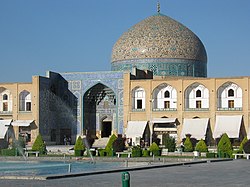
Constructed for Shah Abbas I on Isfahan's Naqsh-e Jahan Square, the Sheikh Lotfollah Mosque is renowned for its compact plan and luminous tilework. Its unusual lack of minarets reflects its role as a private royal mosque.
Image source: Sheikh Lotfollah Mosque
1609 - 1616
Built for Sultan Ahmed I, Istanbul's Blue Mosque combines Ottoman central-dome planning with extensive İznik tile decoration. Its cascading domes, six minarets, spacious courtyard, and külliye formed a major imperial landmark.
Image source: Blue Mosque, Istanbul
1611 - 1629
Built under Shah Abbas I in Isfahan, the Shah Mosque anchors the city's Naqsh-e Jahan Square. Its monumental portal, four iwans, double dome, and brilliant blue tile mosaics represent the achievements of Safavid architecture.
Image source: Shah Mosque (Isfahan)
1671 - 1673
Commissioned by the Mughal governor Aurangzeb in Lahore, the Badshahi Mosque is a monumental red-sandstone and marble complex. Its immense courtyard and prayer hall demonstrate the late Mughal emphasis on scale and imperial ceremony.
Image source: Badshahi Mosque
785 - 788
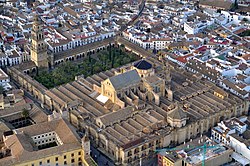
Abd al-Rahman I began the Great Mosque of Córdoba on the site of a former Visigothic basilica. Its double-tiered arches, rhythmic red-and-white voussoirs, and expanding hypostyle hall made it a defining monument of Umayyad architecture in al-Andalus.
Image source: Mosque–Cathedral of Córdoba
848 - 852
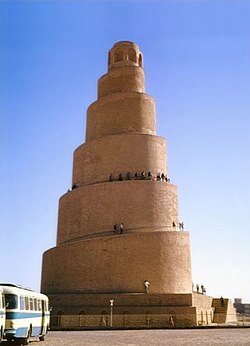
The Abbasid Great Mosque of Samarra was built on an enormous scale under caliph al-Mutawakkil. Its brick enclosure, vast courtyard, and distinctive spiral Malwiya minaret exemplify the monumental experimentation of Abbasid Iraq.
Image source: Great Mosque of Samarra
1107 - 1117
The Almoravid Qubba in Marrakesh is a rare surviving example of early Moroccan Islamic architecture. Its elaborately carved dome, ribbed vaulting, and water-related function document the development of architectural ornament in the Maghreb.
1147 - 1195
The Almohad Kutubiyya Mosque in Marrakesh became a major model for western Islamic architecture. Its square minaret, restrained geometric ornament, and carefully proportioned prayer hall influenced later Moroccan and Andalusian monuments.
1172 - 1198
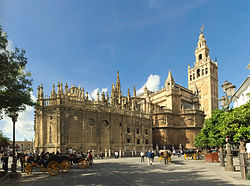
The Almohad rulers built a vast mosque in Seville, including the surviving Giralda minaret. The complex demonstrated Almohad preferences for monumental scale, austere decoration, geometric organization, and sophisticated brick construction.
Image source: Seville Cathedral
1183 - 1209
The Ayyubid ruler al-Zahir Ghazi significantly rebuilt the Citadel of Aleppo. Its imposing entrance bridge, gatehouse, defensive walls, and palace structures demonstrate how Islamic architecture integrated military engineering with ceremonial design.
Image source: Citadel of Aleppo
1238 - 1492
The Nasrid rulers developed the Alhambra above Granada into a fortified palace city. Courtyards, reflecting pools, muqarnas vaults, carved stucco, tilework, and poetic inscriptions create one of the most refined ensembles of Islamic palace architecture.
Image source: Alhambra
1389 - 1405
Timur commissioned this monumental mausoleum in Turkestan for the Sufi master Ahmad Yasawi. Its enormous portal, ribbed dome, glazed tilework, and centralized plan became a key precedent for Timurid architecture.
1399 - 1404
Timur ordered the Bibi-Khanym Mosque in Samarkand as one of the largest congregational mosques of its era. Its giant portal, domed sanctuary, and monumental courtyard expressed imperial ambition despite later structural failures.
1403 - 1404
The Gur-e-Amir in Samarkand became Timur's dynastic mausoleum. Its fluted turquoise dome, monumental pishtaq, and richly patterned tilework established forms that later influenced Timurid and Mughal funerary architecture.
1572
Built in Delhi for the Mughal emperor Humayun, this tomb introduced a grand Persianate garden-tomb type to South Asia. Its red sandstone and marble composition, double dome, and charbagh plan influenced later Mughal monuments.
Image source: Humayun's Tomb
1632 - 1653
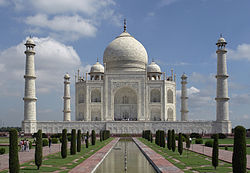
Shah Jahan commissioned the Taj Mahal at Agra as a mausoleum for Mumtaz Mahal. The complex uses a charbagh garden, axial symmetry, a white marble double dome, pietra dura, and minarets to create a celebrated expression of Mughal architecture.
Image source: Taj Mahal
1678 - 1684
Construction of Lalbagh Fort in Dhaka began under the Mughal prince Muhammad Azam. Though unfinished, its gardens, pavilions, mosque, and mausoleum display the Mughal synthesis of Persian planning, Bengal materials, and imperial symbolism.
Image source: Lalbagh Fort
1907
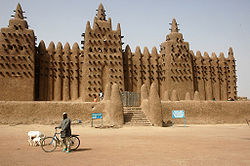
The present Great Mosque of Djenné in Mali was rebuilt in banco, or sun-dried earth, using traditional Sahelian techniques. Its buttresses, toron timber elements, and annual replastering tradition make it a landmark of vernacular Islamic architecture.
Image source: Great Mosque of Djenné
1571 - 1585
Akbar established Fatehpur Sikri as his imperial capital. The planned city combines palaces, audience halls, religious buildings, courtyards, and pavilions, blending Central Asian, Persian, Gujarati, and other South Asian architectural traditions.
Image source: Fatehpur Sikri
1598 - 1629
Shah Abbas I transformed Isfahan with the planned Naqsh-e Jahan Square. The enormous urban ensemble integrates the Shah Mosque, Sheikh Lotfollah Mosque, Ali Qapu palace, bazaar, gardens, and ceremonial public space.
Image source: Naqsh-e Jahan Square
1982 - 1985
Designed by Egyptian architect Abdel-Wahed El-Wakil, the Dar al-Islam complex in Abiquiú, New Mexico, demonstrates a modern revival of traditional Islamic building principles. Earthen materials, courtyards, domes, and passive environmental strategies connect the project to historic regional forms.
1996 - 2007
Built in Abu Dhabi, the Sheikh Zayed Grand Mosque combines white marble, domes, reflective pools, floral inlay, monumental arcades, and multiple minarets. Its design draws on Ottoman, Moorish, Mughal, and contemporary architectural traditions.
Image source: Sheikh Zayed Grand Mosque
2002
The Kingdom Centre in Riyadh, designed by Ellerbe Becket and Omrania, introduced a highly recognizable contemporary landmark to Saudi Arabia. Its glazed tower is distinguished by a monumental inverted-arch opening and sky bridge.
Image source: Kingdom Centre
2008
Designed by I. M. Pei, the Museum of Islamic Art in Doha translates geometric Islamic architectural principles into a modern monumental form. Its faceted limestone masses, domed atrium, and waterfront setting frame one of the world's major collections of Islamic art.
Image source: Museum of Islamic Art, Doha
Or browse the full history timeline directory, with more than 2,500 topics.
This Islamic Architecture timeline was generated with the help of AI, using information found on the internet.
We work hard to keep these timelines accurate, but mistakes do get through. If you spot one, email us at [email protected] and we'll fix it for future visitors.
Generate yours with AI or build it from scratch, for free.
Export your timeline, add your own events, edit or remove AI-generated events, and much more
No credit card required.
Cancel anytime.
Cancel anytime.
You can create an unlimited number of timelines with up to 10 events on each one, customize how they look, export them to PDF, PNG, PowerPoint, CSV, and Excel, and share them with a link. Paid plans raise the event limit and add features like spreadsheet imports and collaborators.
Yes. You can cancel your subscription from your account page at any time, and you will not be charged again. Your subscription stays active for the rest of the period you already paid for.
Yes. We will email you a reminder before the annual renewal, and we will also email you a receipt.
Yes. You can email us within 15 days of any payment, and we will issue you a full refund.
Check out our pricing docs or send us an email anytime: [email protected].