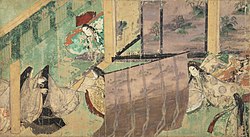
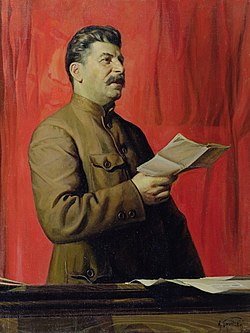
-
Use Cases
-
Resources
-
Pricing
2500 BCE - 1500 BCE
The Middle Jōmon period differed from the Early Jōmon period in numerous ways, reflecting changes in settlement, material culture, and ceramic production.
Image source: Jōmon period
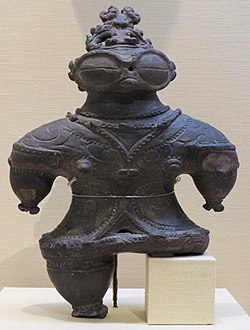
1500 BCE - 300 BCE
During the Late and Final Jōmon period, colder weather prompted settlers to move away from the mountains, influencing settlement patterns and material culture.
500 - 699
The earliest Japanese sculptures of the Buddha date from the sixth and seventh centuries, establishing a major tradition in Japanese religious art.
600 - 799
Throughout the seventh and eighth centuries, contacts between Japan and the Asian continent focused heavily on the development and transmission of Buddhism.
Image source: Buddhism in Japan
607
First built in the early seventh century as the private temple of Crown Prince Shōtoku, Hōryū-ji consists of 41 independent buildings and is a foundational monument of Japanese Buddhist architecture.
623
The Shaka Trinity is a bronze sculpture by Tori Busshi depicting the historical Buddha flanked by two bodhisattvas. It was made in homage to the recently deceased Prince Shōtoku.
700 - 799
Eighth-century temple building focused around Tōdai-ji in Nara, constructed as the headquarters for a network of provincial temples and regarded as the most ambitious religious complex of early Japanese Buddhism.
700 - 1868
Woodblock prints were first used in Japan to reproduce Buddhist scriptures in the eighth century. Woodblock printing then became the common method of printing from the eleventh through the nineteenth century.
Image source: Woodblock printing in Japan
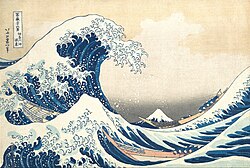
1500 - 1899
Japanese lacquerware became one of the world's leading arts and crafts. Works decorated with maki-e were exported to Europe and China and remained important exports until the nineteenth century.
1573 - 1603
During the Azuchi–Momoyama period, Oda Nobunaga, Toyotomi Hideyoshi, and Tokugawa Ieyasu attempted to bring peace and political stability after nearly a century of warfare.
1600 - 1649
Tawaraya Sōtatsu's pair of screens, Waves at Matsushima, exemplifies the colorful decorative power of early Edo painting. A century later, Kōrin reworked Sōtatsu's style.
Image source: Tawaraya Sōtatsu
1600 - 1699
With the rise of popular culture in the Edo period, ukiyo-e became a major art form. Its woodblock techniques were refined to produce mass-produced images.
Image source: Ukiyo-e
1603 - 1867
Tokugawa Ieyasu established the shogunate in 1603. It maintained peace and economic and political stability until capitulating in 1867 under pressure to open Japan to Western trade.
Image source: Tokugawa shogunate
1620
By around 1620, Japanese producers discovered deposits of kaolinite and began making porcelain for the first time in Japan.
1765
Ukiyo-e prints began in the late seventeenth century, and in 1765 Harunobu produced the first polychrome print, advancing the development of colorful nishiki-e.
Image source: Nishiki-e
1800 - 1899
In the nineteenth century, Hokusai and Hiroshige became dominant ukiyo-e figures. Hiroshige was especially known for romantic and somewhat sentimental landscape prints, while ukiyo-e influenced Western art.
794
In 794, Japan's capital was officially transferred to Heian-kyō, present-day Kyoto, where it remained until 1868.
Image source: Heian-kyō
794 - 1185
The Heian period lasted from 794 to 1185, ending when the Kamakura shogunate was established after the Genpei War. It saw the growth of distinctly Japanese artistic forms.
Image source: Heian period
800 - 899
Murō-ji, set among cypress trees southeast of Nara, best reflects the spirit of early Heian Shingon temples and their mountainous religious environments.
800 - 899
The wooden image of Shakyamuni at Murō-ji typifies early Heian sculpture with its ponderous body, thick honpa-shiki drapery folds, and austere, withdrawn expression.
1053
The Hō-ō-dō, or Phoenix Hall, completed in 1053 at Byōdō-in in Uji, became the exemplar of Fujiwara-period Amida halls.
1053
Inside the Phoenix Hall, a single golden image of Amida was installed on a high platform, forming the central focus of the Pure Land temple.
1100 - 1199
Twelfth-century artists developed pictorial conventions for conveying the emotional content of scenes in the illustrated Tale of Genji, while Japanese painters used devices such as the cutoff, close-up, and fade-out.
1100 - 1185
In the last century of the Heian period, horizontal illustrated narrative handscrolls known as e-maki became an important form of Japanese painting.
1130
Dating from about 1130, the Genji Monogatari Emaki is the earliest surviving yamato-e handscroll and one of the high points of Japanese painting. It illustrates Murasaki Shikibu's Tale of Genji.
1150 - 1199
The late twelfth-century Ban Dainagon Ekotoba presents a court intrigue through active figures, rapidly executed brushstrokes, and thin but vibrant colors.
1160
The Siege of the Sanjō Palace, shown in the Night Attack on the Sanjō Palace section of the Heiji Monogatari handscroll, is a renowned example of lively continuous narrative illustration.
1180 - 1185
War between the Taira and Minamoto clans began in 1180. After the Minamoto victory in 1185, a de facto government was established at Kamakura, where it remained until 1333.
Image source: Genpei War
1185 - 1224
After the Genpei War, Priest Myōe of Kōzan-ji sought to revive his sect and provide refuge for women widowed by the conflict.
1195
Kaikei created the Amitabha Triad at Jōdo-ji in Ono, completed in 1195. The work is one of the most famous sculptures of the Kamakura period.
1200 - 1399
Zen Buddhism, the Ch'an sect traditionally considered to have been founded in China, was introduced for a second time into Japan and took root during the medieval period.
1203
The two Niō guardian images at the Great South Gate of Tōdai-ji in Nara illustrate Unkei's dynamic, supra-realistic style of Kamakura-period sculpture.
1208
Unkei's polychromed wooden sculptures of the Indian sages Muchaku and Seshin at Kōfuku-ji are highly individualized and believable examples of Kamakura realism.
1338 - 1573
During the Muromachi, or Ashikaga, period, a profound change took place in Japanese culture, including the expansion of Zen influence and new approaches to painting.
Image source: Muromachi period
1400 - 1499
The priest-painter Kao's depiction of the legendary monk Kensu at the moment of enlightenment is typical of early Muromachi painting.
1413
Josetsu's Catching a Catfish with a Gourd, painted around the early fifteenth century, marked a turning point in Muromachi painting through its new sense of deep pictorial space.
1446
In Reading in a Bamboo Grove, Shūbun created a realistic landscape with deep recession into space, demonstrating the development of Chinese-inspired ink painting in Japan.
1467 - 1477
After the Ōnin War, Japan entered more than a century of political, social, and economic turmoil, reshaping the conditions under which religious and secular arts were produced.
Image source: Ōnin War
1486
Landscape of the Four Seasons is one of Sesshū's most accomplished works, presenting a continuous landscape that unfolds through the four seasons.
1868 - 1912
The Meiji period saw an abrupt influx of Western styles into Japan. These styles continued to be important while interacting with established Japanese artistic traditions.
Image source: Meiji era
1873
The Japanese government promoted art exports at international world's fairs beginning with the 1873 Vienna World's Fair, helping introduce Japanese arts to foreign audiences.
Image source: 1873 Vienna World's Fair
1876
The Technological Art School opened in 1876 and employed Italian instructors to teach Western artistic methods, reflecting Japan's initial open-hearted acceptance of Western art.
1876
For the 1876 Centennial International Exhibition in Philadelphia, Japan created a Centennial Office and sent an envoy to secure space for 30,000 displayed items.
1876 - 1913
From 1876 to 1913, Kōzan won prizes at 51 exhibitions, including world's fairs and the National Industrial Exhibition, demonstrating the international success of Japanese decorative art.
1890 - 1910
The period from 1890 to 1910 became known as the Golden age of Japanese enamels, marked by sophisticated decorative techniques and international recognition.
1890 - 1944
In 1890, Japan created the Teishitsu Gigeiin, or Artist to the Imperial Household, system to recognize distinguished artists. Seventy artists were appointed between 1890 and 1944.
1900 - 1919
By the early twentieth century, European art forms were well established in Japan, where their combination with Japanese traditions produced buildings such as Tokyo Station and the National Diet Building.
1902
The 1902 Encyclopædia Britannica praised Japanese textile fabrics for their decorative genius and conspicuous recent progress, including very large and colorful pictorial works produced in Kyoto.
1945 - 1952
After Japan's defeat in World War II, many artists came under the influence of or joined the newly legalized Japan Communist Party during the U.S.-led occupation.
1952
In 1952, the Communist Party ordered artists including Hiroshi Katsuragawa and members of the Avant-Garde Art Association into the mountains to produce socialist realist art supporting mountain guerrilla squads.
Image source: Socialist realism
1954
The Gutai group of conceptual artists was founded in 1954. Its members sought recognition, financial support, and opportunities to exhibit Japanese art overseas.
Image source: Gutai Art Association
1960
The massive 1960 Anpo protests against the U.S.–Japan Security Treaty became a final straw for artists dissatisfied with the supposedly vanguard Communist Party's passive role.
Image source: Anpo protests
1965
The Group 1965 artists' collective includes contemporary artist Makoto Aida among its members, representing the continuing development of experimental Japanese art.
1968
The Japanese government established the Agency for Cultural Affairs in 1968 as a special body of the Ministry of Education to support the arts and cultural heritage.
1970
The 1970 Osaka World's Fair cemented new forms of Japanese art when dozens of avant-garde and conceptual artists designed pavilions and artistic experiences for visitors.
Image source: Expo '70
1985 - 1990
After the 1985 Plaza Accord strengthened the yen, Japanese individuals and institutions became major participants in the international art market.
1987
Performing artists maintained their own societies, including the Kabuki Society, organized in 1987 to preserve traditional standards thought to be endangered by modern innovation.
Image source: Kabuki
1988
In 1988, Japan and the United States established a cooperative arrangement through the Smithsonian Institution for high-technology studies of Asian artifacts.
Image source: Smithsonian Institution
1989
In 1989, the Japan Art Association established the Premium Imperiale, an international arts award sometimes described as a Japanese Nobel Prize for the arts.
Or browse the full history timeline directory, with more than 2,500 topics.
This History of Japanese Art timeline was generated with the help of AI, using information found on the internet.
We work hard to keep these timelines accurate, but mistakes do get through. If you spot one, email us at [email protected] and we'll fix it for future visitors.
Generate yours with AI or build it from scratch, for free.
Export your timeline, add your own events, edit or remove AI-generated events, and much more
No credit card required.
Cancel anytime.
Cancel anytime.
You can create an unlimited number of timelines with up to 10 events on each one, customize how they look, export them to PDF, PNG, PowerPoint, CSV, and Excel, and share them with a link. Paid plans raise the event limit and add features like spreadsheet imports and collaborators.
Yes. You can cancel your subscription from your account page at any time, and you will not be charged again. Your subscription stays active for the rest of the period you already paid for.
Yes. We will email you a reminder before the annual renewal, and we will also email you a receipt.
Yes. You can email us within 15 days of any payment, and we will issue you a full refund.
Check out our pricing docs or send us an email anytime: [email protected].