-
Use Cases
-
Resources
-
Pricing
The history of journalism traces the evolution of news gathering and reporting, from handwritten newsletters and the first printed newspapers in 17th-century Europe, through the rise of mass-circulation penny press, radio and television broadcasting, to today's internet-driven digital journalism. More Less
1605
% complete
Johann Carolus's 'Relation aller Fürnemmen und gedenckwürdigen Historien', published in Strasbourg in 1605, is widely regarded as the world's first newspaper. It marked the birth of regularly printed news, laying the foundation for the modern press.
Image source: History of journalism
Nov 16, 1665
% complete
The Oxford Gazette, later renamed the London Gazette, became England's first official newspaper. Published under government authority, it set a precedent for official state communication through print.
Image source: The London Gazette
Sep 25, 1690
% complete
Publick Occurrences Both Forreign and Domestick, published in Boston by Benjamin Harris, was the first multi-page newspaper printed in the Americas. It was suppressed after a single issue but inspired future colonial journalism.
Image source: Publick Occurrences Both Forreign and Domestick
Mar 11, 1702
% complete
The Daily Courant, launched in London by Elizabeth Mallet, was the first daily newspaper in Britain. Its success demonstrated public appetite for frequent news updates and helped establish daily journalism as an institution.
Image source: The Daily Courant
Aug 4, 1735
% complete
The acquittal of publisher John Peter Zenger on charges of seditious libel established a landmark precedent for freedom of the press in colonial America, affirming that truth could be a defense against libel accusations.
Image source: John Peter Zenger
Nov 1, 1765 - Mar 18, 1766
% complete
Britain's Stamp Act imposed taxes on printed materials including newspapers, provoking fierce resistance from colonial printers who saw it as an attack on free expression. Its repeal emboldened the American press.
Image source: Stamp Act 1765
Dec 15, 1791
% complete
The ratification of the First Amendment enshrined freedom of speech and of the press in the U.S. Constitution, providing enduring legal protection for journalists and publishers.
Image source: First Amendment to the United States Constitution
Sep 3, 1833
% complete
Benjamin Day's New York Sun sold for one penny, making news affordable for working-class readers. The penny press era democratized journalism and introduced mass circulation, advertising revenue, and human-interest reporting.
Image source: The Sun (New York City)
Apr 10, 1841
% complete
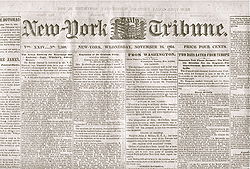
Horace Greeley's New York Tribune emphasized serious political reporting and reform causes, elevating journalistic standards and demonstrating that quality editorial content could attract a broad national audience.
Image source: New-York Tribune
1844
% complete
Samuel Morse's telegraph line between Washington and Baltimore transformed journalism by enabling near-instant transmission of news across distances, giving rise to wire services and deadline-driven reporting.
Image source: Electrical telegraph
May 1846
% complete
Five New York newspapers formed the Associated Press to share telegraph costs and pool news coverage. AP grew into one of the world's largest news agencies, shaping standards of objective reporting.
Image source: Associated Press
1851
% complete
Paul Julius Reuter established Reuters in London, using telegraph lines and even carrier pigeons to deliver financial and general news. It became a global news agency synonymous with fast, reliable international reporting.
Image source: Reuters
Apr 12, 1861 - Apr 9, 1865
% complete
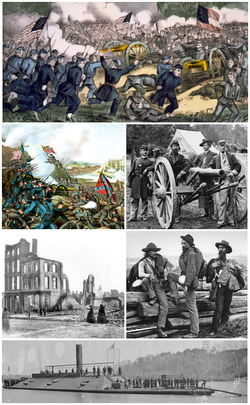
Hundreds of correspondents covered the American Civil War, sending dispatches from the front lines via telegraph. The conflict professionalized war reporting and made newspapers essential sources of timely national news.
Image source: American Civil War
1895 - 1898
% complete
Joseph Pulitzer's World and William Randolph Hearst's Journal competed with lurid headlines and sensational stories, exemplified by exaggerated coverage of Cuba that helped push the U.S. toward war with Spain in 1898.
1902 - 1912
% complete
Investigative journalists like Ida Tarbell, Lincoln Steffens, and Upton Sinclair exposed corporate monopolies, urban corruption, and unsafe food practices, spurring major Progressive Era reforms and regulation.
Image source: Muckraker
1912
% complete
Joseph Pulitzer's bequest founded the Columbia School of Journalism, formalizing journalism education in America and promoting professional standards, ethics, and training for reporters.
Jun 17, 1972 - Aug 9, 1974
% complete
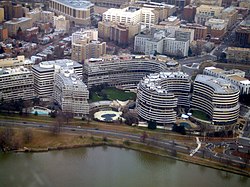
The Washington Post's Bob Woodward and Carl Bernstein uncovered the Watergate break-in cover-up, leading to President Nixon's resignation and ushering in a golden age of investigative journalism.
Image source: Watergate scandal
Nov 2, 1920
% complete
Pittsburgh station KDKA aired results of the Harding-Cox presidential election, marking the start of commercial radio broadcasting. Radio soon delivered breaking news directly into homes, transforming news consumption.
Image source: KDKA (AM)
Oct 18, 1922
% complete
The British Broadcasting Company, later the British Broadcasting Corporation, was established as a public service broadcaster. The BBC became a model for independent, publicly funded journalism worldwide.
Image source: BBC
1940 - 1941
% complete
Edward R. Murrow's live radio broadcasts from London during German bombing raids brought the reality of war to American audiences, establishing broadcast journalism's power and credibility.
Image source: Edward R. Murrow
1947
% complete
Programs like CBS's 'Camel News Caravan' and NBC's early evening news shows launched regular television news in America, beginning television's rise as the dominant medium for news delivery.
Mar 9, 1954
% complete
Murrow's 'See It Now' episode confronted Senator Joseph McCarthy's anti-communist crusade, demonstrating television journalism's capacity to hold powerful figures accountable and contributing to McCarthy's downfall.
Image source: Joseph McCarthy
Sep 26, 1960
% complete
The first televised presidential debate between John F. Kennedy and Richard Nixon highlighted television's growing influence on politics and cemented TV's role as a central forum for public affairs.
Jun 1, 1980
% complete
Ted Turner's Cable News Network pioneered round-the-clock television news, fundamentally changing news cycles and proving continuous live coverage could sustain a global audience.
Image source: CNN
Jan 17, 1991 - Feb 28, 1991
% complete
CNN's real-time reporting from Baghdad during Operation Desert Storm drew massive global audiences, validating the 24-hour news model and making live wartime coverage a defining feature of modern journalism.
Image source: Gulf War
1991
% complete
Tim Berners-Lee's World Wide Web became publicly available, eventually enabling newspapers and broadcasters to publish online, transforming distribution, speed, and economics of news.
Image source: World Wide Web
Jan 17, 1998
% complete
Matt Drudge's website broke the Clinton-Lewinsky scandal ahead of traditional outlets, signaling the internet's arrival as a disruptive force capable of setting the national news agenda.
Image source: Monica Lewinsky
1999
% complete
The rise of blogging platforms empowered individuals to publish commentary and report news independently, challenging gatekeeping by mainstream media and expanding the definition of journalism.
Image source: Blog
Jan 15, 2001
% complete
Wikipedia's launch popularized crowdsourced knowledge creation, influencing how the public accesses information and prompting debates about accuracy, sourcing, and authority in digital media.
Image source: Wikipedia
2007
% complete
The iPhone and smartphone revolution enabled ordinary people to capture and share newsworthy events instantly, making eyewitness video a staple of breaking news coverage worldwide.
Image source: Citizen journalism
2009
% complete
Twitter emerged as a vital tool for breaking news, eyewitness accounts, and direct communication between journalists and the public, reshaping how news spreads and is discovered.
Image source: Twitter, Inc.
Jun 5, 2013
% complete
Edward Snowden's disclosures, reported by Glenn Greenwald and The Guardian, revealed mass government surveillance programs, igniting worldwide debates about privacy, press freedom, and source protection in the digital era.
Image source: 2010s global surveillance disclosures
Or browse the full history timeline directory, with more than 2,000 topics.
This History of Journalism timeline was generated with the help of AI, using information found on the internet.
We work hard to keep these timelines accurate, but mistakes do get through. If you spot one, email us at [email protected] and we'll fix it for future visitors.
Generate yours with AI or build it from scratch, for free.
Export your timeline, add your own events, edit or remove AI-generated events, and much more
No credit card required.
Cancel anytime.
Cancel anytime.
You can create an unlimited number of timelines with up to 10 events on each one, customize how they look, export them to PDF, PNG, PowerPoint, CSV, and Excel, and share them with a link. Paid plans raise the event limit and add features like spreadsheet imports and collaborators.
Yes. You can cancel your subscription from your account page at any time, and you will not be charged again. Your subscription stays active for the rest of the period you already paid for.
Yes. We will email you a reminder before the annual renewal, and we will also email you a receipt.
Yes. You can email us within 15 days of any payment, and we will issue you a full refund.
Check out our pricing docs or send us an email anytime: [email protected].