-
Use Cases
-
Resources
-
Pricing
The history of ornithology traces humanity's study of birds from ancient observations by Aristotle and Pliny the Elder through the Renaissance works of naturalists like Ulisse Aldrovandi, to John James Audubon's iconic bird illustrations in the 19th century. The field evolved from descriptive cataloguing to scientific disciplines including evolution theory with Darwin's finches, the founding of organizations like the American Ornithologists' Union (1883) and the British Trust for Ornithology (1932), and modern advances in migration tracking, genetics, and citizen science projects such as the Christmas Bird Count and eBird. More Less
700
% complete
Starting from the eighth century, numerous Arabic works on birds and general ornithology were written, as well as translations of the works of ancient writers from Greek and Syriac.
Image source: Ornithology
1085
% complete
Toledo fell into Christian hands and its libraries escaped destruction, enabling later translations into Latin of great works of Arabic and Greek scholars with the help of Jewish and Muslim scholars.
Image source: Toledo School of Translators
1187
% complete
The nests of barnacle geese had not been seen, and they were believed to grow by transformations of goose barnacles, an idea prevalent from around the 11th century and noted by Bishop Giraldus Cambrensis in Topographia Hiberniae.
Image source: Gerald of Wales
1215
% complete
Michael Scotus from Scotland made a Latin translation of Aristotle's work on animals from Arabic around 1215, disseminated widely as the first time in a millennium that this foundational text on zoology became available to Europeans.
Image source: Michael Scot
1240 - 1241
% complete
Emperor Frederick II of Hohenstaufen sponsored translations of Arabic texts on falconry, including the Liber Moaminus translated by Theodore of Antioch, while Michael Scotus translated Ibn Sīnā's Kitāb al-Ḥayawān for him.
Image source: Frederick II, Holy Roman Emperor
1544
% complete
Turner's Historia Avium (History of Birds), published at Cologne in 1544, was an early ornithological work from England, reflecting the violent times in which he lived.
Image source: William Turner (naturalist)
1555
% complete
Belon's Book of Birds is a folio volume with descriptions of some 200 species, an important contribution to early comparative anatomy and ornithological description.
Image source: Pierre Belon
1557
% complete
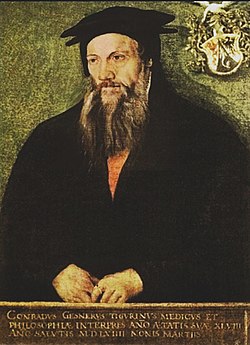
Konrad Gesner wrote the Vogelbuch and Icones avium omnium around 1557, richly illustrated encyclopedic works that helped establish the study of birds in Europe.
Image source: Conrad Gessner
1572
% complete
Volcher Coiter, a Dutch anatomist, made detailed studies of the internal structures of birds and produced a classification of birds, De Differentiis Avium, based on structure and habits.
Image source: Volcher Coiter
1580
% complete
The word ornithology comes from the late 16th-century Latin ornithologia meaning 'bird science', from the Greek órnis ('bird') and lógos ('theory, science, thought').
1599 - 1603
% complete
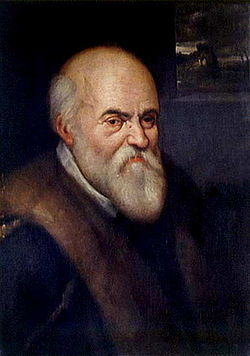
Ulisse Aldrovandi began a 14-volume natural history with three volumes on birds, ornithologiae hoc est de avibus historiae libri XII. His Ornithology alone covers 2000 pages and included aspects such as the chicken and poultry techniques.
Image source: Ulisse Aldrovandi
1667
% complete
The earliest list of British birds, Pinax Rerum Naturalium Britannicarum, was written by Christopher Merrett in 1667, though authors such as John Ray considered it of little value.
Image source: Christopher Merret
1676
% complete
Francis Willughby (1635–1672) and John Ray created the first major system of bird classification based on function and morphology rather than form or behaviour. Willughby's Ornithologiae libri tres, completed by Ray, is sometimes considered the beginning of scientific ornithology.
Image source: Francis Willughby
1713
% complete
Ray worked on his Ornithologia, which was published posthumously in 1713 as Synopsis methodica avium et piscium, further consolidating systematic ornithology.
Image source: John Ray
1731
% complete
Catesby's two-volume Natural History of Carolina, Florida, and the Bahama Islands was a landmark work including 220 hand-painted engravings, forming the basis for many species Carl Linnaeus described in the Systema Naturae.
Image source: Mark Catesby
1758
% complete
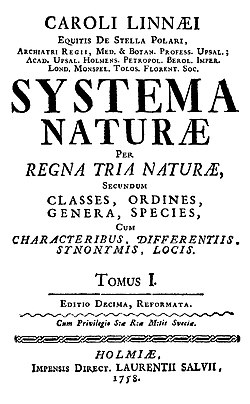
Carl Linnaeus's 1758 Systema Naturae formally described many bird species based on earlier works such as Catesby's landmark natural history, establishing binomial nomenclature for birds.
Image source: Systema Naturae
1760
% complete
Towards the late 18th century Mathurin Jacques Brisson began new works on birds, producing a six-volume work Ornithologie in 1760.
Image source: Mathurin Jacques Brisson
1770 - 1785
% complete
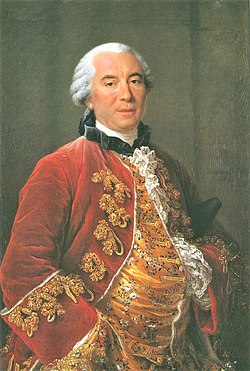
Comte de Buffon's Histoire naturelle des oiseaux comprised nine volumes on birds within his grand Histoire naturelle générale et particulière, a monumental contribution to ornithology.
Image source: Georges-Louis Leclerc, Comte de Buffon
1789
% complete
Gilbert White's 1789 The Natural History and Antiquities of Selborne stood in contrast to earlier works like Turner's, being written in a tranquil era and inspiring generations of naturalists.
Image source: The Natural History and Antiquities of Selborne
1796 - 1808
% complete
Jacob Temminck sponsored François Le Vaillant to collect bird specimens in Southern Africa, resulting in his six-volume Histoire naturelle des oiseaux d'Afrique, which included many non-African birds.
Image source: François Levaillant
1807 - 1808
% complete
Louis Pierre Vieillot spent 10 years studying North American birds and wrote the Histoire naturelle des oiseaux de l'Amérique septentrionale.
Image source: Louis Pierre Vieillot
1888
% complete
A major advance was made by Max Fürbringer in 1888, who established a comprehensive phylogeny of birds based on anatomy, morphology, distribution, and biology.
Image source: Max Fürbringer
1804 - 1806
% complete
In the early 19th century, Lewis and Clark studied and identified many birds in the western United States, expanding knowledge of the continent's avifauna.
Image source: Lewis and Clark Expedition
1808 - 1814
% complete
Wilson composed a nine-volume American Ornithology, the first such record of North American birds, significantly antedating Audubon's famous work.
Image source: Alexander Wilson (ornithologist)
1827 - 1838
% complete
John James Audubon, born in 1785, observed and painted birds in France and later in the Ohio and Mississippi valleys, publishing The Birds of America from 1827 to 1838, engraved by Robert Havell Sr.
Image source: The Birds of America
1830
% complete
This technique became standard with the invention of the blow drill around 1830, allowing oologists to empty eggshells for scientific collections.
Image source: Oology
1858
% complete
Specialization in ornithology led to the formation in Britain of the British Ornithologists' Union in 1858, fostering widely extended geographical ornithology across areas of British rule or influence.
1859
% complete
In 1859, the members of the British Ornithologists' Union founded their journal The Ibis, which became one of the world's leading ornithological journals.
1878
% complete
The idea of swallow hibernation was so well established that even as late as 1878 Elliott Coues could list as many as 182 contemporary publications dealing with the hibernation of swallows.
Image source: Elliott Coues
1878
% complete
The first attenuated vaccine developed by Louis Pasteur, for fowl cholera, was tested on poultry in 1878, linking ornithology with veterinary science.
Image source: Fowl cholera
1885
% complete
Organizations grew rapidly in membership in many countries, most notably the Audubon Society in the US, which started in 1885.
Image source: Audubon
1887
% complete
This pioneering illustrated guide was published in 1887 as Hints to Audubon Workers: Fifty Birds and How to Know Them in Grinnell's Audubon Magazine, helping popularize bird identification.
1889
% complete
The RSPB grew from a small Croydon-based group of women, including Eliza Phillips, Etta Lemon, Catherine Hall and Hannah Poland, and became primarily conservation oriented.
Image source: Royal Society for the Protection of Birds
1903
% complete
The study of birds in their habitats was particularly advanced in Germany with bird ringing stations established as early as 1903, advancing field ornithology.
Image source: Bird ringing
1915
% complete
In Britain, some of the earliest ornithological works that used the word ecology appeared in 1915, marking the rise of ecological approaches to studying birds.
Image source: Ecology
1916
% complete
As early as 1916, Julian Huxley wrote a two-part article in The Auk noting tensions between amateurs and professionals and suggesting that the 'vast army of bird lovers and bird watchers' could provide data scientists needed.
Image source: Julian Huxley
1933
% complete
Unlike the RSPB, which was primarily conservation oriented, the British Trust for Ornithology was started in 1933 with the aim of advancing ornithological research.
Image source: British Trust for Ornithology
1934
% complete
From Frank Chapman's illustrated handbooks to Roger Tory Peterson's classic Field Guide to the Birds in 1934, field guides transformed birdwatching into a mass pursuit.
Image source: Roger Tory Peterson
1943
% complete
The Ibis resisted the introduction of new methods of study, and no paper on ecology appeared until 1943, marking a shift toward ecological ornithology.
2004
% complete
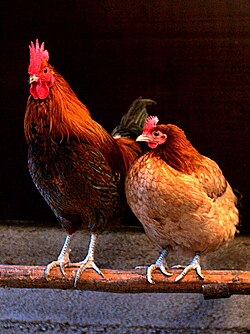
The entire genome of the domestic fowl (Gallus gallus) was sequenced in 2004, opening a new genomic era in the study of birds.
Image source: Chicken
2008
% complete
The zebra finch (Taeniopygia guttata) genome was sequenced in 2008 following the chicken genome, supporting modern research into bird behavior, song learning, and evolution.
Image source: Zebra finch
Or browse the full history timeline directory, with more than 2,000 topics.
This History of Ornithology timeline was generated with the help of AI, using information found on the internet.
We work hard to keep these timelines accurate, but mistakes do get through. If you spot one, email us at [email protected] and we'll fix it for future visitors.
Generate yours with AI or build it from scratch, for free.
Export your timeline, add your own events, edit or remove AI-generated events, and much more
No credit card required.
Cancel anytime.
Cancel anytime.
You can create an unlimited number of timelines with up to 10 events on each one, customize how they look, export them to PDF, PNG, PowerPoint, CSV, and Excel, and share them with a link. Paid plans raise the event limit and add features like spreadsheet imports and collaborators.
Yes. You can cancel your subscription from your account page at any time, and you will not be charged again. Your subscription stays active for the rest of the period you already paid for.
Yes. We will email you a reminder before the annual renewal, and we will also email you a receipt.
Yes. You can email us within 15 days of any payment, and we will issue you a full refund.
Check out our pricing docs or send us an email anytime: [email protected].