
-
Use Cases
-
Resources
-
Pricing
1100
In Europe, quilting appears to have been introduced by Crusaders in the 12th century, particularly in the form of quilted protective garments.
1100
The aketon or gambeson was a quilted garment worn under armor, representing an important early European use of quilted textiles.
1300
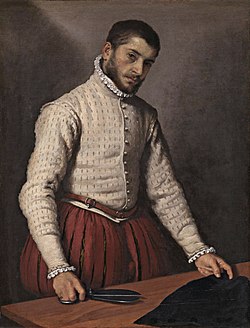
The quilted garment tradition later developed into the doublet, which became an essential part of fashionable men's clothing.
Image source: Doublet (clothing)
1300 - 1600
The doublet remained an essential part of fashionable men's clothing for approximately 300 years, until the early 1600s.
1360
The Tristan Quilt, made around 1360 in Sicily, is one of the earliest existing decorative works associated with quilting.
1600
In the 18th century and earlier, bedrooms of wealthy households were much more social places than they are today, providing an important setting for domestic textile work.
1635
After passengers came safely ashore, the galleon Angel Gabriel was destroyed in Pemaquid Bay by the Great Colonial Hurricane of 1635.
1635
The Great Colonial Hurricane of 1635 rushed up the coast from the direction of Narragansett, Rhode Island, and left the Angel Gabriel as floating debris.
1635
A quilt in the collection of Baltimore's Lovely Lane Museum is believed to have been carried ashore by the Cogswell family, who traveled from Bristol, England, toward Bristol, Maine, in 1635.
1650
Quilt making was common in the late 17th century and the early years of the 18th century.
1700
The listed history identifies the 18th century as a period in which a particular form of quilt making was practiced.
1786
Martha Crafts Howard made a wool wholecloth quilt in 1786.
1830
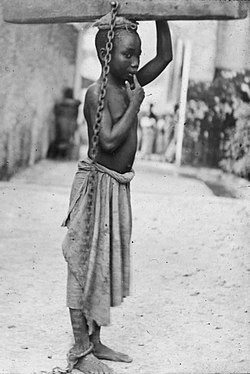
Even before 1830, abolitionists were working actively to end slavery, a context connected with later uses and interpretations of American quilts.
Image source: Abolitionism
1800 - 1840
During the early 19th century, whole cloth quilts, broderie perse, and medallion quilts were among the principal styles being made.
1840
From 1840 onward, the use of piecework and blocks became much more common, often using printed fabric.
1840
The increasing use of printed fabric contributed to the growing popularity of pieced quilts and block-based construction after 1840.
1841
The Rajah quilt was made during the 1841 voyage transporting convict women from England to Hobart, Tasmania.
1841
About 30 convict women created the Rajah quilt while being transported from Woolwich, England, to Hobart, Tasmania, in 1841.
1849
The earliest known Amish quilts date from 1849 and are whole-cloth works made in solid colors.
1850
Technological progress deeply affected the number and styles of quilts made during the middle years of the 19th century.
1856
In 1856, the Singer company began an installment plan that allowed more families to afford a sewing machine.
Image source: Singer Corporation
1856
Singer's 1856 installment plan helped make sewing machines more accessible to families, contributing to technological change in quilt making.
Image source: Sewing machine
1860
Some quilt patterns made during the middle of the 19th century resembled earlier patterns, but their purposes were different.
1870
Quilt making continued to be a popular craft during the latter part of the 19th century.
1880
The latter years of the 19th century are especially remembered for the Crazy quilting craze.
1900
Because of heavy use, very few quilts from the earlier tradition survived into the 21st century.
1989
The quilt made by convict women during the 1841 voyage was rediscovered in Scotland in 1989.
1989 - 2014
Works cited in the listed material include Barbara Brackman's 1989 publication, Roderick Kiracofe and Mary Elizabeth Johnson's 2004 work, Janneken Smucker's 2013 work, and Patricia L. Cummings's 2005 and 2014 materials, reflecting continuing documentation of quilting history.
2014
The Buckingham Quilt surfaced in 2014, bringing a previously little-known quilt into public attention.
Or browse the full history timeline directory, with more than 2,500 topics.
This History of Quilting timeline was generated with the help of AI, using information found on the internet.
We work hard to keep these timelines accurate, but mistakes do get through. If you spot one, email us at [email protected] and we'll fix it for future visitors.
Generate yours with AI or build it from scratch, for free.
Export your timeline, add your own events, edit or remove AI-generated events, and much more
No credit card required.
Cancel anytime.
Cancel anytime.
You can create an unlimited number of timelines with up to 10 events on each one, customize how they look, export them to PDF, PNG, PowerPoint, CSV, and Excel, and share them with a link. Paid plans raise the event limit and add features like spreadsheet imports and collaborators.
Yes. You can cancel your subscription from your account page at any time, and you will not be charged again. Your subscription stays active for the rest of the period you already paid for.
Yes. We will email you a reminder before the annual renewal, and we will also email you a receipt.
Yes. You can email us within 15 days of any payment, and we will issue you a full refund.
Check out our pricing docs or send us an email anytime: [email protected].