-
Use Cases
-
Resources
-
Pricing
Reggae is a genre of popular music that originated in Jamaica in the late 1960s, evolving from earlier ska and rocksteady styles. Characterized by its distinctive offbeat rhythm, prominent bass lines, and socially conscious lyrics, reggae became a powerful vehicle for spreading Rastafarian ideas and messages of peace, love, and resistance. Artists like Bob Marley, Peter Tosh, and Jimmy Cliff propelled the genre to international fame, making it one of Jamaica's most influential cultural exports. More Less
1949
% complete
The 7-inch single was first released in 1949 and would soon supersede the 78 rpm records that Jamaican entrepreneurs had begun issuing in the early 1950s. Phonograph records became central to the Jamaican music industry's development.
Image source: Single (music)
1951
% complete
In 1951 the first recordings of mento music were released as singles, showcasing two styles of mento: an acoustic rural style, and a jazzy pop style. Mento was a key precursor to ska, rocksteady and reggae in Jamaica.
Image source: Mento
1951
% complete
In the early 1950s, Jamaican entrepreneurs began issuing 78 rpm records, though this format would soon be replaced by the 7-inch single. In the latter half of the 20th century, phonograph records became of central importance to the Jamaican music industry.
Image source: Reggae
1960
% complete
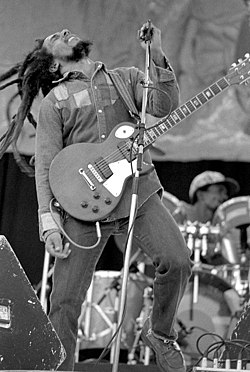
Chris Blackwell founded Island Records in Jamaica in 1960, creating one of the most important labels for promoting reggae music internationally in the decades that followed.
Image source: Island Records
1961 - 1967
% complete
Ska was originally a generic title for Jamaican music recorded between 1961 and 1967. It emerged from Jamaican R&B, which was based largely on American R&B and doo-wop.
Image source: Ska
1962
% complete
When Jamaica gained independence in 1962, ska became the music of choice for young Jamaicans seeking music that was their own. That same year, Chris Blackwell relocated to England, where he continued promoting Jamaican music.
1963
% complete
The Wailers, started by Bob Marley, Peter Tosh and Bunny Wailer in 1963, is perhaps the most recognized band to make the transition through all three stages of early Jamaican popular music: ska, rocksteady and reggae.
Image source: Bob Marley and the Wailers
1964
% complete
Millie Small, best known for her 1964 blue-beat/ska cover version of 'My Boy Lollipop', achieved a smash hit internationally, helping bring Jamaican music to a worldwide audience.
Image source: My Boy Lollipop
1967
% complete
The 1967 edition of the Dictionary of Jamaican English listed reggae as 'a recently established' term, marking the genre's entry into formal documentation of Jamaican language and culture.
Image source: Jamaican Patois
1968
% complete
The shift from rocksteady to reggae was illustrated by the organ shuffle pioneered by musicians like Jackie Mittoo and Winston Wright, featured in transitional singles such as 'Say What You're Saying' by Eric 'Monty' Morris and 'People Funny Boy' by Lee 'Scratch' Perry.
Jan 1, 1968 - Mar 31, 1968
% complete
Early 1968 was when the first bona fide reggae records were released: 'Nanny Goat' by Larry Marshall and 'No More Heartaches' by the Beltones, marking the birth of reggae as a distinct recorded genre.
1968
% complete
The 1968 single by Toots and the Maytals titled 'Do the Reggay' was the first popular song to use the word reggae, effectively naming the genre and introducing it to a global audience. Reggae as a musical term first appeared in print with this rocksteady hit.
1968 - 1972
% complete
Between 1968 and 1972, reggae sales in the United Kingdom exceeded those in Jamaica, demonstrating how quickly the genre had found an enthusiastic audience abroad.
1968 - 1974
% complete
Chris Blackwell formed a partnership with Lee Gopthal's Trojan Records in 1968, which released reggae in the UK until it was bought by Saga Records in 1974.
1968
% complete
Around 1968, reggae influences began surfacing in rock and pop music; one example is the Beatles' 'Ob-La-Di, Ob-La-Da'. In 1968, the newest Jamaican sound also began to spawn big-name imitators in other countries.
Image source: Ob-La-Di, Ob-La-Da
1968
% complete
American artist Johnny Nash's 1968 hit 'Hold Me Tight' has been credited with first putting reggae in the American listener charts, an early breakthrough for the genre in the United States.
1970
% complete
During 1970 alone, Trojan/B&C released approximately 500 singles across more than thirty labels, with sales exceeding two million copies, fueling reggae's boom in Britain.
1978
% complete
Three reggae-tinged singles from the Police's 1978 debut album Outlandos d'Amour laid down the template for much rock/reggae songwriting: a reggae-infused verse with upstrokes on guitar or keyboards and a more aggressive punk/rock chorus.
Image source: Outlandos d'Amour
1979
% complete
New Zealand reggae was heavily inspired by Bob Marley's 1979 tour of the country and early reggae groups such as Herbs, seeding a lasting local reggae scene.
Image source: Music of New Zealand
Apr 18, 1980
% complete
Reggae in Africa was greatly boosted by Bob Marley's visit to Zimbabwe on Independence Day, April 18, 1980, raising the genre's profile across the African continent.
Image source: Zimbabwe
1986
% complete
Musically, the bloco afro Olodum and its lead percussionist Neguinho do Samba began combining the basic samba beat of the blocos with merengue, salsa, and reggae rhythms, debuting their experimentation at the carnival of 1986 in Brazil.
Image source: Olodum
2008
% complete
In Ethiopia, Dub Colossus and Invisible System emerged in 2008 sharing core members, and have received wide acclaim for blending Ethiopian music with dub and reggae influences.
Image source: Colossus (character)
1970
% complete
Producer Derrick Harriott recalled that many of the socially conscious recordings that emerged around 1970 reflected the musicians' own experiences of poverty and hardship, deepening reggae's lyrical themes.
1972
% complete
In 1972, the film The Harder They Come, starring Jimmy Cliff, introduced Jamaican music to cinema audiences outside Jamaica. Its soundtrack remained the best-selling reggae album until Bob Marley's Legend in 1984 and has been described as having 'brought reggae to the world'.
Image source: The Harder They Come
1974
% complete
Reggae's international profile was further boosted by Eric Clapton's 1974 cover of Bob Marley's 'I Shot the Sheriff', which used modern rock production and recording techniques while retaining most of the original's reggae elements.
Image source: I Shot the Sheriff
1984
% complete
Bob Marley's Legend was released in 1984 and surpassed The Harder They Come soundtrack as the best-selling reggae album of all time.
Image source: Legend (Bob Marley and the Wailers album)
1985
% complete
The Grammy Awards introduced the Grammy Award for Best Reggae Album category in 1985, formally recognizing reggae's artistic achievement within the American music industry.
Image source: Grammy Award for Best Reggae Album
1990
% complete
In Germany, three successful Reggae Summerjam open-air festivals helped spark a renaissance of Caribbean music, but in 1990 conflict broke out between the two main German promoters. The 1990 Reggae Summerjam was staged as usual but for only one day.
Image source: Summerjam
2005
% complete
After lobbying from the Stop Murder Music coalition, the dancehall music industry agreed in 2005 to stop releasing songs that promote hatred and violence against gay people.
Image source: Stop Murder Music
Jun 2007
% complete
In June 2007, Beenie Man, Sizzla and Capleton signed up to the Reggae Compassionate Act, in a deal brokered with top dancehall promoters and Stop Murder Music activists.
Feb 2008
% complete
Jamaican Prime Minister Bruce Golding made February 2008 the first annual Reggae Month in Jamaica. To celebrate, the Recording Industry Association of Jamaica held its first Reggae Academy Awards on February 24, 2008.
2013
% complete
Canadian band Magic!'s 2013 single 'Rude' was an international hit, demonstrating reggae-pop's continued commercial appeal around the world.
Image source: Rude (song)
2017
% complete
In 2017, Toots and the Maytals became the second reggae-based group ever to perform at the Coachella festival, after Chronixx in 2016.
Image source: Toots and the Maytals
2017
% complete
In 2017, the first-ever chart dedicated to reggae and dancehall music was established in Australia by radio presenter DJ Ragz, music producer DJ Wade and Dancehall Reggae Australia.
2018
% complete
In 2018, the Reggae Museum of Maranhão was inaugurated in Brazil, the second reggae museum in the world after Jamaica, with the objective of preserving the state's reggae cultural history.
Nov 2018
% complete
In November 2018, UNESCO added the 'reggae music of Jamaica' to the Representative List of the Intangible Cultural Heritage of Humanity, honoring the genre's global cultural significance.
Image source: Intangible cultural heritage
Feb 2019
% complete
Reggae Month 2019 in Jamaica featured corporate functions, major celebrations for Bob Marley's birthday on February 6, a tribute concert for Dennis Brown on February 24, and a sold-out Protoje concert at Hope Gardens in Kingston on February 23.
Or browse the full history timeline directory, with more than 2,000 topics.
This History of Reggae timeline was generated with the help of AI, using information found on the internet.
We work hard to keep these timelines accurate, but mistakes do get through. If you spot one, email us at [email protected] and we'll fix it for future visitors.
Generate yours with AI or build it from scratch, for free.
Export your timeline, add your own events, edit or remove AI-generated events, and much more
No credit card required.
Cancel anytime.
Cancel anytime.
You can create an unlimited number of timelines with up to 10 events on each one, customize how they look, export them to PDF, PNG, PowerPoint, CSV, and Excel, and share them with a link. Paid plans raise the event limit and add features like spreadsheet imports and collaborators.
Yes. You can cancel your subscription from your account page at any time, and you will not be charged again. Your subscription stays active for the rest of the period you already paid for.
Yes. We will email you a reminder before the annual renewal, and we will also email you a receipt.
Yes. You can email us within 15 days of any payment, and we will issue you a full refund.
Check out our pricing docs or send us an email anytime: [email protected].