-
Use Cases
-
Resources
-
Pricing
Salsa music is a vibrant Latin dance genre that emerged in the 1960s-1970s in New York City's Latino communities, blending Afro-Cuban rhythms like son cubano and mambo with jazz, Puerto Rican bomba and plena, and other Caribbean styles. Popularized by artists such as Celia Cruz, Héctor Lavoe, and Willie Colón, and championed by Fania Records, salsa became a worldwide musical phenomenon symbolizing Latino identity and culture. More Less
1930
% complete
Musicologist Max Salazar traced the origin of the connection between salsa music and its name to 1930, when Ignacio Piñeiro composed the song "Échale salsita" ("Put some sauce in it"). This early son composition is widely cited as a key linguistic and musical precursor to the later salsa genre.
Image source: Ignacio Piñeiro
1952
% complete
In 1952, Arsenio Rodríguez moved for a short period to New York City, taking with him his modern son montuno style. His innovations in Cuban dance music profoundly influenced the development of what would become known as salsa in New York's Latin music scene.
Image source: Arsenio Rodríguez
1955
% complete
The first self-identified salsa band, Cheo Marquetti y su Conjunto - Los Salseros, was formed in 1955 in Cuba. This group was notable for being the first ensemble to adopt the term "salseros" for itself, marking an early milestone in the naming of the genre.
1957
% complete
The first album to mention salsa on its cover was titled "Salsa", released by La Sonora Habanera in 1957. This was an early instance of the word appearing in commercial music packaging, predating the term's widespread adoption in New York.
Image source: Salsa music
1964
% complete
Fania Records' first record album was "Cañonazo", recorded and released in 1964. Founded by Johnny Pacheco, the label would go on to define the sound of salsa music for decades and launch the careers of many of its greatest stars.
Image source: Fania Records
1966
% complete
In 1966, the Palladium, the legendary New York City ballroom that had been the premier venue for mambo and Latin dance music, closed because it lost its liquor license. Its closing marked the end of an era and coincided with the rise of the newer salsa scene.
Image source: Palladium Ballroom
1968
% complete
In 1968, Johnny Pacheco put together a team that included percussionist Louie Ramírez, bassist Bobby Valentín and arranger Larry Harlow to form the Fania All-Stars. The supergroup united the label's top talent and became salsa's most famous collective.
Aug 24, 1971
% complete
In 1971, the Fania All-Stars sold out Yankee Stadium, a landmark achievement demonstrating salsa's massive popularity in New York. The legendary concert was captured on film and cemented the group's status as the ambassadors of the genre.
1973
% complete
In 1973, Izzy Sanabria hosted the television show "Salsa", which was the first reference to this particular music as salsa. The show played a significant role in popularizing and standardizing the term for the emerging New York-based genre.
Image source: Salsa music
1973
% complete
In 1973, Larry Harlow stretched out from the typical salsa record formula with his opera "Hommy", inspired by The Who's rock opera "Tommy". The ambitious concept album expanded the artistic boundaries of salsa music.
1973
% complete
Alongside "Hommy", Larry Harlow also released "La Raza Latina, a Salsa Suite" in the early 1970s, a critically acclaimed work that traced the history of Latin music and further showcased his innovative approach to the salsa form.
1975
% complete
In 1975, Roger Dawson created the "Sunday Salsa Show" over WRVR FM in New York, which became one of the highest-rated radio shows in the market with a reported audience of over a quarter of a million listeners every Sunday, per Arbitron Radio Ratings.
Image source: Roger Dawson
1978
% complete
Roger Dawson's show won several awards from the readers of Latin New York magazine, Izzy Sanabria's Salsa Magazine at that time. The accolades reflected the program's enormous influence on the salsa community in New York.
1979
% complete
The 1979 documentary "Salsa: Latin Music in the Cities" captured the vibrant urban salsa scene at its height, documenting the music, dancers, and culture surrounding the genre during its golden age.
Oct 1980
% complete
The "Sunday Salsa Show" ran until late 1980, when Viacom changed the format of WRVR to country music, ending one of salsa radio's most beloved programs and marking a shift in New York's media landscape.
Image source: WRVR
1974
% complete
In 1974, the Fania All-Stars performed in Zaire (known today as the Democratic Republic of the Congo), Africa, at the 80,000-seat Stade du Hai in Kinshasa. The historic concert highlighted the deep connections between Afro-Cuban music and its African roots.
1996
% complete
In 1996, master percussionist Giovanni Hidalgo released "In The Tradition", an album celebrating the roots of Afro-Caribbean rhythms and showcasing the virtuosity that made him one of the most respected congueros in salsa history.
Image source: Giovanni Hidalgo
2014
% complete
The 2014 film "Sex, Love & Salsa" brought salsa music and dance culture to the screen, reflecting the genre's enduring presence in popular entertainment more than half a century after its emergence.
1980
% complete
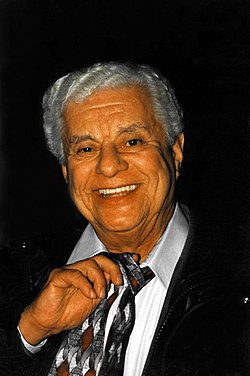
Tito Puente recorded the Irakere composition "Bacalao con pan" in 1980, a notable example of cross-pollination between Cuban bands and New York salsa artists during a period when cultural exchange between the US and Cuba was limited.
Image source: Tito Puente
1983
% complete
Venezuelan salsa star Oscar D'León's 1983 tour of Cuba is remembered prominently by virtually every Cuban interviewed on the subject. The tour was a major cultural moment, reconnecting Cuban audiences with the international salsa scene.
Image source: Oscar D'León
1984
% complete
Salsa romántica can be traced back to "Noches Calientes", a 1984 album by singer José Alberto "El Canario" with producer Louie Ramírez. The smoother, love-focused style came to dominate salsa commercially throughout the late 1980s and 1990s.
1985
% complete
In 1985, Rubén Blades covered Los Van Van's "Muevete", continuing the musical dialogue between Cuban songwriters and salsa stars abroad, alongside Tito Puente's earlier recording of Irakere's material.
1985
% complete
Rubén Blades' landmark album "Siembra" was heard everywhere on the island throughout the mid-1980s and has been quoted extensively in the guías and coros of Cuban musicians ever since, becoming a touchstone of the era.
Image source: Siembra
1992
% complete
In Cuba, what came to be known as the "timba explosion" began with the debut album of La Charanga Habanera, "Me Sube La Fiebre", in 1992. Timba became Cuba's distinctive, high-energy evolution of Cuban dance music in the 1990s.
Image source: Timba
1994
% complete
One revealing moment came during a performance in 1994, just after the artist had launched his salsa career — an episode often cited in accounts of how musicians transitioned into the salsa world during the decade.
1997
% complete
On the 1997 classic "Llévala a tu vacilón", Los Van Van's Mayito Rivera quoted Rubén Blades' "Plástico" in his guías, illustrating the lasting influence of "Siembra" on generations of Cuban musicians long after its release.
2000
% complete
In 2000, Los Van Van were awarded the first ever Grammy Award for Best Salsa Album, a historic recognition of Cuba's leading dance orchestra and a milestone for Cuban music on the international stage.
Image source: Los Van Van
2010
% complete
As documented in Kevin Moore's 2010 writing on Cuban musicology, Reggie Jackson referred to Manolín — the hugely popular timba star of the 1990s known as "El Médico de la Salsa" — as "the straw that stirs the drink," underscoring his central role in the timba era.
Or browse the full history timeline directory, with more than 2,000 topics.
This History of Salsa Music timeline was generated with the help of AI, using information found on the internet.
We work hard to keep these timelines accurate, but mistakes do get through. If you spot one, email us at [email protected] and we'll fix it for future visitors.
Generate yours with AI or build it from scratch, for free.
Export your timeline, add your own events, edit or remove AI-generated events, and much more
No credit card required.
Cancel anytime.
Cancel anytime.
You can create an unlimited number of timelines with up to 10 events on each one, customize how they look, export them to PDF, PNG, PowerPoint, CSV, and Excel, and share them with a link. Paid plans raise the event limit and add features like spreadsheet imports and collaborators.
Yes. You can cancel your subscription from your account page at any time, and you will not be charged again. Your subscription stays active for the rest of the period you already paid for.
Yes. We will email you a reminder before the annual renewal, and we will also email you a receipt.
Yes. You can email us within 15 days of any payment, and we will issue you a full refund.
Check out our pricing docs or send us an email anytime: [email protected].