-
Use Cases
-
Resources
-
Pricing
Savannah, Georgia, founded in 1733 by General James Oglethorpe as the first city of the British colony of Georgia, is one of America's oldest cities. Known for its historic district, antebellum architecture, and cobblestone streets, Savannah played key roles in the American Revolution and Civil War, famously being spared destruction during Sherman's March to the Sea in 1864 when it was presented as a Christmas gift to President Lincoln. More Less
Nov 1732
% complete
In November 1732 the merchantman Anne, carrying 114 colonists including General James Oglethorpe, set sail from England to the Americas to establish a new settlement.
1733
% complete
In the 18th century, under their leader Tomochichi, the Yamacraw people met the newly arriving European settlers, establishing peaceful relations that allowed Savannah to be founded.
Image source: Tomochichi
Feb 12, 1733
% complete
After a brief stay at Charles Town, South Carolina, Oglethorpe and his settlers landed at Yamacraw Bluff and were greeted by Tomochichi, the Yamacraws, and John and Mary Musgrove. Savannah was established in 1733 as the first colonial capital of Georgia.
Jul 1733
% complete
In July 1733, five months after the arrival of the Anne, 41 Jews from the Sephardi community in London arrived in Savannah, the largest such group to enter a colony up to that time.
1734
% complete
Solomon's Lodge was founded in 1734 by James Oglethorpe, and it is considered to be the oldest continuously operating Masonic Lodge in North America. Originally called simply the Lodge of Savannah, it was officially renamed Solomon's Lodge in 1776.
1740
% complete
In 1740 George Whitefield founded the Bethesda Orphanage, which is now the oldest extant orphanage in the United States.
Image source: Bethesda Academy
1743
% complete
After Oglethorpe's return to England in 1743, the city continued to follow the general pattern established by the Oglethorpe Plan until the 1850s, when a more conventional grid was adopted.
Image source: Oglethorpe Plan
1754
% complete
The great experiment came to an end after Savannah and the rest of Georgia became a Royal Colony in 1754. After Georgia became a royal colony, there were so many dissenters (Protestants of minority, non-Anglican denominations) that the establishment of the Church of England was successfully resisted until 1752.
Image source: Province of Georgia
1763
% complete
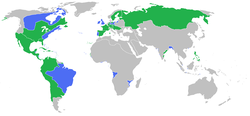
Additional fortune came to the city in 1763 following the Treaty of Paris, which opened the interior of North America to economic interests in the American colonies. That same year the Creeks agreed to the first of several large land cessions.
Image source: Treaty of Paris (1763)
1764 - 1773
% complete
Between 1764 and 1773 Savannah exported hides from 500,000 deer (2 million pounds), which established the city as a significant commercial port on the South Atlantic coast.
1773
% complete
An additional two million acres of land between the Ogeechee and Altamaha rivers and the headwaters of the Oconee and Savannah rivers was ceded to Georgia by the Creeks and Cherokees in 1773.
1793
% complete
The invention of the cotton gin in 1793 by Eli Whitney changed the face of agriculture in the American South, opening the interior of the region to widespread cotton production and transforming Savannah's economy.
Image source: Cotton gin
1800
% complete
Although originally banned from the colony upon the insistence of Oglethorpe, the slave population exceeded the free population in Savannah by the end of the 18th century, with 5,146 free residents and 8,201 slaves recorded in 1800.
Image source: Slavery in the United States
1818
% complete
In 1818 shipping and business stopped temporarily when the city fell under quarantine due to a yellow fever epidemic.
1820
% complete
By 1820, Savannah was exporting $18 million worth of goods, making it the eighteenth-largest urban area in the United States.
1828 - 1831
% complete
In 1828, construction began on the Savannah-Ogeechee Canal, a 16.5-mile canal connecting the Ogeechee River near present-day Richmond Hill to the Savannah River. Completed in 1831, it directed the resources of Georgia's south-central interior to Savannah.
Image source: Savannah–Ogeechee Canal
1778
% complete
In 1778 during the American Revolutionary War, Savannah came under British and Loyalist control, remaining occupied for several years.
Image source: Capture of Savannah
1779
% complete
At the Siege of Savannah in 1779, American and French troops fought unsuccessfully to retake the city from British forces during the American Revolutionary War.
Image source: Siege of Savannah
Jan 27, 1785
% complete
On January 27, 1785, members of the State Assembly gathered in Savannah to found the nation's first state-chartered, public university—the University of Georgia, later located in Athens.
Image source: University of Georgia
1792
% complete
In 1792 the Savannah Golf Club opened within a mile of Fort Jackson, on what is now President Street, making it one of America's earliest golf clubs.
Image source: Royal Montreal Golf Club
1804
% complete
In 1804 Candler Hospital was founded, and is the second oldest hospital in America in continuous operation.
Image source: Candler Hospital (Savannah)
Jan 11, 1820
% complete
On January 11, 1820, a fire broke out and burned a large section of the city, bringing nationwide attention to Savannah.
Image source: Great Savannah Fire of 1820
1854
% complete
A yellow fever epidemic struck Savannah in 1854, killing 650 residents. Another followed in the summer of 1876, believed to have originated from contaminated water sources.
Nov 1864
% complete
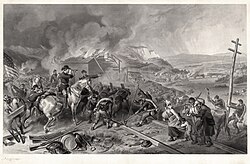
In November 1864, two months after capturing Atlanta, General William Tecumseh Sherman and his army of 62,000 men began the march south to Savannah during the Civil War.
Image source: Sherman's March to the Sea
Dec 22, 1864
% complete
Sherman and his troops captured Savannah on December 22, 1864, concluding his March to the Sea and famously presenting the city to President Lincoln as a Christmas gift.
1870
% complete
By 1870 three principal railroads—the Central of Georgia Railway, the Savannah and Charleston and the Savannah and Gulf—connected the city to markets along the coast and the interior.
Image source: Central of Georgia Railway
1876 - 1883
% complete
The Savannah Cotton Exchange was established in 1876 and made its permanent home on Bay Street in 1883, with the warehouses down below on River Street.
Image source: Savannah Cotton Exchange
1883
% complete
Contributing to the trend of upriver industrial development, the Kehoe Iron Works was established in 1883 by Irish immigrant William Kehoe, marking the diversification of Savannah's economy into heavy industry and manufacturing.
1887
% complete
An additional railroad was built extending from the Drayton Street Depot out to Tybee Island in 1887, boosting tourism and connectivity for the coastal city.
Image source: Tybee Island, Georgia
1890
% complete
Savannah State University was founded in 1890 and is the oldest African-American public college in Georgia.
Image source: Savannah State University
1900
% complete
Union Camp, a division of the American Pulp and Paper Company, was established around the turn of the 20th century, locating its mill upriver from the historic core of the city.
Image source: Union Camp Corporation
1902
% complete
In 1902 the naval stores industry was revolutionized by former University of Georgia chemist Charles Herty, whose innovations transformed turpentine production in the Southeast.
Image source: Charles Herty
1955
% complete
In 1955, the demolition of the City Market on Ellis Square and the attempted demolition of the Davenport House prompted seven Georgia women, led by Lucy Barrow McIntire, to create the Historic Savannah Foundation to protect the city's historic architecture.
Image source: Historic Savannah Foundation
Feb 5, 1958
% complete
On February 5, 1958, during a training mission flown by a B-47, a Mark 15 nuclear bomb, also known as the Tybee Bomb, was lost off the coast of Tybee Island near Savannah and never recovered.
Image source: 1958 Tybee Island mid-air collision
1978
% complete
In 1978 the Savannah College of Art and Design was founded, and rather than building one centralized campus, it began a process of renovation and adaptive reuse of many notable downtown buildings.
Image source: Savannah College of Art and Design
Dec 1986
% complete
In December 1986, an oil tanker docked at the port of Savannah caused an oil spill, resulting in approximately 500,000 US gallons of fuel oil leaking into the Savannah River.
1994 - 1997
% complete
The city's popularity as a tourist destination, modest in the 1970s, grew in the 1980s and was solidified by the best-selling 1994 book and 1997 motion picture Midnight in the Garden of Good and Evil, both set in Savannah.
Image source: Midnight in the Garden of Good and Evil
Or browse the full history timeline directory, with more than 2,000 topics.
This History of Savannah timeline was generated with the help of AI, using information found on the internet.
We work hard to keep these timelines accurate, but mistakes do get through. If you spot one, email us at [email protected] and we'll fix it for future visitors.
Generate yours with AI or build it from scratch, for free.
Export your timeline, add your own events, edit or remove AI-generated events, and much more
No credit card required.
Cancel anytime.
Cancel anytime.
You can create an unlimited number of timelines with up to 10 events on each one, customize how they look, export them to PDF, PNG, PowerPoint, CSV, and Excel, and share them with a link. Paid plans raise the event limit and add features like spreadsheet imports and collaborators.
Yes. You can cancel your subscription from your account page at any time, and you will not be charged again. Your subscription stays active for the rest of the period you already paid for.
Yes. We will email you a reminder before the annual renewal, and we will also email you a receipt.
Yes. You can email us within 15 days of any payment, and we will issue you a full refund.
Check out our pricing docs or send us an email anytime: [email protected].