-
Use Cases
-
Resources
-
Pricing
The history of the periodic table traces humanity's quest to organize chemical elements, beginning with early attempts by scientists like Döbereiner and Newlands, culminating in Dmitri Mendeleev's groundbreaking 1869 table that predicted undiscovered elements, and evolving through Henry Moseley's atomic number-based arrangement into the modern periodic table used today. More Less
1500 - 1599
% complete
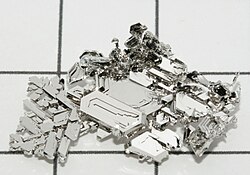
Platinum was known to pre-Columbian South Americans, but knowledge of it did not reach Europe until the 16th century, adding a new metal to the slowly growing inventory of known elements that chemists would later seek to organize.
Image source: Platinum
1669
% complete
In 1669, or later, Hennig Brand's experiments with distilled human urine resulted in the production of a glowing white substance, which he called 'cold fire' (kaltes Feuer). This was the discovery of phosphorus, the first element whose discovery is recorded with a known discoverer and date.
Image source: Phosphorus
1680
% complete
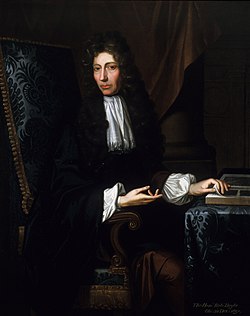
Brand kept his discovery secret until 1680, when Anglo-Irish chemist Robert Boyle rediscovered phosphorus and published his findings, bringing the new element to the wider attention of the scientific community.
Image source: Robert Boyle
1766
% complete
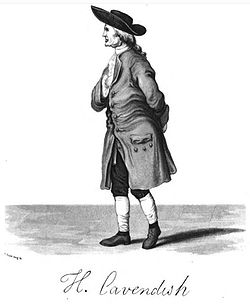
British chemist Henry Cavendish, the discoverer of hydrogen in 1766, later discovered that air is composed of more gases than nitrogen and oxygen, recording these findings in 1784 and 1785, including a then-unidentified gas less reactive than nitrogen.
Image source: Henry Cavendish
1789
% complete
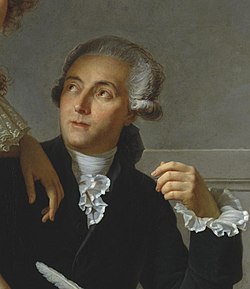
In 1789, French chemist Antoine Lavoisier wrote Traité Élémentaire de Chimie (Elementary Treatise of Chemistry), which is considered to be the first modern textbook about chemistry and helped define the concept of chemical elements.
Image source: Antoine Lavoisier
1808 - 1810
% complete
In 1808–10, British natural philosopher John Dalton published a method by which to arrive at provisional atomic weights for the elements known in his day, from stoichiometric measurements and reasonable inferences, providing quantitative data essential for later classification efforts.
Image source: John Dalton
1815
% complete
In 1815, British physician and chemist William Prout noticed that atomic weights seemed to be multiples of that of hydrogen, an early hint at underlying structure in the elements.
Image source: William Prout
1718
% complete
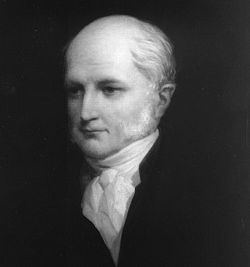
In 1718, Étienne François Geoffroy's Affinity Table made use of several aspects — tabular grouping and correlation with chemical affinity — that would later be reprised in the development of the periodic table.
Image source: Étienne François Geoffroy
1817
% complete
In 1817, German physicist Johann Wolfgang Döbereiner began to formulate one of the earliest attempts to classify the elements, starting a tradition of seeking patterns in elemental properties.
Image source: Johann Wolfgang Döbereiner
1829
% complete
In 1829, Döbereiner found that he could form some of the elements into groups of three, with the members of each group having related properties. These 'triads' were an important precursor to the periodic law.
1843
% complete
In 1843, building on work done by Döbereiner, Leopold Gmelin developed a forerunner of the modern periodic table that listed 55 chemical elements grouped by common characteristics.
Image source: Leopold Gmelin
1860
% complete
In 1860, the modern scientific consensus emerged at the first international chemical conference, the Karlsruhe Congress, and a revised list of elements and atomic masses was adopted, providing reliable data for the first successful periodic tables.
Image source: Karlsruhe Congress
1862
% complete
In 1862, de Chancourtois devised a three-dimensional chart, named the 'telluric helix' after the element tellurium, which fell near the center of his diagram, arranging elements by atomic weight along a spiral.
Image source: Alexandre-Émile Béguyer de Chancourtois
1863
% complete
In 1863, de Chancourtois extended his work by including a chart and adding ions and compounds, broadening the scope of his early periodic arrangement.
1864
% complete
In 1864, a book by John Newlands was published containing an early version of the periodic table containing 28 elements, classified into six families by their valence — for the first time, elements had been grouped according to their valence. His next attempt came in 1865, with his 'law of octaves'.
Image source: John Newlands (chemist)
1868
% complete
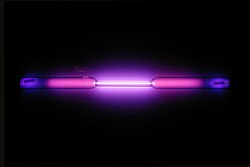
Helium was first reported in 1868; the report was based on the new technique of spectroscopy, as some spectral lines in light emitted by the Sun did not match those of any of the known elements.
Image source: Helium
1894
% complete
In 1894, British chemist William Ramsay and British physicist Lord Rayleigh isolated argon from air and determined that it was a new element, the first of the noble gases to be isolated on Earth.
Image source: Argon
1896
% complete
In 1896, Ramsay tested a report of American chemist William Francis Hillebrand, who had found a stream of an unreactive gas from a sample of uraninite, leading Ramsay toward the discovery of helium on Earth.
Image source: William Ramsay
1898
% complete
Using fractional distillation to separate the components of air, Ramsay discovered several more inert gases in 1898: metargon, krypton, neon, and xenon; spectroscopic analysis showed metargon was argon contaminated by a carbon-based impurity. Ramsay suggested a gas with atomic weight 20 between helium and argon, which proved to be neon.
1898
% complete
In 1898, when only helium, argon, and krypton were definitively known, William Crookes suggested these elements be placed in a single column between the hydrogen group and the fluorine group, an early attempt to accommodate the inert gases in the periodic table.
Image source: William Crookes
1900
% complete
In 1900, at the Prussian Academy of Sciences, Ramsay and Mendeleev discussed the new inert gases and their location in the periodic table; Ramsay proposed that these elements be put in a new group between halogens and alkali metals, to which Mendeleev agreed.
1902
% complete
In 1902, Mendeleev wrote that the inert gases should be put in a new group 0, consistent with what Ramsay suggested to him and crediting Errera as the first to suggest the idea. Mendeleev added these elements to the table as group 0 without disturbing the basic concept of the periodic table.
1905
% complete
In 1905, Swiss chemist Alfred Werner resolved the dead zone of Mendeleev's table. Although Mendeleev knew of lanthanum, cerium, and erbium, they were previously unaccounted for because their total number and exact order were not known, and Mendeleev could not fit them in his table by 1901.
Image source: Alfred Werner
1907 - 1913
% complete
In 1907, thorium and radiothorium, products of radioactive decay, were found to be physically different but chemically identical; this led Frederick Soddy to propose in 1910 that they were the same element with different atomic weights. In 1913, Soddy and Kazimierz Fajans published that many radioactive substances shared the same place in the periodic table.
Image source: Isotope
1869
% complete
In 1869, Russian chemist Dmitri Mendeleev arranged 63 elements by increasing atomic weight in several columns, noting recurring chemical properties across them. He argued there were seven types of highest oxides, though his 1869 list misplaced seven then-known elements, including indium and thorium.
Image source: Dmitri Mendeleev
Dec 1869 - 1870
% complete
In a paper dated December 1869 which appeared early in 1870, Julius Lothar Meyer published a new periodic table of 55 elements, in which the series of periods are ended by an element of the alkaline earth metal group. Meyer had also revised his table in 1868, but this was published as a draft only after his death.
Image source: Lothar Meyer
1870 - 1871
% complete
In early 1870, Mendeleev decided that the atomic weights of indium, thorium, and the rare-earth metals must be wrong and that the rare-earth metals should be trivalent, increasing their predicted weights by half. He abandoned attempts to incorporate the rare-earth metals in late 1871.
1870 - 1871
% complete
Mendeleev continued to improve his ordering: in 1870, it gained a tabular shape with each column given its own highest oxide, and in 1871, he further developed it and formulated what he termed the 'law of periodicity'.
Image source: Periodic trends
1870 - 1871
% complete
In 1870, Mendeleev first tried to characterize the yet undiscovered elements, giving detailed predictions for three elements he termed eka-boron, eka-aluminium, and eka-silicium, and in 1871 he expanded his predictions further. His 1871 table left many more spaces for undiscovered elements.
Image source: Mendeleev's predicted elements
1875
% complete
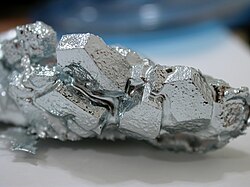
Mendeleev's eka-aluminium was discovered in 1875 and became known as gallium, providing a striking confirmation of his predictions and of the periodic law.
Image source: Gallium
1879
% complete
Mendeleev's predicted eka-boron was discovered in 1879 and named scandium, further validating the predictive power of the periodic law.
Image source: Scandium
1881
% complete
In 1881, Mendeleev and Meyer had an argument via an exchange of articles in the British journal Chemical News over priority of the periodic table. Mendeleev claimed priority, arguing that the creator of a scientific idea is the one who perceives its real aspect and illustrates it convincingly.
1882
% complete
In 1882, the Royal Society in London awarded the Davy Medal to both Mendeleev and Meyer for their work to classify the elements; although two of Mendeleev's predicted elements had been discovered by then, his predictions were not mentioned in the prize rationale.
Image source: Davy Medal
1886
% complete
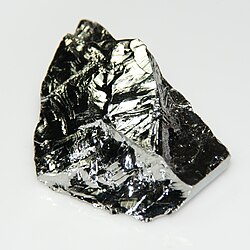
Mendeleev's predicted eka-silicium was discovered in 1886 and named germanium, completing the confirmation of his three most famous predictions of new elements.
Image source: Germanium
1889
% complete
In 1889, Mendeleev noted at the Faraday Lecture to the Royal Institution in London that he had not expected to live long enough 'to mention their discovery to the Chemical Society of Great Britain as a confirmation of the exactitude and generality of the periodic law'.
1890
% complete
By 1890, Mendeleev's periodic table had been universally recognized as a piece of basic chemical knowledge, cementing its place at the foundation of the science.
Image source: History of the periodic table
1906 - 1914
% complete
Following Charles Glover Barkla's discovery of characteristic X-rays emitted from metals in 1906, Henry Moseley considered a possible correlation between X-ray emissions and physical properties of elements, providing experimental support for ordering elements by atomic number.
Image source: Henry Moseley
1913
% complete
In 1913, amateur Dutch physicist Antonius van den Broek was the first to propose that the atomic number (nuclear charge) determined the placement of elements in the periodic table, building on the discovery of the atomic nucleus in the Geiger–Marsden experiments conducted between 1908 and 1913.
Image source: Antonius van den Broek
1913
% complete
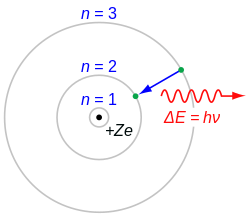
The Bohr model was developed beginning 1913, championing the idea of electron configurations that determine chemical properties. Bohr was influenced by Walther Kossel, who in 1916 was the first to establish an important connection between the quantum atom and the periodic table.
Image source: Bohr model
1914
% complete
In 1914, Swedish physicist Johannes Rydberg noticed that the atomic numbers of the noble gases equal doubled sums of squares of simple numbers: 2, 10, 18, 36, 54, and 86, revealing a mathematical pattern in the structure of the periodic table.
Image source: Johannes Rydberg
1916
% complete
Among the notable works that established the importance of the periodicity of eight was the valence bond theory, published in 1916 by American chemist Gilbert N. Lewis, followed by Irving Langmuir's octet theory of chemical bonding in 1919, in which Langmuir postulated 'cells' (atomic orbitals) arranged in 'equidistant layers' (electron shells).
Image source: Gilbert N. Lewis
1921
% complete
In 1921, British chemist Charles Rugeley Bury made the next major step toward the modern theory by suggesting that eight and eighteen electrons in a shell form stable configurations. Bury is also credited with the first use of the term 'transition metal' in 1921.
1924
% complete
Bohr's research led Austrian physicist Wolfgang Pauli to investigate the length of periods in the periodic table in 1924, work that contributed to the Pauli exclusion principle and the quantum mechanical explanation of the table's structure.
Image source: Wolfgang Pauli
1925
% complete
Circa 1925, the periodic table changed by shifting some Reihen (series) to the right, into an extra set of columns (groups), reflecting the growing quantum mechanical understanding of electron shells and orbitals during the Old Quantum Theory period (1913 to 1925).
1940
% complete
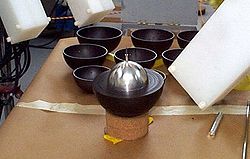
In 1940, neptunium and plutonium were the first transuranic elements to be discovered; they were placed in sequence beneath rhenium and osmium, respectively, opening the era of synthetic superheavy elements.
Image source: Neptunium
1945
% complete
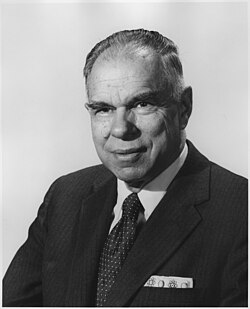
During his Manhattan Project research in 1943, American chemist Glenn T. Seaborg developed the actinide concept. In 1945, against the advice of colleagues, he proposed a significant change to Mendeleev's table: the actinide series, placing the heavy radioactive elements in a row below the lanthanides.
Image source: Glenn T. Seaborg
1949
% complete
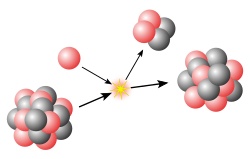
Following its acceptance, the actinide concept proved pivotal in the groundwork for discoveries of heavier elements, such as berkelium in 1949, demonstrating the power of the revised periodic table to guide new element discovery.
Image source: Berkelium
1971 - 2010
% complete
Burkhard Fricke in 1971 and Pekka Pyykkö in 2010 used computer modeling to calculate the positions of elements up to Z = 172, and found that the positions of several elements were different from those predicted by Seaborg, extending periodic table theory into the relativistic regime.
2010
% complete
The discovery of tennessine in 2010 filled the last remaining gap in the seventh period of the periodic table, completing the current known structure of the table.
Or browse the full history timeline directory, with more than 2,000 topics.
This History of the Periodic Table timeline was generated with the help of AI, using information found on the internet.
We work hard to keep these timelines accurate, but mistakes do get through. If you spot one, email us at [email protected] and we'll fix it for future visitors.
Generate yours with AI or build it from scratch, for free.
Export your timeline, add your own events, edit or remove AI-generated events, and much more
No credit card required.
Cancel anytime.
Cancel anytime.
You can create an unlimited number of timelines with up to 10 events on each one, customize how they look, export them to PDF, PNG, PowerPoint, CSV, and Excel, and share them with a link. Paid plans raise the event limit and add features like spreadsheet imports and collaborators.
Yes. You can cancel your subscription from your account page at any time, and you will not be charged again. Your subscription stays active for the rest of the period you already paid for.
Yes. We will email you a reminder before the annual renewal, and we will also email you a receipt.
Yes. You can email us within 15 days of any payment, and we will issue you a full refund.
Check out our pricing docs or send us an email anytime: [email protected].