-
Use Cases
-
Resources
-
Pricing
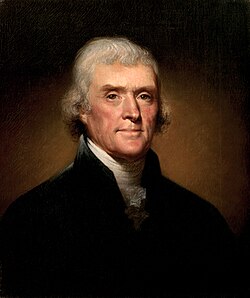
John Adams (1735–1826) was an American statesman, lawyer, and Founding Father who served as the first Vice President under George Washington and as the second President of the United States from 1797 to 1801. A leading advocate for independence, he played a crucial role in drafting the Declaration of Independence and shaping the new nation's government. More Less
Oct 30, 1735
% complete
John Adams was born on October 30, 1735, in Braintree (now Quincy), Massachusetts, to John Adams Sr., a farmer and deacon, and Susanna Boylston Adams. He was the eldest of three sons in a modest but respectable Puritan family that valued hard work, education, and civic duty.
Image source: John Adams
1755
% complete
Adams entered Harvard College at age fifteen and graduated in 1755 ranked among the top students of his class. His education exposed him to Enlightenment ideas and prepared him for a career in law and public service.
Image source: Harvard College
1756
% complete
After graduating from Harvard, Adams briefly worked as a schoolteacher in Worcester, Massachusetts. During this period he began studying law under attorney James Putnam while reflecting deeply on his future career path.
Image source: Worcester, Massachusetts
1758
% complete
In 1758, Adams was admitted to practice law in Massachusetts. He built a successful legal career in Boston, gaining a reputation for diligence, integrity, and sharp intellect that would serve his political ambitions well.
Image source: Bar (law)
Oct 25, 1764
% complete
John Adams married Abigail Smith, the daughter of a Weymouth minister, on October 25, 1764. Their marriage became one of the most celebrated partnerships in American history, marked by deep affection and an extensive correspondence that offers invaluable insight into the founding era.
Image source: Abigail Adams
Jul 14, 1765
% complete
The Adamses' first child, Abigail 'Nabby' Adams, was born in July 1765. The couple would ultimately have six children, including future president John Quincy Adams, though only four survived to adulthood.
Image source: Abigail Adams Smith
Aug 1765
% complete
In response to Britain's Stamp Act of 1765, Adams drafted a series of essays published as 'A Dissertation on the Canon and Feudal Law,' arguing passionately against taxation without representation and establishing himself as a leading voice of colonial resistance.
Image source: Stamp Act 1765
1768
% complete
Seeking greater professional opportunities amid growing political tensions, Adams moved his family to Boston in 1768. There he continued his law practice and became increasingly involved in the resistance movement against British policies.
Image source: Boston
Oct 1770
% complete
Demonstrating his commitment to the rule of law, Adams courageously defended British soldiers charged with murder following the Boston Massacre of March 1770. Most were acquitted, and his successful defense enhanced his reputation for principle and fairness despite public criticism.
Image source: Boston Massacre
1774 - 1775
% complete
Writing under the pseudonym 'Novanglus,' Adams published a series of essays arguing that Parliament had no authority over the internal affairs of the colonies. These writings articulated a sophisticated constitutional case for American self-government.
Image source: John Adams
Sep 5, 1774 - Oct 26, 1774
% complete
Adams represented Massachusetts at the First Continental Congress in Philadelphia, where delegates coordinated colonial responses to the punitive Coercive Acts. He quickly emerged as one of the most ardent advocates for resisting British authority.
Image source: First Continental Congress
Apr 19, 1775
% complete
The outbreak of armed conflict between British troops and Massachusetts militia at Lexington and Concord transformed the political crisis into war. Adams, attending the Second Continental Congress, urged the creation of a unified Continental Army under George Washington.
Image source: Battles of Lexington and Concord
Jun 15, 1775
% complete
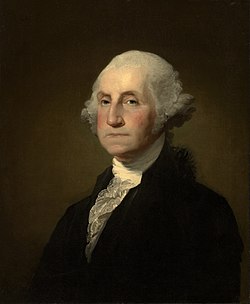
At the Second Continental Congress, Adams played a pivotal role in creating the Continental Army and nominated George Washington of Virginia to serve as its commander-in-chief, a decision that proved crucial to the American cause.
Image source: George Washington
1776
% complete
Adams became the foremost champion of independence in Congress, seconding Richard Henry Lee's resolution for independence and tirelessly persuading hesitant delegates. Thomas Jefferson later called him 'the colossus of independence.'
Image source: Lee Resolution
Jun 1776 - 1777
% complete
While serving in Congress, Adams chaired the Board of War and Ordnance, effectively functioning as a one-man war department. He oversaw recruitment, supplies, and strategy during the critical early years of the Revolutionary War.
Image source: Board of War
Jul 4, 1776
% complete
The Continental Congress formally adopted the Declaration of Independence, primarily drafted by Thomas Jefferson with input from Adams and Benjamin Franklin. Adams had insisted Jefferson write the draft and defended it during debate, helping secure unanimous approval.
Image source: United States Declaration of Independence
1779 - 1780
% complete
Adams returned home to draft the Massachusetts Constitution of 1780, which remains the oldest functioning written constitution in continuous effect in the world. Its strong framework of separated powers influenced the later U.S. Constitution.
Image source: Constitution of Massachusetts
1778 - 1779
% complete
Congress appointed Adams as a commissioner to France in 1778 to strengthen the Franco-American alliance. Though his blunt style clashed with French court culture and fellow diplomats, he worked to secure naval support and financial aid for the American cause.
Image source: France–United States relations
1782
% complete
Serving as minister to the Netherlands, Adams secured recognition of the United States by the Dutch Republic and negotiated vital loans that stabilized American finances. His success in Amsterdam demonstrated his skill as a financial diplomat.
Image source: Netherlands–United States relations
Sep 3, 1783
% complete
Adams joined Benjamin Franklin and John Jay in negotiating the Treaty of Paris, which ended the Revolutionary War and secured British recognition of American independence along with generous territorial boundaries extending to the Mississippi River.
Image source: Treaty of Paris (1783)
1785 - 1788
% complete
Adams became the first American ambassador to the Court of St James's, presenting his credentials to King George III in 1785. Despite the awkwardness of representing a former colony, he worked to establish commercial treaties and normalize relations between the two nations.
Image source: List of ambassadors of the United States to the United Kingdom
1787 - 1788
% complete
From London, Adams wrote his monumental 'Defence of the Constitutions of Government of the United States,' defending balanced government and bicameral legislatures. The work influenced debates surrounding the drafting and ratification of the U.S. Constitution.
Image source: A Defence of the Constitutions of Government of the United States of America
Mar 1801
% complete
After leaving the presidency, Adams retired to his family estate, Peacefield, in Quincy, Massachusetts. He devoted himself to farming, reading, and writing extensive letters reflecting on politics, philosophy, and religion.
Image source: Peacefield
1812 - 1826
% complete
Encouraged by mutual friend Benjamin Rush, Adams and Jefferson resumed correspondence after years of estrangement. Their exchange of hundreds of letters produced some of the most profound reflections on the American Revolution and republicanism ever written.
Image source: Burr–Hamilton duel
1825
% complete
John Quincy Adams won the contested election of 1824, chosen by the House of Representatives. John Adams lived to see his son become president, a unique father-son achievement in early American history until the Bush presidencies.
Image source: 1824 United States presidential election
Jul 4, 1826
% complete
John Adams died at Peacefield on July 4, 1826, the fiftieth anniversary of the Declaration of Independence, reportedly uttering 'Thomas Jefferson survives,' unaware that Jefferson had died hours earlier the same day. His death marked the passing of a generation of founders.
Jun 21, 1788
% complete
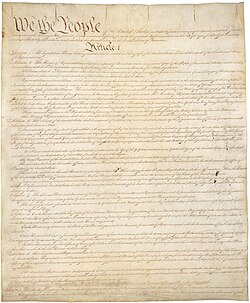
New Hampshire's ratification made the Constitution operative, establishing the framework of the new federal government. Adams' writings on balanced government had shaped the constitutional convention's thinking on separation of powers and checks and balances.
Image source: Constitution of the United States
Apr 21, 1789 - Mar 4, 1797
% complete
Adams received the second-highest number of electoral votes in the nation's first presidential election, making him the first Vice President under George Washington. He presided over the Senate and famously lamented the office as 'the most insignificant office that ever the invention of man contrived.'
Image source: Vice President of the United States
Apr 30, 1789
% complete
George Washington took the oath of office in New York City with Adams standing beside him as Vice President. The two men formed the core of the new Federalist administration, though they would develop differing views on executive power and foreign policy.
Image source: First inauguration of George Washington
1790
% complete
The national capital moved from New York to Philadelphia while Washington, D.C. was under construction. Adams and other government officials relocated, continuing their work in the temporary capital for the remainder of the decade.
Image source: Residence Act
1797 - 1798
% complete
American envoys sent to France were demanded bribes by French agents known as X, Y, and Z, sparking outrage across America. The scandal led to an undeclared naval war with France and tested Adams' leadership early in his presidency.
Image source: XYZ Affair
1798 - 1800
% complete
An undeclared naval conflict between the United States and France saw American warships, including the fledgling U.S. Navy, battle French privateers in the Caribbean. Adams strengthened the navy significantly during this period, laying foundations for American sea power.
Image source: Quasi-War
Jun 18, 1798 - Jul 14, 1798
% complete
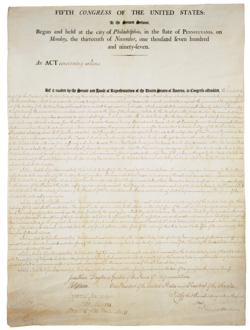
Amid fears of war with France, Congress passed the controversial Alien and Sedition Acts, restricting immigration and limiting criticism of the government. The laws remain among the most criticized infringements on civil liberties in American history and damaged Adams' reputation.
Image source: Alien and Sedition Acts
1800
% complete
In the bitterly contested election of 1800, Adams was defeated by Thomas Jefferson, marking the first peaceful transfer of power between rival political parties in American history. Adams left office before Jefferson's inauguration, departing Washington before dawn.
Image source: 1800 United States presidential election
Sep 30, 1800
% complete
Against fierce opposition within his own party, Adams dispatched a new peace mission to France, resulting in the Convention of 1800 that ended the Quasi-War. Though the decision cost him politically, he considered preserving peace one of his greatest achievements.
Image source: Convention of 1800
Or browse the full history timeline directory, with more than 2,000 topics.
This John Adams timeline was generated with the help of AI, using information found on the internet.
We work hard to keep these timelines accurate, but mistakes do get through. If you spot one, email us at [email protected] and we'll fix it for future visitors.
Generate yours with AI or build it from scratch, for free.
Export your timeline, add your own events, edit or remove AI-generated events, and much more
No credit card required.
Cancel anytime.
Cancel anytime.
You can create an unlimited number of timelines with up to 10 events on each one, customize how they look, export them to PDF, PNG, PowerPoint, CSV, and Excel, and share them with a link. Paid plans raise the event limit and add features like spreadsheet imports and collaborators.
Yes. You can cancel your subscription from your account page at any time, and you will not be charged again. Your subscription stays active for the rest of the period you already paid for.
Yes. We will email you a reminder before the annual renewal, and we will also email you a receipt.
Yes. You can email us within 15 days of any payment, and we will issue you a full refund.
Check out our pricing docs or send us an email anytime: [email protected].