-
Use Cases
-
Resources
-
Pricing
John Quincy Adams (1767–1848) was an American statesman, diplomat, and the sixth President of the United States. Son of President John Adams, he served as Secretary of State under James Monroe, helped shape the Monroe Doctrine, and after his presidency became a leading abolitionist voice as a member of Congress. More Less
Jul 11, 1767
% complete
John Quincy Adams was born on July 11, 1767, in Braintree, Massachusetts, to John Adams and Abigail Adams. As the eldest son of the future second president of the United States, he grew up during the American Revolution, an era that profoundly shaped his political ideals.
Image source: John Quincy Adams
Jun 17, 1775
% complete
At age seven, Adams reportedly watched from a hilltop near his home as the Battle of Bunker Hill raged in Boston. This early exposure to the Revolutionary War left a lasting impression on him and deepened his commitment to the American cause.
Image source: Battle of Bunker Hill
Feb 1778
% complete
In 1778, ten-year-old Adams accompanied his father on a diplomatic mission to France, beginning years of residence and schooling in Europe. He became fluent in French and Dutch and gained invaluable exposure to international affairs at a young age.
1781 - 1783
% complete
At just fourteen, Adams traveled to St. Petersburg, Russia, serving as secretary and interpreter to Francis Dana, the first U.S. envoy to Russia. The experience gave him rare firsthand knowledge of European courts and diplomacy.
Image source: Francis Dana
Jul 1787
% complete
After returning to America, Adams entered Harvard College and graduated with distinction in 1787. He later earned a master's degree and studied law, being admitted to the bar in 1790 to begin a legal practice in Boston.
Jul 26, 1797
% complete
Adams married Louisa Catherine Johnson, the daughter of an American merchant living in London. She became one of his closest confidantes and remains the only foreign-born First Lady in U.S. history until Melania Trump.
Image source: Louisa Adams
May 30, 1794 - May 20, 1797
% complete
George Washington appointed Adams as U.S. minister to the Netherlands in 1794, recognizing his linguistic skills and diplomatic promise. During this posting, he also handled diplomatic business in London following his father's appointment as ambassador to Britain.
Nov 5, 1797 - 1801
% complete
Under President John Adams, his father, JQA served as U.S. minister plenipotentiary to Prussia. In 1799 he signed a treaty of commerce between the United States and Prussia, strengthening transatlantic trade relations.
Mar 4, 1803 - Jun 8, 1808
% complete
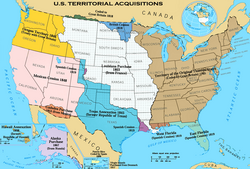
Adams served as a Federalist senator from Massachusetts, though he increasingly broke party lines. He supported the Louisiana Purchase and Jefferson's Embargo Act, positions that angered fellow New England Federalists and led to his resignation before his term ended.
Aug 6, 1809 - 1814
% complete
President James Madison appointed Adams as the first official U.S. minister to Russia. He developed a cordial relationship with Tsar Alexander I and reported on Napoleon's disastrous invasion of Russia in 1812.
1814 - Dec 24, 1814
% complete
Adams served as chief American negotiator at Ghent, Belgium, where the treaty ending the War of 1812 was signed on December 24, 1814. He skillfully restored pre-war boundaries and secured favorable terms for the United States without addressing disputed issues like impressment.
Image source: Treaty of Ghent
1815 - 1817
% complete
After the war, Adams took up the post of minister to Great Britain, helping repair relations between the two countries and laying groundwork for future Anglo-American cooperation, including the eventual demilitarization of the Great Lakes.
Sep 22, 1817 - Mar 4, 1825
% complete
Widely regarded as one of the greatest secretaries of state in U.S. history, Adams served under President Monroe for eight years. His tenure produced landmark achievements including the Convention of 1818 with Britain, the Adams-Onis Treaty, and the Monroe Doctrine.
Oct 20, 1818
% complete
Adams negotiated the Convention of 1818 with Britain, establishing the 49th parallel as the border between the United States and British North America from the Lake of the Woods to the Rockies, and securing joint occupancy of Oregon Country.
Image source: Treaty of 1818
Feb 22, 1819
% complete
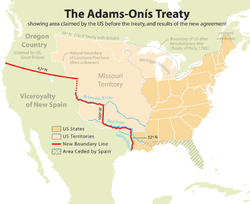
The Adams-Onis Treaty with Spain ceded Florida to the United States and defined the boundary between the U.S. and New Spain all the way to the Pacific. It is considered one of Adams' greatest diplomatic achievements.
Image source: Adams–Onís Treaty
Dec 2, 1823
% complete
Adams was the principal architect of the Monroe Doctrine, announced in Monroe's annual message of 1823, which warned European powers against further colonization or interference in the Western Hemisphere. His insistence that America act independently, rather than alongside Britain, shaped the doctrine's unilateral character.
Image source: Monroe Doctrine
Dec 1, 1824 - Feb 9, 1825
% complete
In a four-way race with no electoral majority, Andrew Jackson won the most popular and electoral votes, but the House of Representatives chose Adams after Henry Clay supported him, leading to accusations of a 'corrupt bargain.'
Image source: 1824 United States presidential election
Mar 4, 1825 - Mar 4, 1829
% complete
John Quincy Adams took office as the sixth president, the only son of a president to hold the office until George W. Bush. His presidency coincided with the dawn of the American System debate over internal improvements and tariffs.
Image source: Presidency of John Quincy Adams
Mar 4, 1825 - Mar 4, 1829
% complete
In his first annual message, Adams presented a visionary program of internal improvements: national universities, an astronomical observatory, roads, canals, and scientific exploration. Congress largely rejected these proposals as exceeding federal authority.
May 19, 1828
% complete
A protective tariff championed by Adams' administration provoked fierce opposition in the South, where it was dubbed the 'Tariff of Abominations.' The controversy fueled sectional tensions and contributed to Adams' defeat in 1828.
Image source: Tariff of Abominations
Nov 3, 1828 - Dec 3, 1828
% complete
Adams lost decisively to Andrew Jackson in a bitterly personal campaign marked by attacks on both candidates' characters. Rather than retire, Adams resolved to continue serving the nation in public life.
Image source: 1828 United States presidential election
Mar 4, 1831
% complete
Unique among former presidents, Adams returned to Congress as a representative from Massachusetts, serving for seventeen years until his death. He considered it the proudest chapter of his career.
1836 - 1844
% complete
When the House imposed rules barring antislavery petitions from discussion, Adams waged an eight-year battle against the gag rule, defending the right of petition and free speech. The rule was finally repealed in 1844, cementing Adams' reputation as a champion of civil liberties.
Image source: Gag rule (United States)
Feb 1841
% complete
Representing enslaved Africans who had seized control of the slave ship Amistad, Adams argued their case before the Supreme Court in 1841. The Court ruled in favor of the captives, who were freed and allowed to return to Africa.
Image source: United States v. The Amistad
1845 - 1848
% complete
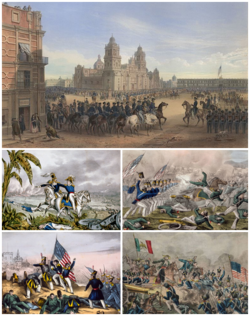
In his final years in Congress, Adams vociferously opposed the annexation of Texas and the Mexican-American War, believing they were schemes to expand slavery. He voted against the war and continued speaking out even as his health failed.
Image source: Mexican–American War
Feb 21, 1848 - Feb 23, 1848
% complete
While addressing the House on February 21, 1848, Adams suffered a massive stroke and collapsed on the floor of the Capitol. He died two days later in the Speaker's Room, aged 80, with his last words reportedly 'This is the last of earth! I am content.'
1874
% complete
Adams kept a diary for nearly seven decades, producing one of the most extensive personal records in American history. Published in twelve volumes beginning in 1874, it has become an indispensable chronicle of the early republic and its diplomacy.
Image source: John Quincy Adams
Or browse the full history timeline directory, with more than 2,000 topics.
This John Quincy Adams timeline was generated with the help of AI, using information found on the internet.
We work hard to keep these timelines accurate, but mistakes do get through. If you spot one, email us at [email protected] and we'll fix it for future visitors.
Generate yours with AI or build it from scratch, for free.
Export your timeline, add your own events, edit or remove AI-generated events, and much more
No credit card required.
Cancel anytime.
Cancel anytime.
You can create an unlimited number of timelines with up to 10 events on each one, customize how they look, export them to PDF, PNG, PowerPoint, CSV, and Excel, and share them with a link. Paid plans raise the event limit and add features like spreadsheet imports and collaborators.
Yes. You can cancel your subscription from your account page at any time, and you will not be charged again. Your subscription stays active for the rest of the period you already paid for.
Yes. We will email you a reminder before the annual renewal, and we will also email you a receipt.
Yes. You can email us within 15 days of any payment, and we will issue you a full refund.
Check out our pricing docs or send us an email anytime: [email protected].