-
Use Cases
-
Resources
-
Pricing
Julius Caesar (100–44 BCE) was a Roman general, statesman, and writer whose military conquests and political ambitions transformed the Roman Republic. His rise to power, dictatorship, and eventual assassination marked pivotal turning points that led to the fall of the Republic and the rise of the Roman Empire. More Less
Jul 12, 100 BC
% completado
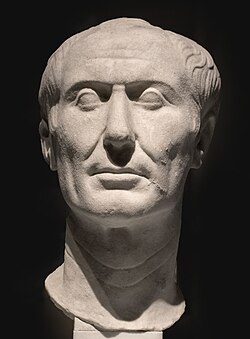
Gaius Julius Caesar was born into the patrician Julian family in Rome. Despite his noble lineage, his family was not especially wealthy or influential, but Caesar would rise to become one of the most powerful figures in Roman history.
Image source: Julius Caesar
84 BC
% completado
Caesar married Cornelia, daughter of Cinna, a leader of the populares faction. The marriage aligned him politically with Marius's faction, defying the dictator Sulla, who demanded he divorce her.
Image source: Cornelia (wife of Caesar)
82 BC
% completado
When dictator Sulla ordered Caesar to divorce Cornelia, Caesar refused and fled Rome. He was spared through the intervention of relatives and Vestal Virgins, reportedly with Sulla remarking that Caesar contained many Mariuses.
Image source: Sulla
75 BC
% completado
While traveling in the Aegean, Caesar was kidnapped by Cilician pirates. He famously laughed at their ransom demands, promised to return and crucify them, and after his release, he did exactly that.
Image source: Cilician pirates
69 BC
% completado
Caesar began his political career as quaestor in Hispania Ulterior. There, viewing a statue of Alexander the Great, he reportedly wept that at an age when Alexander had conquered the world, he had done nothing memorable.
65 BC
% completado
As aedile, Caesar staged lavish public games and gladiatorial contests, borrowing enormous sums to win popular favor. His generosity made him immensely popular with the Roman people.
Image source: Aedile
63 BC
% completado
During Cicero's consulship, Catiline plotted to overthrow the Republic. Caesar argued against executing the conspirators without trial, showing his populist leanings, though Cicero's hardline stance prevailed.
Image source: Catilinarian conspiracy
63 BC
% completado
Caesar won election as Pontifex Maximus, the chief priest of Rome, defeating senior candidates through aggressive campaigning and bribery. The position gave him significant prestige and influence.
Image source: Pontifex maximus
60 BC
% completado
Caesar allied with Pompey and Crassus in an informal political coalition known as the First Triumvirate. This alliance allowed each man to bypass the Senate and achieve his personal ambitions.
Image source: First Triumvirate
59 BC
% completado
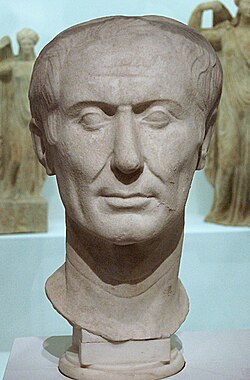
Caesar was elected consul for 59 BC, pushing through land reform laws benefiting Pompey's veterans and the urban poor despite fierce opposition from his co-consul Bibulus and the Senate.
54 BC
% completado
Julia, Caesar's daughter and Pompey's wife, died in childbirth. Her death weakened the personal bond between Caesar and Pompey, contributing to the eventual breakdown of the Triumvirate.
Image source: Julia (daughter of Caesar)
53 BC
% completado
Marcus Licinius Crassus was killed after his disastrous Parthian campaign at Carrhae. His death removed a key stabilizing figure from the Triumvirate, accelerating rivalry between Caesar and Pompey.
Image source: Marcus Licinius Crassus
58 BC
% completado
As proconsul of Cisalpine and Transalpine Gaul, Caesar launched the Gallic Wars, defeating the Helvetii and beginning eight years of campaigns that would dramatically expand Roman territory.
Image source: Gallic Wars
58 BC
% completado
Caesar decisively defeated the Helvetii tribe as they attempted to migrate through Gaul, forcing them back to their homeland and establishing his reputation as a military commander.
Image source: Battle of Bibracte
58 BC
% completado
Caesar defeated the Germanic king Ariovistus, driving Germanic tribes back across the Rhine and securing Gaul's eastern frontier early in his campaign.
Image source: Battle of Vosges (58 BC)
57 BC
% completado
Caesar campaigned against the Belgae, the fiercest of the Gallic peoples. At the Battle of the Sabis, his legions narrowly survived a surprise attack by the Nervii before achieving victory.
Image source: Battle of the Sabis
55 BC
% completado
Caesar led the first Roman expedition across the English Channel to Britain, landing near Deal. Though inconclusive militarily, the invasion was a spectacular propaganda achievement.
Image source: Julius Caesar's invasions of Britain
55 BC
% completado
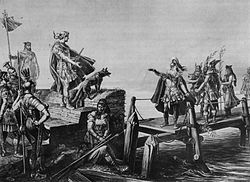
Caesar built a bridge across the Rhine in just ten days, marched into Germanic territory to demonstrate Roman power, then destroyed the bridge upon returning — a show of engineering and military might.
Image source: Caesar's Rhine bridges
54 BC
% completado
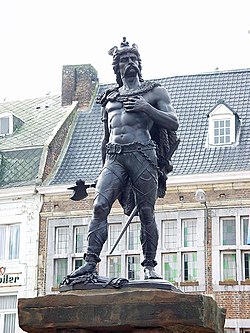
The Eburones under Ambiorix ambushed and annihilated fifteen cohorts under Sabinus and Cotta, one of Rome's worst disasters in Gaul, prompting brutal reprisals by Caesar.
Image source: Ambiorix
54 BC
% completado
With a larger force, Caesar crossed into Britain again, advancing inland and defeating Cassivellaunus before returning to Gaul. No lasting occupation followed, but the expeditions enhanced his fame.
Sep 52 BC - Oct 52 BC
% completado
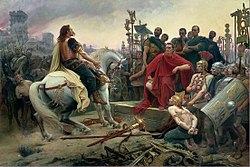
Caesar besieged Vercingetorix at Alesia, building double fortifications to withstand both the besieged Gauls and a massive relief army. His decisive victory effectively completed the conquest of Gaul.
Image source: Battle of Alesia
Jan 49 BC
% completado
The Senate, backed by Pompey, ordered Caesar to relinquish command of his army and return to Rome as a private citizen. Caesar refused, setting the stage for civil war.
Image source: Caesar's civil war
49 BC
% completado
Unable to defend Italy, Pompey withdrew his forces to Greece. Caesar entered Rome unopposed, seized the treasury, and consolidated control over Italy.
Image source: Caesar's civil war
Jan 10, 49 BC
% completado
Caesar led the 13th Legion across the Rubicon river, the boundary of Italy, committing treason against the Republic. 'Alea iacta est' — the die is cast — became one of history's most famous phrases.
Image source: Crossing the Rubicon
48 BC - 47 BC
% completado
Caesar was besieged in Alexandria's palace quarter by Ptolemy's forces. During the fighting, fire spread to the library, destroying part of its collection. Reinforcements eventually secured his victory.
Image source: Siege of Alexandria (47 BC)
48 BC
% completado
Arriving in Egypt, Caesar became embroiled in the dynastic struggle between Cleopatra and her brother Ptolemy XIII. He sided with Cleopatra, beginning their famous romantic and political alliance.
Image source: Cleopatra
Aug 9, 48 BC
% completado
In Greece, Caesar decisively defeated Pompey's larger army at Pharsalus. Pompey fled to Egypt, where he was assassinated on arrival by agents of Ptolemy XIII.
Image source: Battle of Pharsalus
47 BC
% completado
Caesar crushed Pharnaces II of Pontus so swiftly that he reported the victory to Rome with the famous phrase 'Veni, vidi, vici' — I came, I saw, I conquered.
Image source: Battle of Zela (47 BC)
Jan 1, 45 BC
% completado
Caesar reformed the Roman calendar with the help of astronomer Sosigenes, introducing a 365-day year with leap years. The Julian calendar remained the basis of Western calendars for over 1,500 years.
Mar 17, 45 BC
% completado
At Munda in Hispania, Caesar defeated the last Republican forces led by Pompey's sons Gnaeus and Sextus, ending the civil war and leaving him master of the Roman world.
Image source: Battle of Munda
44 BC
% completado
Caesar was appointed dictator for life, accumulating unprecedented power and honors. Reforms included the Julian calendar, debt relief, and expansion of the Senate, but his growing autocracy alarmed many senators.
Image source: Roman dictator
Mar 15, 44 BC
% completado
On the Ides of March, a group of senators including Brutus and Cassius stabbed Caesar to death in the Theatre of Pompey. They claimed to be saving the Republic, but his death triggered further civil wars.
Mar 20, 44 BC
% completado
Mark Antony's incendiary funeral speech turned public opinion violently against the assassins, who fled Rome. The crowd burned Caesar's body in the Forum, and unrest swept the city.
Image source: Assassination of Julius Caesar
43 BC
% completado
Octavian, Mark Antony, and Lepidus formed the legally sanctioned Second Triumvirate to avenge Caesar and divide Roman power, launching proscriptions that killed Cicero among others.
Image source: Second Triumvirate
42 BC
% completado
The Senate formally deified Caesar, making Octavian 'divi filius' — son of a god. Caesar's cult and temple in the Forum cemented his legacy and legitimized the imperial system that followed.
Image source: Roman imperial cult
Or browse the full history timeline directory, with more than 2,000 topics.
This Julius Caesar timeline was generated with the help of AI, using information found on the internet.
We work hard to keep these timelines accurate, but mistakes do get through. If you spot one, email us at [email protected] and we'll fix it for future visitors.
Generate yours with AI or build it from scratch, for free.
Export your timeline, add your own events, edit or remove AI-generated events, and much more
No credit card required.
Cancel anytime.
Cancel anytime.
You can create an unlimited number of timelines with up to 10 events on each one, customize how they look, export them to PDF, PNG, PowerPoint, CSV, and Excel, and share them with a link. Paid plans raise the event limit and add features like spreadsheet imports and collaborators.
Yes. You can cancel your subscription from your account page at any time, and you will not be charged again. Your subscription stays active for the rest of the period you already paid for.
Yes. We will email you a reminder before the annual renewal, and we will also email you a receipt.
Yes. You can email us within 15 days of any payment, and we will issue you a full refund.
Check out our pricing docs or send us an email anytime: [email protected].