-
Use Cases
-
Resources
-
Pricing
The Roman Empire was one of the most influential and enduring civilizations in history. This timeline highlights key events, including the rise of the Republic, the reign of Julius Caesar, the establishment of the Pax Romana, and the fall of the Western Roman Empire. More Less
Build a timeline like this one in minutes, for free. Start Yours →
Part of our collection of ancient history timelines.
509 BC
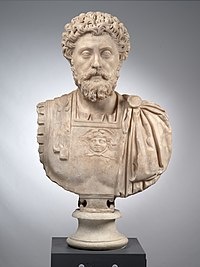
The Roman Republic was established after the overthrow of the last Roman king, Lucius Tarquinius Superbus. This marked the beginning of the republican era in Rome, characterized by a system of government with elected officials and a Senate.
Image source: Roman Republic
Mar 15, 44 BC
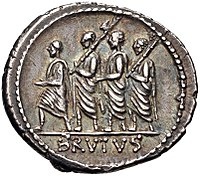
Julius Caesar, a prominent Roman general and statesman, was assassinated by a group of senators led by Brutus. This event resulted in a power struggle and ultimately led to the end of the Roman Republic.
Image source: Assassination of Julius Caesar
70 AD
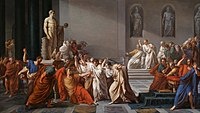
The Colosseum, also known as the Flavian Amphitheatre, was completed during the reign of Emperor Vespasian. This iconic structure became a symbol of Roman engineering and hosted various spectacles, including gladiatorial contests and public events.
Image source: Colosseum
118 AD - 125 AD
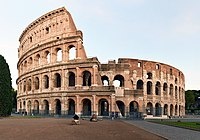
The Pantheon, a temple dedicated to all the gods of ancient Rome, was built during the reign of Emperor Hadrian. It is renowned for its architectural grandeur and remains one of Rome's most iconic landmarks.
Image source: Pantheon, Rome
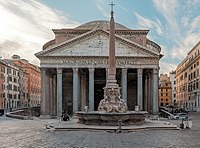
122 AD
Emperor Hadrian ordered the construction of Hadrian's Wall, a defensive fortification in northern Britain. This wall marked the northern limit of the Roman Empire and served as a symbol of Roman power and control.
Image source: Hadrian's Wall

165 AD - 180 AD
The Antonine Plague, also known as the Plague of Galen, was an ancient pandemic that swept through the Roman Empire, causing widespread death and economic disruption.
Image source: Antonine Plague

212 AD - 216 AD
Emperor Caracalla initiated the construction of the Roman Baths of Caracalla, one of the largest and most luxurious thermal baths in ancient Rome. It served as a social gathering place and showcased Roman engineering prowess.
Image source: Caracalla

Oct 28, 312 AD
The Battle of Milvian Bridge was a pivotal moment in the rise of Christianity. Emperor Constantine claimed to have seen a vision of a Christian symbol before the battle and emerged victorious. This event contributed to the eventual adoption of Christianity as the state religion.
Image source: Battle of the Milvian Bridge
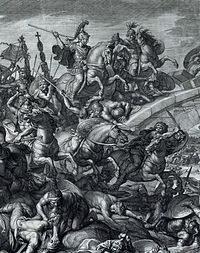
313 AD
The Edict of Milan, issued by Emperor Constantine, granted religious tolerance to Christians within the Roman Empire. This edict marked a significant shift in Roman policy towards Christianity and paved the way for its eventual adoption as the state religion.
Image source: Edict of Milan
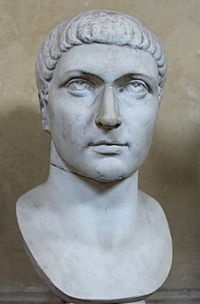
Aug 2, 216 BC
The Battle of Cannae was a major military encounter during the Second Punic War between Rome and Carthage. Carthaginian general Hannibal achieved a decisive victory by employing a double-envelopment tactic, resulting in heavy Roman casualties.
Image source: Battle of Cannae
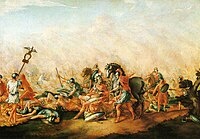
Build a timeline like this one in minutes, for free. Start Yours →
This Roman Empire timeline was generated with the help of AI, using information found on the internet.
We work hard to keep these timelines accurate, but mistakes do get through. If you spot one, email us at [email protected] and we'll fix it for future visitors.
Generate yours with AI or build it from scratch, for free.