-
Use Cases
-
Resources
-
Pricing
1250 - 1295
A 2022 study using radiocarbon evidence from more than 500 archaeological sites concluded that settlement probably occurred in the North Island between 1250 and 1275, and in the South Island between 1280 and 1295.
1280 - 1350
The history of the Māori people began with Polynesian settlers reaching New Zealand in a series of ocean migrations, generally dated from the late 13th or early 14th centuries.
1280
Radiocarbon dating of rat bones, rat-gnawed seeds, and woody seed cases published in 2008 indicated that rats, and therefore humans, arrived around 1280.
1300 - 1500
Early Māori history is commonly divided into an Archaic period, lasting approximately from 1300 to 1500, before the development of the later Classic period.
1300 - 1350
A 2017 assessment of archaeological and genetic evidence proposed that the main settlement period occurred in the first half of the 14th century, possibly through a coordinated mass migration.
1300 - 1450
From the early settlement period onward, about 32 bird species became extinct, through factors including human and introduced-animal predation, vegetation burning, and climate cooling.
1314
Confirmed archaeological evidence lags some proposed arrival dates, because human remains, artefacts, or structures are not confidently dated earlier than the Kaharoa Tephra deposited by the Mount Tarawera eruption around 1314.
1350
Traditional genealogies point to around 1350 as a probable arrival date for many migratory waka from which Māori trace their descent.
1400 - 1500
The settlers of the Chatham Islands developed a separate, pacifist culture and became known as the Moriori.
1450
A group of Māori migrated east to Rēkohu, now known as the Chatham Islands, probably during the 15th century and possibly around its middle.
Image source: Moriori
1460 - 1500
A sudden, long-lasting cooler period beginning around 1500 coincided with major earthquakes, including an Alpine Fault earthquake, a Wellington-area earthquake around 1460, destructive tsunamis, and the extinction of moa and other food species.
1500 - 1769
The Classic period, approximately 1500–1769, saw the development of distinctive Māori social, political, artistic, and military traditions.
Image source: Māori culture
1998 - 2017
Genetic and demographic studies produced varying estimates for the founding population: 50 to 100 women in 1998, at least 190 females in 2005, and approximately 500 people or more in the 2017 study.
2008
Genetic studies published in 2008 found that about 21 percent of the Māori-Polynesian autosomal gene pool was of Melanesian origin and 79 percent East Asian origin, and confirmed Polynesian genetic closeness to Micronesians, Taiwanese Indigenous peoples, and East Asians.
Image source: Māori people
2010
Research on the Wairau Bar skeletons found very short life expectancy: the oldest skeleton was 39 and most people died in their twenties.
Image source: Wairau Bar
1642
Abel Tasman's voyage in 1642 brought the first European contact with New Zealand, including a brief offshore skirmish with Māori.
Image source: Abel Tasman
1769
Captain James Cook's party made the first sustained outside contact with Māori during Cook's first voyage, while he mapped the islands.
Image source: First voyage of James Cook
1773 - 1777
Māori contact with Cook continued during his second and third voyages in 1773 and 1777, including encounters in the Marlborough Sounds.
Image source: Second voyage of James Cook
1800 - 1820
Between 1800 and 1820, 65 sealing voyages and 106 whaling voyages visited New Zealand, mainly from Britain and Australia, intensifying Māori contact with Europeans.
Image source: History of New Zealand
1805 - 1840
Between 1805 and 1840, muskets and the recently introduced potato changed intertribal warfare, creating pressure to obtain firearms and enabling longer campaigns.
Image source: Musket Wars
1809
During the Boyd Massacre, Māori took hostage and killed 66 crew members and passengers of the sailing ship Boyd, apparently in revenge for the captain's whipping of a chief's son.
1838
When Whiria, also known as Pōmare II, led a war party against Tītore in 1838, 131 Europeans were among his warriors.
1839
In 1839, reports of lawlessness and uncontrolled land speculation by British subjects led the British government to decide to colonise New Zealand.
1839
By 1839, estimates placed the number of Europeans living among Māori as high as 2,000, with about two-thirds living in the North Island, particularly Northland.
May 6, 1839
On 6 May 1839, the British government expanded the New South Wales colony to include New Zealand and dispatched William Hobson to negotiate sovereignty and establish a colony.
1840
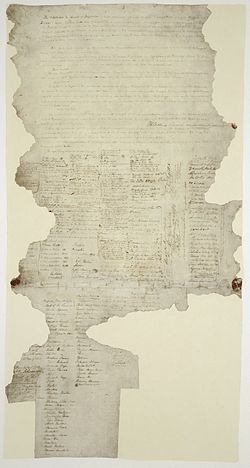
Most other chiefs around New Zealand signed the Treaty of Waitangi during 1840, although some chiefs refused to sign.
Feb 6, 1840
On 6 February 1840, William Hobson signed the Treaty of Waitangi with many North Island chiefs. The treaty granted Māori the status of British subjects and enabled New Zealand to become part of the British Empire.
May 1840
In May 1840, Hobson established British sovereignty over New Zealand through two declarations.
Image source: Colony of New Zealand
1881 - 1898
Minor conflicts after the main wars included the incident at Parihaka in 1881 and the Dog Tax War from 1897 to 1898.
Image source: New Zealand Wars
1800 - 1843
The Māori population is estimated to have fallen from about 100,000 in 1800 to between 50,000 and 80,000 by the end of the wars in 1843.
1800 - 1840
Introduced diseases spread with extraordinary virulence during the early 19th century, affecting Māori populations throughout the North Island and into the South Island.
1840 - 1890
Between 1840 and 1890, Māori sold 95 percent of their land, amounting to 63 million of 66 million acres.
1862 - 1865
The Native Land Acts of 1862 and 1865 established the Native Land Court, converting communal Māori land ownership into individual household titles to facilitate assimilation and European purchases.
Image source: Māori Land Court
1867
In 1867, Parliament created four Māori seats and granted Māori men universal suffrage, 12 years before their European New Zealand counterparts received the same voting rights.
Image source: Māori electorates
1871 - 1896
The Māori population was recorded as 37,520 in the 1871 census and 42,113 in 1896, while the European population exceeded 700,000 by 1896.
1884
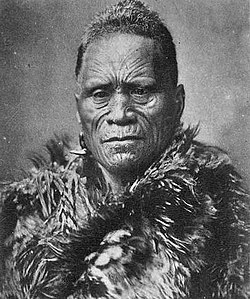
In 1884, King Tāwhiao withdrew money from the Kīngitanga bank, Te Peeke o Aotearoa, and travelled to London to ask Queen Victoria to honour the Treaty of Waitangi.
Image source: Tāwhiao
1890 - 1910
From the late 19th century, Māori politicians including James Carroll, Āpirana Ngata, Te Rangi Hīroa, and Māui Pōmare formed an influential reform group known as the Young Māori Party.
1910
The Māori Land Conference at Waihi in 1910 discussed the potential sale of a further 600,000 acres of Māori land.
1918
Māori were badly affected by the 1918 influenza epidemic when the Māori Battalion returned from the Western Front.
1936
The Māori population reached 82,326 in 1936, although Professor Ian Pool attributed much of the sudden rise in the 1930s to the introduction of a family benefit requiring birth registration.
1976
Since 1976, people of Māori descent have been able to choose enrollment on either the general or Māori roll for general elections, while voting in only one type of electorate.
2013
In the 2013 census, approximately 600,000 people in New Zealand identified as Māori, representing roughly 15 percent of the national population.
1815
Thomas Kendall first wrote down the Māori language in 1815 in A korao no New Zealand.
1820
In 1820, Professor Samuel Lee, assisted by Thomas Kendall and the chiefs Hongi Hika and Waikato, compiled A Grammar and Vocabulary of the New Zealand Language.
1835 - 1840
Between February 1835 and January 1840, William Colenso printed 74,000 Māori-language booklets from his press at Paihia.
1843
In 1843, the government distributed free Māori-language gazettes known as Ko Te Karere O Nui Tireni.
Image source: Māori language
1975
In 1975, the Crown established the Waitangi Tribunal to investigate alleged breaches of Treaty guarantees and make recommendations, although its rulings are not binding.
Image source: Waitangi Tribunal
1990 - 2006
During the 1990s and 2000s, the government negotiated redress for Crown breaches of the Treaty of Waitangi, providing more than NZ$900 million in settlements by 2006.
Image source: Treaty of Waitangi claims and settlements
2004
The foreshore and seabed controversy in 2004 expressed competing Māori and non-Māori views about rights, ownership, and the relationship between Māori interests and the Crown.
Jun 25, 2008
On 25 June 2008, the largest settlement described in the source was signed with seven Māori iwi and transferred nine large tracts of forested land to Māori control.
Or browse the full history timeline directory, with more than 2,500 topics.
This Maori History timeline was generated with the help of AI, using information found on the internet.
We work hard to keep these timelines accurate, but mistakes do get through. If you spot one, email us at [email protected] and we'll fix it for future visitors.
Generate yours with AI or build it from scratch, for free.
Export your timeline, add your own events, edit or remove AI-generated events, and much more
No credit card required.
Cancel anytime.
Cancel anytime.
You can create an unlimited number of timelines with up to 10 events on each one, customize how they look, export them to PDF, PNG, PowerPoint, CSV, and Excel, and share them with a link. Paid plans raise the event limit and add features like spreadsheet imports and collaborators.
Yes. You can cancel your subscription from your account page at any time, and you will not be charged again. Your subscription stays active for the rest of the period you already paid for.
Yes. We will email you a reminder before the annual renewal, and we will also email you a receipt.
Yes. You can email us within 15 days of any payment, and we will issue you a full refund.
Check out our pricing docs or send us an email anytime: [email protected].