-
Use Cases
-
Resources
-
Pricing
1700 - 1800
Ethiopianism, a tradition with roots in the 18th century, became one of the fundamental ingredients of Rastafarian ideology.
1700 - 1800
The Back to Africa ethos, also rooted in the 18th century, contributed a foundational element to Rastafarian ideology.
Image source: Back-to-Africa movement
1800 - 1899
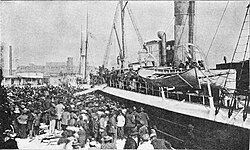
During the 19th century, growing calls urged members of the African diaspora in Western Europe and the Americas to resettle in Africa.
1800 - 1899
Many members of the African diaspora moved during the 19th century to colonies founded in Sierra Leone and Liberia.
1900 - 1930
Rastafari emerged from the convergence of several religious, cultural, and intellectual streams, drawing on conceptual frameworks that dated from the 19th and early 20th centuries.
Image source: Rastafari

1916
A later rumor claimed that Marcus Garvey had called on his supporters in 1916 to look to Africa for the crowning of a black king. The quotation was never verified.
Image source: Marcus Garvey

Aug 1930
In August 1930, a play written by Marcus Garvey, Coronation of an African King, was performed at Kingston's Edelweiss Park.
1948
The creation of the State of Israel in 1948 as a nation-state for the Jewish diaspora to return to later gave impetus to the idea of the African diaspora's return to Africa.
Image source: Israel

1968
Guyanese black nationalist academic Walter Rodney lectured to Jamaica's Rastafari community in 1968. He later published his thoughts as the pamphlet Groundings.
1800 - 1899
Throughout the 19th century, the overwhelming majority of Jamaica's legislative council was white, while people of African descent were treated as second-class citizens.
Image source: Colony of Jamaica

This Rastafari History timeline was generated with the help of AI, using information found on the internet.
We work hard to keep these timelines accurate, but mistakes do get through. If you spot one, email us at [email protected] and we'll fix it for future visitors.
Generate yours with AI or build it from scratch, for free.