
-
Use Cases
-
Resources
-
Pricing
1779
Juan Bautista de Anza led a Spanish expedition through the Arkansas River region in 1779. His campaign against Comanche forces and diplomatic efforts with Indigenous communities increased Spanish knowledge of the area and helped define imperial claims in the central Rocky Mountain frontier.
1821
Mexico's independence from Spain in 1821 transferred sovereignty over much of present-day southern Colorado to Mexico. The Arkansas River valley remained sparsely settled, but Mexican trade and frontier networks connected the area to New Mexico.
Image source: Mexican War of Independence
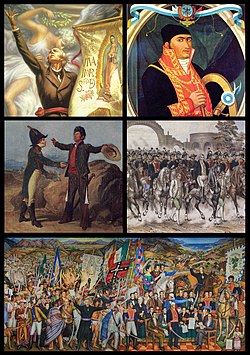
1833
Bent's Old Fort was established on the Arkansas River east of present-day Pueblo by William and Charles Bent and Ceran St. Vrain. The trading post became a major center for commerce among Native peoples, trappers, traders, Mexican communities, and American travelers.
1848
The Treaty of Guadalupe Hidalgo ended the Mexican-American War and transferred the region containing present-day Pueblo to the United States. American territorial administration and migration subsequently expanded into the upper Arkansas valley.
Image source: Treaty of Guadalupe Hidalgo
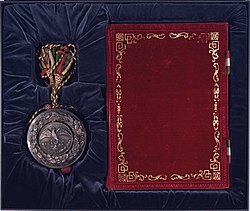
1842
French-Canadian trader James P. Beckwourth and other early traders are associated with the establishment of an early settlement near the confluence of the Arkansas and Fountain rivers. The community developed as a small trading and farming center on an important overland route.
1861
When Colorado Territory was created in 1861, Pueblo County was organized as one of its original counties. The county government provided a formal framework for courts, land administration, taxation, and local development.
Feb 28, 1861
The United States established Colorado Territory in 1861, bringing the Pueblo area under a new territorial government. This change encouraged organized settlement and linked the community more closely to expanding federal and regional institutions.
Image source: Colorado Territory
1862
During the American Civil War, Confederate and Union-aligned forces competed for control of the Southwest and the Arkansas River corridor. Pueblo's location made it strategically important for transportation, military movement, and territorial defense.
Image source: Colorado War
1868
The emergence of local newspapers in the late 1860s gave Pueblo a regular public forum for political debate, commercial notices, community news, and reporting on the rapidly changing frontier settlement.
1876
Pueblo was incorporated as a city in 1876, the same year Colorado entered the Union. Municipal incorporation formalized local government as population and commercial activity accelerated.
Aug 1, 1876
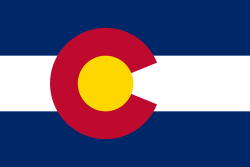
Colorado became the 38th U.S. state in 1876. Statehood strengthened public institutions and gave Pueblo a larger role in the political and economic development of southern Colorado.
Image source: Colorado
1886
Competing settlements along the Arkansas River, including Pueblo, South Pueblo, and Central Pueblo, consolidated in 1886. The merger created a larger and more unified city capable of coordinating infrastructure and attracting major industries.
1872
The Denver and Rio Grande Railway reached Pueblo in 1872. Rail access transformed the settlement into a regional transportation hub and laid the foundation for large-scale mining, agriculture, manufacturing, and trade.
Image source: Denver and Rio Grande Western Railroad
1880
The Colorado Coal and Iron Company was founded in 1880 and soon centered major operations in Pueblo. Its mines, furnaces, rail facilities, and company communities helped make the city one of the West's leading industrial centers.
1882
The Colorado Coal and Iron Company began producing iron and steel in Pueblo in 1882. The works attracted workers from across the United States and abroad and established the industrial identity that shaped Pueblo for generations.
1892
The Colorado Coal and Iron Company merged with the Colorado Fuel Company in 1892 to form Colorado Fuel and Iron. The corporation became a dominant employer and landowner in southern Colorado, with extensive influence over mining and steel communities.
Jun 3, 1921
The Pueblo Flood of 1921 followed intense rainfall in the Arkansas River basin and inundated large portions of the city. Hundreds of people died, thousands were displaced, and the disaster prompted major changes in flood-control planning and urban infrastructure.
1941 - 1945
During World War II, Pueblo's steel industry supplied materials for military vehicles, weapons, railroads, and other war-related production. The wartime economy expanded industrial employment and reinforced the city's national importance.
1942
The United States established the Pueblo Ordnance Depot during World War II to store and distribute military supplies and ammunition. The installation became a major regional employer and remained part of Pueblo's defense-related economy.
1950 - 1953
During the Korean War, the Pueblo Ordnance Depot handled military supplies for U.S. forces. Its operations demonstrated the continuing strategic importance of Pueblo's transportation links and military infrastructure.
1950 - 1970
In the postwar decades, Colorado Fuel and Iron operated one of the largest integrated steel mills west of the Mississippi River. The mill shaped Pueblo's neighborhoods, labor culture, immigrant communities, and economic life.
1948
Pueblo Memorial Airport began operations after World War II, expanding the city's transportation network. The airport supported commercial, cargo, general aviation, and military-related activity in the region.
1981
After ownership changes and restructuring, Pueblo's steel operations became associated with Rocky Mountain Steel Mills. The transition reflected broader pressures on American heavy industry and brought uncertainty to the city's traditional economic base.
1983
The Pueblo steel operation entered bankruptcy during a severe national downturn in the steel industry. The crisis caused layoffs and economic hardship, while local leaders and workers sought ways to preserve industrial production.
2007
Russian steelmaker Evraz acquired the Pueblo mill in 2007. The acquisition brought new investment and modernization efforts to one of the city's defining industrial institutions.
2010
Pueblo marked 150 years of municipal and community history in 2010. Centennial and sesquicentennial commemorations highlighted the city's Indigenous, Hispanic, immigrant, agricultural, railroad, and industrial heritage.
2010 - 2020
As traditional industries declined, Pueblo pursued renewable-energy development, including solar generation, wind-related manufacturing, and energy research. These initiatives formed part of a broader effort to diversify the local economy.
2014 - 2020
Following Colorado's legalization of recreational cannabis, Pueblo promoted cultivation, manufacturing, and related businesses as part of its economic diversification strategy. The industry generated investment and controversy over water use, regulation, and long-term sustainability.
Image source: Cannabis in Colorado
2016 - 2020
The Pueblo steelworks underwent major modernization and shifted toward electric-arc-furnace production and rail manufacturing. The changes reduced reliance on older integrated-steel methods while preserving Pueblo's identity as a steel city.
2017
Pueblo Community College received federal recognition as a Hispanic-Serving Institution, reflecting the region's substantial Latino population and the college's role in workforce training, higher education access, and community development.
Or browse the full history timeline directory, with more than 2,500 topics.
This Pueblo History timeline was generated with the help of AI, using information found on the internet.
We work hard to keep these timelines accurate, but mistakes do get through. If you spot one, email us at [email protected] and we'll fix it for future visitors.
Generate yours with AI or build it from scratch, for free.
Export your timeline, add your own events, edit or remove AI-generated events, and much more
No credit card required.
Cancel anytime.
Cancel anytime.
You can create an unlimited number of timelines with up to 10 events on each one, customize how they look, export them to PDF, PNG, PowerPoint, CSV, and Excel, and share them with a link. Paid plans raise the event limit and add features like spreadsheet imports and collaborators.
Yes. You can cancel your subscription from your account page at any time, and you will not be charged again. Your subscription stays active for the rest of the period you already paid for.
Yes. We will email you a reminder before the annual renewal, and we will also email you a receipt.
Yes. You can email us within 15 days of any payment, and we will issue you a full refund.
Check out our pricing docs or send us an email anytime: [email protected].