-
Use Cases
-
Resources
-
Pricing
600 - 1000
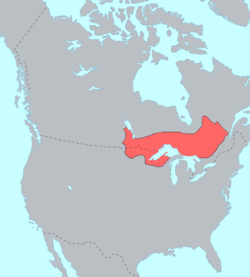
Somewhere between the sixth and tenth centuries, Ojibwe ancestors slowly migrated farther inland.
Image source: Ojibwe
600
Tribal warfare and prophecies contributed to Ojibwe movement westward around the sixth century CE.
1000 - 1492
Centuries before Christopher Columbus, Ojibwe ancestors formed the Council of Three Fires with allied Indigenous peoples.
1100 - 1300
The Ojibwe reached the Great Lakes sometime around the twelfth to thirteenth centuries.
1200 - 1600
The Noquet occupied the region and were culturally and linguistically connected with the Menominee. They gradually disappeared through assimilation with the Ojibwe and Menominee.
1500
After reaching Lake Superior, Ojibwe communities later settled modern-day Wisconsin, where Madeline Island became a significant part of the Ojibwe nation.
1500
By around 1500, the Ojibwe reached Lake Superior from the eastern parts of the Great Lakes region.
1500 - 1600
According to the Bayfield Historical Society, the confederacy was likely formed in the sixteenth century in response to the expansionism of the Iroquois Confederacy.
1680
Modern historians generally follow Harold Hickerson's view that the Ojibwe did not reside on Madeline Island until after 1680.
1680 - 1718
Dr. Schenck found no archaeological evidence of a large Ojibwe settlement at La Pointe before 1718, although Ojibwe or Saulteur bands were present in the area before a village was established.
1718
By 1718, the only group identifiable as Ojibwe residing at the Kaministikwia River was the Saulters.
1730
By 1730, the Ouace, believed to be an Ojibwe clan, were also identified at the Kaministikwia River.
1745
Sometime before 1745, Shadawish led his extended family to the headwaters of the Wisconsin River near Lac Vieux Desert, becoming the first Ojibwe known to settle in what is now mainland Wisconsin.
1492 - 2025
According to several authors, the R1b genetic lineage was most likely introduced through admixture during post-1492 European settlement of North America.
1800 - 1900
William Warren wrote that the Ojibwe originally had five clans, while around his lifetime in the nineteenth century there were approximately fifteen to twenty-one clans.
1800 - 1900
By the nineteenth century, the Ojibwe were beginning to perceive themselves as a nation or tribe.
1840 - 1849
By around the 1840s, the Ojibwe population numbered approximately 30,000 and extended across a broad area of North America.
1970 - 1999
The dreamcatcher originated among the Ojibwe and became a popular commercial item in the late twentieth century, later becoming a symbol of the Pan-Indian movement.
Image source: Dreamcatcher
2000 - 2099
By the twenty-first century, the Ojibwe had become one of the largest Indigenous ethnic groups in North America.
2013
In 2013, the Lac du Flambeau Band of Lake Superior Chippewa re-purchased Strawberry Island, a sacred island previously owned by a non-Indigenous family.
2014
About 160,000 people were registered with approximately 200 First Nation bands in 2014.
2020
According to the 2020 United States census, Ojibwe people made up the largest Canadian Indian alone population category, at 14.9%.
2025
In 2025, a Catholic retreat center on the shore of Trout Lake was returned to the Lac du Flambeau Band of Lake Superior Chippewa, in one of the first transfers of land from Catholic sisters to a tribal government.
1500 - 1650
Sometime between the sixteenth and early seventeenth centuries, the Ojibwe gained contact with the French, and diplomatic relations were positive.
1535
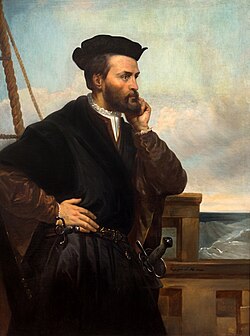
Jacques Cartier entered the St. Lawrence River in 1535, marking an early stage of sustained French exploration in the region.
Image source: Jacques Cartier
1609
In 1609, Samuel de Champlain killed two Iroquois chiefs, an act that affected relations and conflicts among Indigenous nations and the French.
Image source: Samuel de Champlain
1622
Roman Catholic missionaries followed European contact. Ojibwe first encountered Franciscan missionaries in 1622.
1641
Jesuit missionaries first encountered the Ojibwe in 1641 as Catholic missionary activity expanded in the Great Lakes region.
1650
According to historian Jacob Jurss, around 1650 the Ojibwe established Shagwaamikong, or La Pointe, one of the largest settlements on Lake Superior.
1670 - 1700
In the 1670s, Jesuits established a mission at the Sault. A sparse Roman Catholic missionary effort continued through the eighteenth century.
Jun 4, 1671
On June 4, 1671, colonial agent Simon-François Daumont de Saint-Lusson was dispatched from Quebec to distant tribes and proposed a congress of Indigenous nations at the Falls of St. Mary.
1679
In 1679, the Ojibwe and Dakota formed an alliance at Fond du Lac. The Ojibwe agreed to provide fur in exchange for Dakota permission to move west toward the Mississippi.
1736 - 1739
The alliance between the Dakota and Ojibwe collapsed between 1736 and 1739 because of French intervention.
1787 - 1794
Ojibwe Chief Nittum organized a brief peace between the Ojibwe and Dakota that lasted from 1787 to 1794.
Oct 4, 1842 - Mar 23, 1843
Robert Stuart signed the first Treaty of La Pointe for the United States with representatives of Ojibwe bands from Lake Superior and the Mississippi River on October 4, 1842. It was proclaimed on March 23, 1843, and recorded as 7 Stat.
Image source: Treaty of La Pointe
1850 - 1899
During the second half of the nineteenth century, the United States government forced Ojibwe bands onto reservations. Ojibwe communities continued to face hardships caused by federal policies.
1858
The Battle of Shakopee, fought in 1858, was described as the last battle in the long conflict between the Ojibwe and Dakota.
1862
During the Dakota War of 1862, a group of Ojibwe volunteers fought against the Dakota on behalf of the United States, as many Ojibwe continued to regard the Dakota as enemies.
Image source: Dakota War of 1862
Sep 2, 1862
On September 2, 1862, Chiefs Naw-Gaw-Nub, also spelled Ne-Bah-Quah-Om, and Shin-Gwack wrote Minnesota Governor Alexander Ramsey requesting permission to fight the Dakota.
Or browse the full history timeline directory, with more than 2,500 topics.
This Ojibwe History timeline was generated with the help of AI, using information found on the internet.
We work hard to keep these timelines accurate, but mistakes do get through. If you spot one, email us at [email protected] and we'll fix it for future visitors.
Generate yours with AI or build it from scratch, for free.
Export your timeline, add your own events, edit or remove AI-generated events, and much more
No credit card required.
Cancel anytime.
Cancel anytime.
You can create an unlimited number of timelines with up to 10 events on each one, customize how they look, export them to PDF, PNG, PowerPoint, CSV, and Excel, and share them with a link. Paid plans raise the event limit and add features like spreadsheet imports and collaborators.
Yes. You can cancel your subscription from your account page at any time, and you will not be charged again. Your subscription stays active for the rest of the period you already paid for.
Yes. We will email you a reminder before the annual renewal, and we will also email you a receipt.
Yes. You can email us within 15 days of any payment, and we will issue you a full refund.
Check out our pricing docs or send us an email anytime: [email protected].