
-
Use Cases
-
Resources
-
Pricing
900 BCE - 700 BCE
Although Jain tradition considers the dharma eternal, scholarly consensus places its verifiable historical roots in the ninth to eighth centuries BCE. Narratives of earlier tirthankaras also contain overlaps with Vedic and Epic literature, suggesting a deep antiquity.
Image source: History of Jainism
850 BCE - 750 BCE
Parshvanatha, the twenty-third tirthankara, is the earliest Jain leader widely accepted by scholars as historical. He is generally placed in the ninth or eighth century BCE and is regarded as an important predecessor of Mahavira.
Image source: Parshvanatha
599 BCE - 527 BCE
Mahavira, the twenty-fourth tirthankara, is recognized by scholars as a reformer of a pre-existing community associated with Parshvanatha rather than the founder of an entirely new religion.
Image source: Mahavira
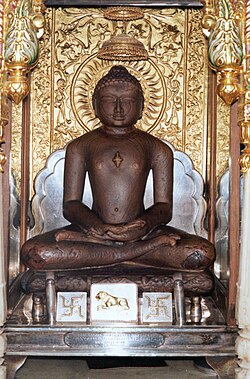
300 BCE - 298 BCE
Traditional accounts, especially the twelfth-century Parishishtaparvan, describe Chandragupta Maurya embracing Jainism. Jain texts also remember Mauryan rulers such as Ashoka and Samprati in connection with the religion.
Image source: Chandragupta Maurya
250 BCE
The Barabar Caves, the oldest rock-cut caves in India, were dedicated by Emperor Ashoka in the third century BCE. They are associated with the ascetic religious environment of the Mauryan period.
Image source: Barabar Caves
200 BCE - 300 CE
Excavations at Mathura revealed a thriving Jain community from the second century BCE through the Kushan period. The site provides important archaeological evidence for early Jain institutions and image production.
150 BCE - 50 BCE
The Barli Inscription, discovered in 1912 and dated to the second or first century BCE, is interpreted by some scholars as a Jain dedication. It is evidence proposed for the early spread of Jainism into western India.
150 BCE - 50 BCE
The Hathigumpha inscription details the reign of Kharavela of the Mahameghavahana dynasty. Beginning with a variation of the Navkar Mantra, it records the recovery of a Kalinga Jina idol and suggests that Jainism was established in Kalinga by the fourth century BCE.
Image source: Hathigumpha inscription
400 BCE
Later Digambara hagiographies, recorded around the tenth century CE, place the origins of the division between Digambara and Svetambara traditions in the fourth century BCE.
1 CE - 300 CE
Bronze images dating from the first to third centuries CE represent the earliest known Jain bronzes and demonstrate the development of Jain image-making traditions.
Image source: Jain art
1 CE - 500 CE
The gradual schism between the Digambara and Śvētāmbara sects likely began around the first century CE and was solidified by the fifth century. Differences included ascetic nudity and the authority of scriptures.
82 CE
The Śvetāmbara narrative, preserved in earlier sources such as the fifth-century Avashyak Bhashya, claims that the Jain sangha remained unified until 82 CE.
200 CE - 500 CE
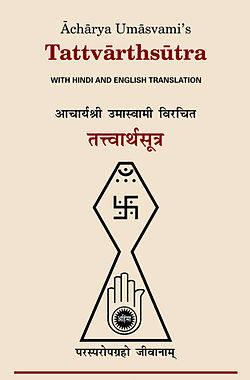
Umasvati authored the Tattvartha Sutra, a foundational exposition of Jain doctrine known as the Manifesto on the Nature of Reality. The work became influential across Jain traditions.
Image source: Tattvartha Sutra
200 CE
According to Jain tradition, a teacher in the second century CE summoned monks Pushpadanta and Bhutabali to Mount Girnar. They transmitted remaining fragments of oral knowledge by compiling them in sutra form.
200 CE - 800 CE
Kundakunda helped define Digambara identity through works such as the Samayasara. His philosophy emphasized the absolute standpoint, or nischaya naya, and the inherent purity of the soul.
300 CE - 400 CE
Inscriptions at the Son Bhandar Caves in Rajgir, dated to the third or fourth century CE, were made by Muni Vairadeva. They confirm that the site remained a center for ascetics into the Gupta period.
Image source: Son Bhandar Caves
400 CE - 500 CE
Akshapada, a fifth-century grammarian and philosopher, formalized rules of inference in the Nyayavatara. The work equipped Jain monks for debate with Buddhist logicians.
500 CE
By the fifth century, the Akota Hoard in Gujarat displayed distinct Śvetāmbara iconography, including clothed representations of tirthankaras.
500 CE - 1400 CE
The Yapaniya became a major Jain sect in the Deccan, especially Karnataka, from the fifth through the fourteenth centuries. Inscriptions at sites such as Halasi record royal grants to the order.
600 CE - 1000 CE
Between the sixth and tenth centuries, Jainism underwent significant ritual transformation as it responded to the growing popularity of Shaiva and Buddhist esoteric traditions.
1000 CE - 1100 CE
An eleventh-century Jain teacher further systematized the worship of Padmavati, combining Jain ethical ideas with elements of Tantric methodology.
600 CE - 1300 CE
The earliest structural Jain temple complexes appeared at Deogarh in the sixth century. The site later became known for numerous Sahastrakuta, or thousand-Jina, pillars erected in the thirteenth century.
700 CE
Chalukya patronage led to the dedication of Badami Cave Temple 4 around the seventh century. It became the earliest major Jain rock-cut temple in the Deccan.
800 CE - 900 CE
Jainism flourished in Tamil Nadu around the eighth and ninth centuries under Pandya patronage, adding southern India to the religion's major medieval centers.
Image source: Jainism in Tamil Nadu
800 CE - 1300 CE
The eighth through thirteenth centuries marked the zenith of Jain institutional power. Jain communities benefited from royal patronage, wealthy merchants, temples, monasteries, and pilgrimage networks.
800 CE - 1100 CE
From the eighth to eleventh centuries, Jainism became deeply embedded in the mercantile ethos of Rajasthan, where merchant communities supported temples, teachers, and literary activity.
900 CE
Under Rashtrakuta patronage in the ninth century, new Jain caves were excavated at the Nasik Caves, continuing the pattern of adding Jain monuments to older religious sites.
1000 CE - 1100 CE
In Bundelkhand, Chandela rulers commissioned Jain temples at Khajuraho during the tenth and eleventh centuries. Their architecture shares the distinctive style of the site's Hindu temples.
Image source: Khajuraho Group of Monuments
1031 CE - 1230 CE
Western Indian Jain temple building flourished through the patronage of ministers and merchant elites. The Vimala Vasahi, commissioned by Vimala Shah in 1031, and the Luna Vasahi, built around 1230 by Vastupala and Tejapala, are prominent examples.
Image source: Dilwara Temples
1100 CE - 1200 CE
From the twelfth century, Jainism faced challenges from devotional movements such as Lingayatism and from Islamic invasions. Temple destruction and disruption of pilgrimage centers affected several Jain regions.
1100 CE - 1300 CE
Jain communities benefited from powerful patrons and wealthy ministers, including Vastupala and Tejapala of the Vaghela court and the thirteenth-century shipping magnate Jagadu Shah.
1100 CE - 1200 CE
The twelfth-century Bawangaja monolith in the Satpura Range attests to Jain prominence in central India. The eighty-four-foot statue of Rishabhanatha was carved directly into the mountain.
1108 CE
According to accounts cited by Helmuth von Glasenapp, Basava, a minister to Kalachuri king Bijjala II, converted numerous Jains to Lingayatism during the eleventh century. Legends also describe Jain temples being destroyed or converted to Shaivite use.
Image source: Basava
1200 CE - 1600 CE
After the twelfth century, Jain temples, pilgrimage centers, and parts of the Digambara tradition faced persecution during periods of Muslim rule, although conditions varied considerably by region and ruler.
1300 CE - 1500 CE
The Gwalior Fort became a major center for Digambara Jainism, with nearly one hundred rock-cut monuments created between the fourteenth and fifteenth centuries.
1300 CE - 1500 CE
From the fourteenth century onward, the Digambara tradition developed the Bhattarakas, a specialized clerical class that helped administer religious institutions and preserve the tradition.
1399 CE - 1763 CE
Jain communities faced persecution during Lingayat movements in Telugu- and Kannada-speaking territories, including areas ruled by the Wodeyars of Mysore, Ummatur, and the Nayaks of Keladi.
1440 CE - 1453 CE
Inscriptions credit the Tomara kings with supporting Jain excavations at Gwalior. The monuments include the massive Siddhachal and Gopachal colossi.
Image source: Gwalior Fort
1473 CE - 1527 CE
The Siddhachal caves were completed by 1473, but many of the Jain statues were defaced around 1527 on the orders of Mughal emperor Babur.
1580 CE - 1605 CE
Influenced by the Śvetāmbara monk Hiravijaya, Akbar ordered the release of caged birds and banned animal killing during the Jain festival of Paryushana, providing a temporary period of imperial support.
Image source: Akbar
1683 CE
In 1683, the lingam symbol was stamped in the main temple complex of the Jains at Halebidu, an episode associated with the religious conflict affecting Jain sites.
1500 CE - 1650 CE
A scripturalist movement initiated by the fifteenth-century scribe Lonka Shah crystallized into the Sthanakvasi sect by the seventeenth century. It challenged image worship and emphasized scriptural and ascetic practice.
1650 CE - 1700 CE
By the mid-seventeenth century, Jain civilization underwent intense internal scrutiny. Reform movements challenged established ritualism and encouraged renewed attention to doctrine and discipline.
1652 CE
Hemraj Pande composed the Chaurasi Bol in 1652, a later text summarizing differences among Jain traditions and sectarian positions.
1700 CE - 1760 CE
In the eighteenth century, Jain merchant influence peaked with the House of Jagat Seth, a group of Marwari-Oswal bankers whose financial power extended across Bengal.
1719 CE - 1766 CE
The Digambara community in North India saw the rise of the Adhyatma, or Spiritual, movement in Jaipur under the lay scholar Pandit Todarmal, who emphasized philosophical and spiritual study.
1757 CE - 1947 CE
According to von Glasenapp's 1925 account, British colonial rule allowed Jains to pursue their religion with fewer of the persecutions they had experienced under some earlier regimes.
1757 CE
Alienated by the policies of the Nawab of Bengal, the Jagat Seths financed Robert Clive's forces before the Battle of Plassey. Their support helped facilitate the transition from Mughal to British rule in eastern India.
Image source: Battle of Plassey
1760 CE
Around 1760, Acharya Bhikshu established a strict hierarchical monastic order focused on ascetic discipline rather than temple management. The movement became the Terapanth tradition.
1848 CE
The Dharmanatha temple was built in Ahmedabad in 1848, illustrating the continued construction of Jain religious institutions during the colonial era.
1874 CE - 1959 CE
Seth Hukamchand used industrial wealth to construct the Kanch Mandir in Indore and sponsor publication of ancient Jain scripture, exemplifying modern Jain mercantile patronage.
Image source: Hukam Chand Kachwai
1882 CE - 1953 CE
Walchand Hirachand pioneered indigenous Indian shipping through Scindia Steam, aviation through Hindustan Aeronautics Limited, and automobiles through Premier Automobiles Limited.
1891 CE - 1921 CE
British census figures reported a decline in the Jain population from 1.417 million in 1891 to 1.179 million in 1921, though interpretations of colonial demographic and economic change differ.
1893 CE
Virchand Gandhi served as the official Jain delegate to the first World's Parliament of Religions in Chicago in 1893, presenting Jainism to an international audience.
Image source: Virchand Gandhi
1905 CE
Kshullak Ganeshprasad Varni established Syadvad Mahavidyalaya at Varanasi in 1905. The institution helped reintroduce traditional Jain logic and philosophy into modern higher education.
1927 CE
Digambara monk Shantisagar entered Bombay, now Mumbai, in 1927. Authorities forced him to cover his body, highlighting tensions between traditional Jain ascetic practice and colonial public regulations.
1947 CE
Following Indian independence, Jains moved from navigating colonial legal frameworks to establishing a distinct religious identity within a secular democracy while expanding their global diaspora.
1950 CE - 2000 CE
The late twentieth century saw the professionalization of Jain mercantile influence through international networking bodies, connecting Jain communities across national borders.
2000 CE
In the twenty-first century, Jainism has increasingly contributed to global discussions of ecology and bioethics, drawing on its principles of nonviolence and respect for living beings.
2014 CE
Jains were notified as a National Minority in 2014. The recognition provided rights connected with the independent management of educational institutions and religious trusts.
Or browse the full history timeline directory, with more than 2,500 topics.
This History of Jainism timeline was generated with the help of AI, using information found on the internet.
We work hard to keep these timelines accurate, but mistakes do get through. If you spot one, email us at [email protected] and we'll fix it for future visitors.
Generate yours with AI or build it from scratch, for free.
Export your timeline, add your own events, edit or remove AI-generated events, and much more
No credit card required.
Cancel anytime.
Cancel anytime.
You can create an unlimited number of timelines with up to 10 events on each one, customize how they look, export them to PDF, PNG, PowerPoint, CSV, and Excel, and share them with a link. Paid plans raise the event limit and add features like spreadsheet imports and collaborators.
Yes. You can cancel your subscription from your account page at any time, and you will not be charged again. Your subscription stays active for the rest of the period you already paid for.
Yes. We will email you a reminder before the annual renewal, and we will also email you a receipt.
Yes. You can email us within 15 days of any payment, and we will issue you a full refund.
Check out our pricing docs or send us an email anytime: [email protected].