-
Use Cases
-
Resources
-
Pricing
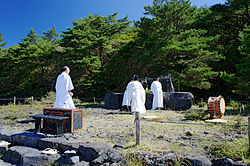
Shinto is the indigenous religion of Japan, centered on the worship of kami (spirits or deities) found in nature, ancestors, and sacred places. Unlike religions with a single founder or fixed doctrine, Shinto evolved organically over millennia, shaping Japanese culture, rituals, and identity. It encompasses ancient folk beliefs, imperial rites, shrine worship, and modern practices, and coexists harmoniously with Buddhism in Japanese spiritual life. More Less
475
% complete
In the late 5th century, the imperial dynasty leader Yūryaku declared himself daiō ('great king') and established hegemony over much of Japan, laying the groundwork for the Yamato court's ritual authority over kami worship.
Image source: Emperor Yūryaku
500
% complete
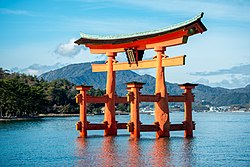
From the early 6th century CE, the style of ritual favored by the Yamato began spreading to other kami shrines around Japan as the Yamato extended their territorial influence across the archipelago.
Image source: Shinto
650
% complete
In the mid-7th century, a legal code called Ritsuryō was adopted to establish a Chinese-style centralised government in Japan, formalizing state administration including matters related to kami worship.
Image source: Ritsuryō
700
% complete
From the 8th century, kami worship and Buddhism were thoroughly intertwined in Japanese society. From the 8th century onward up until the Meiji era, the kami were incorporated into a Buddhist cosmology in various ways through shinbutsu-shūgō.
Image source: Shinbutsu-shūgō
712
% complete
In the early 8th century, Emperor Tenmu commissioned a compilation of the legends and genealogies of Japan's clans, resulting in the completion of the Kojiki in 712. It is one of the earliest written records of kami worship traditions.
Image source: Kojiki
720
% complete
The Nihon Shoki, completed in 720, together with the Kojiki recounts the origin of the kami and of Japan itself. Although the narratives differ in detail, these two 8th-century texts form the earliest written tradition regarding kami worship.
Image source: Nihon Shoki
800
% complete
In the centuries following its emergence, shinbutsu-shūgō — the syncretic blending of kami worship with Buddhism — was adopted by Japan's Imperial household, cementing the fusion of the two religious traditions at the highest levels of society.
1650
% complete
The earliest examples of shrine mergers are known from the mid-17th century; these occurred in certain areas of Japan and had the support of the local authorities, foreshadowing the large-scale shrine consolidations of the Meiji era.
1841 - 1843
% complete
Even before the Meiji era, the government had already been treating shrines as an extension of government, as seen for example in the Tenpō Reforms, setting a precedent for later state control of shrine worship.
1868 - 1945
% complete
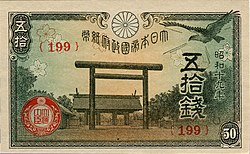
Scholars call the period from 1868 to 1945 the 'State Shinto period' because, during these decades, Shinto elements came under a great deal of overt state influence and control as the government systematically utilized shrine worship to mobilize imperial loyalties for nation-building.
Image source: State Shinto
1868 - 1915
% complete
Scholars Breen and Teeuwen characterise the period between 1868 and 1915, during the Meiji era, as being the 'formative years' of modern Shinto, when many of its defining institutions and practices took shape.
1868 - 1912
% complete
During the Meiji era (1868 to 1912), Japan's nationalist leadership expelled Buddhist influence from kami worship and formed State Shinto, which some historians regard as the origin of Shinto as a distinct religion.
1868
% complete
In 1868, all shrine priests were placed under the authority of the new Jingikan, or Council of Kami Affairs, centralizing state control over kami worship as part of the Meiji government's restructuring.
1868
% complete
Following the Meiji Restoration, in 1868 the government recognised specifically Shinto funerals for Shinto priests, an early step in distinguishing Shinto as a separate religious tradition from Buddhism.
1868
% complete
Historically, there were female priests in Shinto, although they were largely pushed out of their positions in 1868 during the Meiji reforms that restructured the priesthood.
1868
% complete
The Meiji Restoration of 1868 was fuelled by a renewal of Confucian ethics and imperial patriotism among Japan's ruling class, ushering in sweeping changes to Japan's religious landscape and the role of kami worship.
Image source: Meiji Restoration
1871
% complete
In 1871, a new hierarchy of shrines was introduced, with imperial and national shrines at the top, organizing all shrines into a state-controlled ranking system.
Image source: Modern system of ranked Shinto shrines
1872
% complete
In 1872, the Jingikan was replaced with the Kyobusho, or Ministry of Edification, which continued the government's campaign to promote national doctrine through shrines.
Image source: Robert Govett
1882
% complete
In 1882, the Meiji government designated 13 religious movements that were neither Buddhist nor Christian to be forms of 'Sect Shinto', distinguishing them from state-administered shrine worship.
Image source: Sect Shinto
1884
% complete
The government's campaign of national edification, promoted through the Kyobusho, was discontinued in 1884 after failing to achieve its goals of unifying religious teaching under state direction.
1906
% complete
In 1906, thousands of village shrines were merged so that most small communities had only a single shrine, where rites in honor of the emperor could be held, intensifying state control over local worship.
1868 - 1945
% complete
In total, from 1868 to 1945, 1,640 shrines were built in territories under Japanese control, spreading State Shinto throughout the expanding empire as a tool of imperial loyalty.
1885
% complete
Starting in 1885, Japanese began to move to Hawaii, most of whom left Japan for economic reasons, carrying Shinto practices abroad and establishing shrines in their new communities.
Image source: Japanese diaspora
1900 - 1945
% complete
Although never of great importance to Japanese religious life, in the early 20th century the government proclaimed that the accounts of the kami and Japan's origins in the Kojiki and Nihon Shoki were factual, supporting imperial ideology.
1900 - 1945
% complete
With the formation of the Empire of Japan in the early 20th century, Shinto was exported to other areas of East Asia. The end of the 19th and beginning of the 20th centuries saw the expansion of the Empire of Japan, which also led to the spread of Shinto in colonized territories.
1908
% complete
Since 1908, emigration to Brazil also began, where the Japanese worked on coffee plantations. These communities brought Shinto traditions with them, extending the religion beyond East Asia.
Image source: Japanese Brazilians
1945
% complete
Post-1945, Shinto themes repeatedly blended into Japanese new religious movements, as emerging groups drew on kami worship, ritual practices, and mythological motifs in their teachings.
Image source: Japanese new religions
1946
% complete
In 1946, many shrines formed a voluntary organisation, the Association of Shinto Shrines (Jinja Honchō), to coordinate shrine activities after the disestablishment of State Shinto under the postwar constitution.
Image source: Association of Shinto Shrines
1965 - 1977
% complete
In 1965, the city of Tsu, Mie Prefecture, paid four Shinto priests to purify the site where the municipal athletic hall was to be built. Critics claimed this contravened the constitutional separation of religion and state; in 1971 the high court ruled it unconstitutional, though the Supreme Court overturned this in 1977.
Image source: Tsu Surf
1970
% complete
Of the Sect Shinto groups, Tenrikyo was probably the most successful, although in 1970 it repudiated its Shinto identity, formally distancing itself from the tradition.
Image source: Tenrikyo
1979
% complete
In 1979 Yasukuni Shrine enshrined 14 men who had been declared Class-A defendants at the 1946 Tokyo War Crimes Trials, generating domestic and international condemnation, particularly from China and Korea.
Image source: Yasukuni Shrine
2006 - 2008
% complete
According to surveys carried out in 2006 and 2008, less than 40% of the population of Japan identifies with an organised religion: around 35% are Buddhists, and 30% to 40% are members of Shinto sects and derived religions. In 2008, 26% reported often visiting Shinto shrines, while only 16.2% expressed belief in the existence of kami.
Image source: Religion in Japan
2012
% complete
In 2012, an Austrian who had completed the Shinto priest training program at Kokugakuin University became the first non-Japanese individual in history to be certified as a Shinto priest.
Image source: Kokugakuin University
2014
% complete
In the 21st century, Shinto has increasingly been portrayed as a nature-centred spirituality with environmentalist credentials; several shrines have collaborated with local environmentalist campaigns, and an international interfaith conference on environmental sustainability was held at the Ise shrine in 2014.
Image source: Ise Shrine
Or browse the full history timeline directory, with more than 2,000 topics.
This Shinto timeline was generated with the help of AI, using information found on the internet.
We work hard to keep these timelines accurate, but mistakes do get through. If you spot one, email us at [email protected] and we'll fix it for future visitors.
Generate yours with AI or build it from scratch, for free.
Export your timeline, add your own events, edit or remove AI-generated events, and much more
No credit card required.
Cancel anytime.
Cancel anytime.
You can create an unlimited number of timelines with up to 10 events on each one, customize how they look, export them to PDF, PNG, PowerPoint, CSV, and Excel, and share them with a link. Paid plans raise the event limit and add features like spreadsheet imports and collaborators.
Yes. You can cancel your subscription from your account page at any time, and you will not be charged again. Your subscription stays active for the rest of the period you already paid for.
Yes. We will email you a reminder before the annual renewal, and we will also email you a receipt.
Yes. You can email us within 15 days of any payment, and we will issue you a full refund.
Check out our pricing docs or send us an email anytime: [email protected].