-
Use Cases
-
Resources
-
Pricing
Hinduism is one of the world's oldest religions, originating in the Indian subcontinent over 4,000 years ago. It encompasses a diverse range of philosophies, beliefs, and rituals centered on concepts such as dharma (duty), karma (action and consequence), and moksha (liberation). Unlike most major religions, Hinduism has no single founder and evolved gradually through texts like the Vedas, Upanishads, Bhagavad Gita, and epics such as the Ramayana and Mahabharata. More Less
3000 BCE
% complete
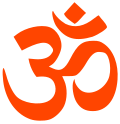
The Puranic chronology, as narrated in the Mahabharata, Ramayana, and the Puranas, envisions a timeline of events related to Hinduism starting well before 3000 BCE.
Image source: Hinduism
2600 BCE - 1750 BCE
% complete
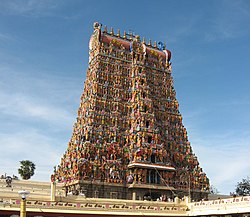
The first period is the pre-Vedic period, which includes the Indus Valley Civilization and local pre-historic religions, ending at about 1750 BCE.
Image source: Indus Valley Civilisation
1900 BCE - 1400 BCE
% complete
This period was followed in northern India by the Vedic period, which saw the introduction of the historical Vedic religion with the Indo-Aryan migrations, starting somewhere between 1900 BCE to 1400 BCE.
Image source: Vedic period
1500 BCE - 500 BCE
% complete
Hindu scriptures were composed, memorised and transmitted verbally, across generations, for many centuries before they were written down.
Image source: Śruti
600 BCE - 400 BCE
% complete
Gautama Dharmasutras composed in about the middle of the 1st millennium BCE lists 48 sanskaras, while Gryhasutra and other texts composed centuries later list between 12 and 16 sanskaras.
Image source: Samskara (Indian philosophy)
500 CE - 600 CE
% complete
The word avatar does not appear in the Vedic literature; it appears in verb forms in post-Vedic literature, and as a noun particularly in the Puranic literature after the 6th century CE.
Image source: Avatar
650 CE - 1100 CE
% complete
The period from roughly 650 to 1100 CE forms the late Classical period or early Middle Ages, in which classical Puranic Hinduism is established, and Adi Shankara's influential consolidation of Advaita Vedanta takes place.
522 BCE - 486 BCE
% complete
The 6th-century BCE inscription of Darius I mentions Hindush (referring to Sindh) among his provinces.
200 CE - 300 CE
% complete
Hindustan (spelt "hndstn") is found in a Sasanian inscription from the 3rd century CE.
Image source: Hindustan
300 CE - 400 CE
% complete
According to Arvind Sharma, the historical evidence suggests that "the Hindus were referring to their religion by the term vaidika dharma or a variant thereof" by the 4th-century CE.
600 CE - 700 CE
% complete
Among the earliest known records of 'Hindu' with connotations of religion may be in the 7th-century CE Chinese text Record of the Western Regions by Xuanzang.
Image source: Records of the Western Regions
1200 CE - 1300 CE
% complete
By the 13th century, Hindustan emerged as a popular alternative name of India or northern India.
1300 CE - 1400 CE
% complete
In the 14th century, 'Hindu' appeared in several texts in Persian, Sanskrit and Prakrit within India, and subsequently in vernacular languages, often in comparative contexts to contrast them with Muslims or "Turks".
Image source: Hindus
1400 CE
% complete
Circa 1400, the Apabhramsa text Kīrttilatā by Vidyapati, along with 16–18th century Bengali Gaudiya Vaishnava texts, used terms contrasting Hindus with others.
Image source: Vidyapati
1600 CE - 1700 CE
% complete
Starting in the 17th century, European merchants and colonists adopted "Hindu" (often with the English spelling "Hindoo") to refer to residents of India as a religious community.
1787 CE
% complete
Terms such as "Hindoo faith" and "Hindoo religion" were often used, eventually leading to the appearance of "Hindooism" in a letter of Charles Grant in 1787, who used it along with "Hindu religion".
Image source: Charles Grant (British East India Company)
1100 CE - 1200 CE
% complete
The notion of common denominators for several religions and traditions of India further developed from the 12th century CE.
1200 CE - 1600 CE
% complete
According to Nicholson, already between the 12th and the 16th centuries certain thinkers began to treat as a single whole the diverse philosophical teachings of the Upanishads, epics, Puranas, and the schools known retrospectively as the 'six systems' (saddarsana) of mainstream Hindu philosophy. The tendency of 'a blurring of philosophical distinctions' has also been noted by Mikel Burley.
Image source: Hindu philosophy
1250 CE - 1750 CE
% complete
Hinduism under both Hindu and Islamic rulers from c. 1250–1750 CE saw the increasing prominence of the Bhakti movement, which remains influential today.
Image source: Bhakti movement
1500 CE - 1800 CE
% complete
Lorenzen locates the origins of a distinct Hindu identity in the interaction between Muslims and Hindus, and a process of "mutual self-definition with a contrasting Muslim other", which started well before 1800.
Image source: Hindu nationalism
1560 CE
% complete
In Goa, the 1560 inquisition by Portuguese colonists is also considered one of the most brutal persecutions of Hindus.
Image source: Goa Inquisition
1608 CE - 1681 CE
% complete
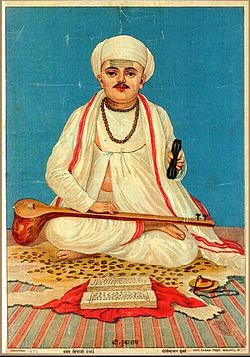
Saints and sometimes militant sect leaders, such as the Marathi poet Tukaram (1609–1649) and Ramdas (1608–1681), articulated ideas in which they glorified Hinduism and the past.
Image source: Tukaram
1800 CE - 2000 CE
% complete
This inclusivism was further developed in the 19th and 20th centuries by Hindu reform movements and Neo-Vedanta, and has become characteristic of modern Hinduism.
1800 CE - 1900 CE
% complete
The notion and reports on "Hinduism" as a "single world religious tradition" were also popularised by 19th-century proselytising missionaries and European Indologists, roles sometimes served by the same person, who relied on texts preserved by Brahmins for their information of Indian religions.
Image source: Orientalism
1800 CE - 1900 CE
% complete
Beginning in the 19th century, Indian modernists re-asserted Hinduism as a major asset of Indian civilisation, meanwhile "purifying" Hinduism from its Tantric elements and elevating the Vedic elements.
1800 CE - 1900 CE
% complete
Since the 19th century, modern Hinduism, influenced by Western culture, has acquired a great appeal in the West, notably reflected in the popularisation of Yoga and various sects such as Transcendental Meditation and the ISKCON's Hare Krishna movement.
Image source: Hinduism in the West
1816 CE - 1817 CE
% complete
The first Indian to use "Hinduism" may have been Raja Ram Mohan Roy in 1816–17.
Image source: Raja Ram Mohan Roy
1900 CE - 2000 CE
% complete
The Yoga Sutras is a classical text for the Hindu Yoga tradition, which gained renewed popularity in the 20th century.
Image source: Yoga Sutras of Patanjali
1900 CE - 2000 CE
% complete
During the 20th century, due to the Indian diaspora, Hindu minorities have formed in all continents, with the largest communities in absolute numbers in the United States, and the United Kingdom.
Image source: Hinduism by country
1900 CE - 2021 CE
% complete
Although religious conversion from and to Hinduism has been a controversial subject, in the 20th–21st century many missionary organisations such as ISKCON, Sathya Sai Organization, and Vedanta Society have been influential in spreading the core culture of Hinduism outside India.
Image source: ISKCON
1900 CE - 2014 CE
% complete
There are many new ethnic Ghanaian Hindus in Ghana, who have converted to Hinduism due to the works of Swami Ghanananda Saraswati and the Hindu Monastery of Africa, from the beginning of the 20th century, by the forces of Baba Premananda Bharati (1858–1914), Swami Vivekananda, and others.
Image source: Hindu Monastery of Africa
1915 CE
% complete
Bal Gangadhar Tilak gave the following definition in Gita Rahasya (1915): "Acceptance of the Vedas with reverence; recognition of the fact that the means or ways to salvation are diverse; and realization of the truth that the number of gods to be worshipped is large".
Image source: Bal Gangadhar Tilak
1947 CE
% complete
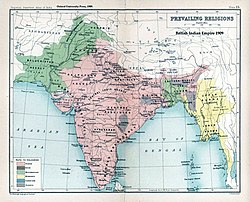
The Partition of India in 1947 was along religious lines, with the Republic of India emerging with a Hindu majority.
Image source: Partition of India
1966 CE - 1995 CE
% complete
It was quoted by the Indian Supreme Court in 1966, and again in 1995, "as an 'adequate and satisfactory' definition", and is still the legal definition of a Hindu today.
2007 CE
% complete
June McDaniel (2007) classifies Hinduism into six major kinds and numerous minor kinds, in order to understand the expression of emotions among the Hindus.
2020 CE
% complete
According to a 2020 estimate by The World Religion Database hosted at Boston University, the Vaishnavism tradition is the largest group with about 399 million Hindus, followed by Shaivism with 385 million, Shaktism with 305 million and other traditions including Neo-Hinduism and Reform Hinduism with 25 million Hindus.
Image source: Vaishnavism
2020 CE
% complete
According to the 2020 population estimate by Pew Research Center, 95% of the global Hindu population of 1,177,860,000 is concentrated in India, the only country with a Hindu population exceeding one billion.
Image source: Hinduism in India
Or browse the full history timeline directory, with more than 2,000 topics.
This Hinduism timeline was generated with the help of AI, using information found on the internet.
We work hard to keep these timelines accurate, but mistakes do get through. If you spot one, email us at [email protected] and we'll fix it for future visitors.
Generate yours with AI or build it from scratch, for free.
Export your timeline, add your own events, edit or remove AI-generated events, and much more
No credit card required.
Cancel anytime.
Cancel anytime.
You can create an unlimited number of timelines with up to 10 events on each one, customize how they look, export them to PDF, PNG, PowerPoint, CSV, and Excel, and share them with a link. Paid plans raise the event limit and add features like spreadsheet imports and collaborators.
Yes. You can cancel your subscription from your account page at any time, and you will not be charged again. Your subscription stays active for the rest of the period you already paid for.
Yes. We will email you a reminder before the annual renewal, and we will also email you a receipt.
Yes. You can email us within 15 days of any payment, and we will issue you a full refund.
Check out our pricing docs or send us an email anytime: [email protected].